Skip Bocconi Test Questions? Treat Each Screen as a Mini Exam

Skip Bocconi Test Questions? Treat Each Screen as a Mini Exam
Yes, you can leave questions unanswered on the Bocconi online test, and an omitted answer scores exactly 0 points. A correct answer adds a point, but a wrong one carries a penalty, and that penalty changes by question type, sometimes −0.25, −0.33, or −0.2. That gap between a safe neutral impact and a possible penalty is the whole strategy.
TL;DR:
- On four choice questions with a 0.25 point penalty, blind guessing averages zero; eliminate one option first, while three choice items carry steeper penalties.
- Each screen presents three questions and closes permanently when you click Next, but the final summary page lets you fill omissions if time remains.
- With 50 questions in 75 minutes, budget about 4.5 minutes per three question screen and reserve a small buffer for summary review.
- Read all three questions first, answer the easiest, and set a screen deadline so one difficult item cannot consume time meant for easier questions.
- Calculators and external electronic devices are prohibited during the proctored test, and candidates must complete a room scan and use a lockdown browser before starting.
Table of Contents
- How Bocconi Scoring Works: Rules, Areas, and Numbers
- Test Navigation Rules That Affect Your Skipping Decisions
- A Step-by-Step Skipping and Time Strategy for Test Day
- Training Your Skipping and Guessing Reflexes With Simulations
- Why Skipping Has to Be Strategic, Not Instinctive
- Where to Practice These Exact Skipping and Timing Routines
- FAQ
- Sources
How Bocconi Scoring Works: Rules, Areas, and Numbers
The scoring system is simple on the surface and tactical underneath. A correct answer earns +1 point, an omitted question earns 0, and a wrong answer loses points. The size of that loss depends on the area and on how many answer choices the question offers.
- Four-choice questions generally carry a smaller penalty for a wrong answer, while three-choice critical-thinking items have a steeper penalty, and omitted items do not affect your score.
On a four-choice item with a −0.25 penalty, random guessing across four options averages out to zero. Eliminate even one wrong option before guessing among the rest, and the math tips in your favor. On a three-choice item with a steeper penalty, random guessing can land below zero, so elimination matters more before you commit to an answer. The official instructions also note minimum score thresholds tied to selection eligibility, which is one more reason to treat every point as earned rather than risked carelessly.
Test Navigation Rules That Affect Your Skipping Decisions
The Bocconi test does not let you wander back and forth between questions, and that constraint shapes every skipping decision you make.
- Questions appear three at a time per screen, and once you click Next, that screen is closed for good.
- A summary page appears before final submission, showing which questions are answered and which are omitted.
- You must click “Submit all and finish” to close the attempt, or the system autosubmits whatever is selected when time runs out.
This sequential, no-return structure comes directly from the official Bocconi test page. It means a skip is not a soft decision you revisit later within that screen. Once you move on, your answer, or lack of one, is locked in until the summary page, where you can still fill in deliberate blanks if time allows.
A Step-by-Step Skipping and Time Strategy for Test Day
Treat each screen as its own mini-exam. With 50 questions in 75 minutes, that works out to about 1.5 minutes per question, or roughly 4.5 minutes per three-question screen, with a small buffer saved for the summary review.
- Read all three questions on a screen before answering any of them, so you know which to tackle first.
- Answer the easiest question on the screen immediately, then move to the harder ones with the time left.
- Decide on each question before clicking Next: once that screen closes, the decision is final.
- If a question stumps you, eliminate at least one wrong choice before guessing, based on the penalty math for that question type.
- Leave truly unknown questions blank rather than guessing blind, especially on three-choice items with steeper penalties.
- Use the summary page in the final minutes to revisit any flagged uncertainty and fill in answers where you found a partial edge.
Pro Tip: Decide your guess-or-skip rule before the test starts, not in the moment, so a hard question never eats minutes meant for three easier ones.
Before test day, run a full technical and environment check: confirm your lockdown browser works, your room is clear of prohibited materials, and you understand what a 360-degree scan requires.
Training Your Skipping and Guessing Reflexes With Simulations
Reading about the rules and reacting to them under pressure are different skills, and the gap between them closes with repetition under matching conditions.
- Full 75-minute, sequential-screen simulations build the habit of finalizing a screen before moving forward, exactly as the real test demands.
- No-calculator drills and room-scan rehearsals make the proctoring steps automatic, so they cost no mental energy on test day.
- Short, timed micro-drills of three questions at once mirror the actual screen format and train your per-screen pacing directly.
- Elimination practice, done repeatedly, turns the guessing math from theory into a fast, reliable instinct.
- Summary-review rehearsals teach you how to scan for blanks quickly and use leftover minutes with purpose.
On the training side, our simulation walkthrough breaks down what a realistic mock should include, and our guide to allowed materials covers exactly what to rehearse for the no-calculator rule. Good general time-management habits also carry over from everyday study planning, and resources like time management strategies for college apply the same discipline of fixed budgets and hard cutoffs that the Bocconi screen format rewards.
Why Skipping Has to Be Strategic, Not Instinctive
The sequential, no-return format is a deliberate design choice. It tests time discipline as much as it tests subject knowledge, because backtracking is simply not possible. The most common mistake is spending too long on one stubborn question and letting it eat the time meant for two easier ones on the same screen.
A close second is skipping the summary review entirely and submitting with blanks that could have been filled with an educated guess. Guessing without elimination first is the third frequent error, and it is the one most likely to turn a safe zero into a real loss. Fix all three with a strict per-screen clock, elimination before any guess, and a disciplined sweep of the summary page at the end.

— quentin
Where to Practice These Exact Skipping and Timing Routines
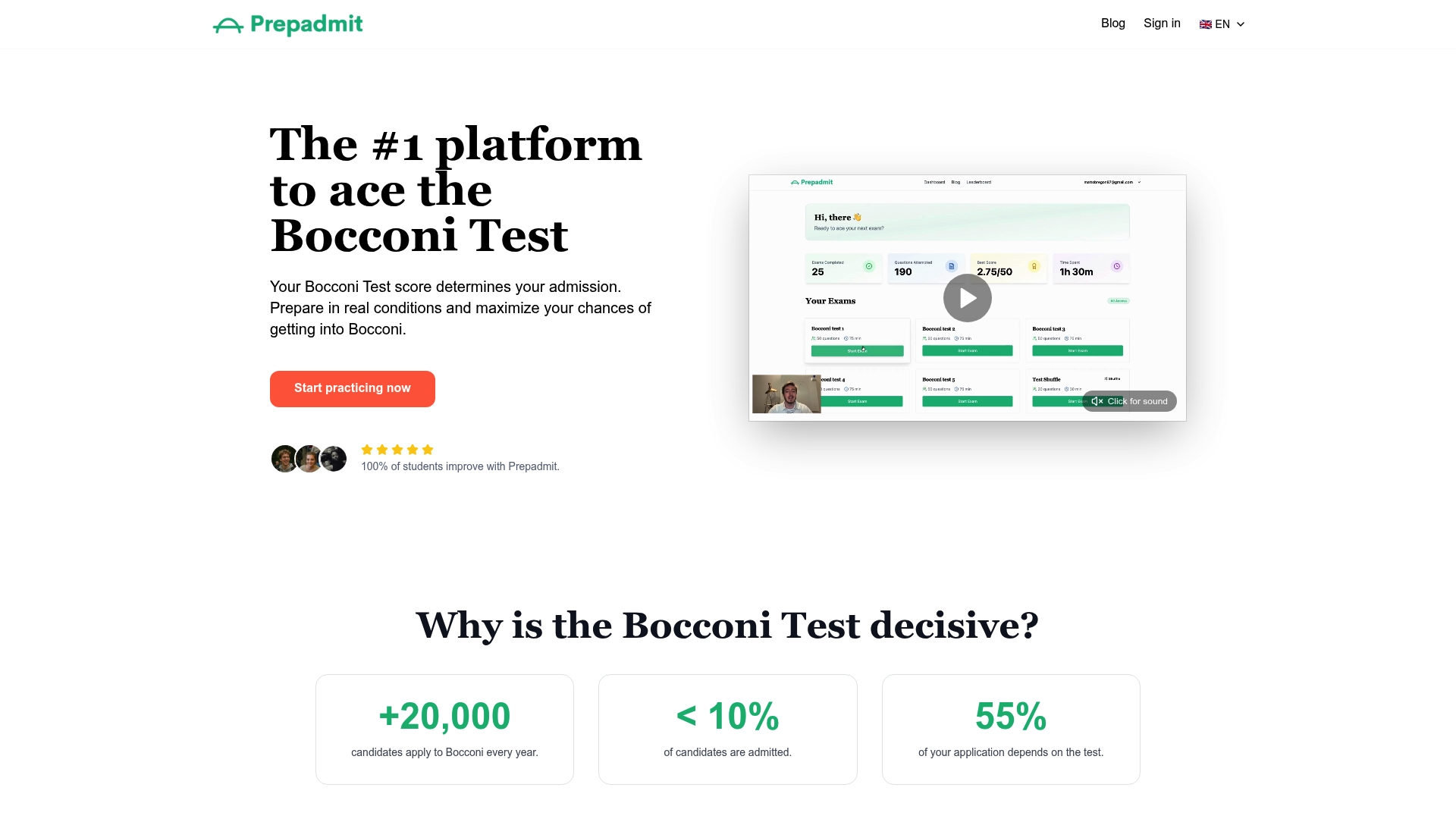
We built our platform around the behaviors this article covers, because reading the rules and reacting correctly under a ticking clock are not the same skill. Our simulations run on official past papers under the same 75-minute, sequential-screen format, so the habit of finalizing a screen before moving on becomes automatic rather than something you think about mid-test.
- Timed, on-demand simulations reproduce the three-question screen structure and the no-return constraint exactly.
- Skill-specific practice modes let you drill elimination technique on the question types where penalties are steepest.
- Progress tracking and peer ranking show you where your pacing and accuracy stand before the real test.
- A money-back guarantee supports access to the full preparation.
For a one-week structured plan that pairs timed sims with summary-review drills, our seven-day prep guide lays out a day-by-day schedule. When you are ready to start training under real conditions, access the full preparation and put these skipping and timing rules into practice before test day arrives.
FAQ
Can you skip questions on the Bocconi test without losing points?
Yes, an omitted question scores exactly 0 points, with no penalty attached. A wrong answer does carry a penalty, so skipping is always safer than a blind guess on a question you cannot narrow down at all.
What is the rule for using a calculator during the Bocconi test?
Calculators and other external electronic devices are not permitted during the proctored test session. Candidates complete a room scan and use a lockdown browser to confirm no prohibited materials are present before starting.
What is the official rule document for the Bocconi online test?
The Instructions and Rules of Conduct published by Bocconi covers navigation, scoring, proctoring, and allowed materials in full detail. It is the primary source to check before test day for any rule questions that come up during preparation.
How much does Prepadmit cost?
Pricing for full access to our preparation platform is available on request through our main page. The page also outlines what full access includes, from simulations to progress tracking.
Recommended
Related articles
Ready to ace your admission test?
Discover PrepAdmit, the platform that helps you succeed at top university admission tests.
Discover PrepAdmit