3 Bocconi Worked Exercises and a 75 Minute Mock Plan

3 Bocconi Worked Exercises and a 75 Minute Mock Plan
This page gives you fully worked Bocconi exercises across math, numerical reasoning, and reading comprehension, plus a ready mock plan built on 50 questions in roughly 75 minutes. You get step-by-step solutions, links to Bocconi’s own practice materials, and a review method that turns mistakes into targeted drills. Timed simulations and answer commentary sit alongside these examples if you want a full practice platform to run the routine on.
TL;DR:
- Candidates need to master different thinking styles as the test covers math, data interpretation, reading inference, and logical argumentation.
- Recognizing traps in question wording, such as unnecessary details or similar answer choices, is crucial for accuracy and speed.
- Timed drills that simulate test conditions and detailed error logging significantly improve performance, especially when focusing on frequent mistake patterns.
- Practice should be paired with reviewing mistakes and understanding their causes; volume alone yields limited progress without targeted analysis.
- Combining official materials, conceptual workbooks, and timed mocks maximizes preparation effectiveness and builds confidence under exam conditions.
Table of Contents
- What Does the Bocconi Test Actually Look Like?
- How Do You Solve a Bocconi Math Problem Step by Step?
- How Do You Handle Numerical Reasoning and Data-Sufficiency Questions?
- How Do You Break Down a Reading Comprehension Question?
- How Do You Build and Review a Full Practice Mock?
- What Does Prepadmit Add to Official Bocconi Materials?
- Useful Resources for Bocconi Test Preparation
- The Real Gap in How Students Prepare for Bocconi
- Sources
- FAQ
What Does the Bocconi Test Actually Look Like?
The Bocconi online test runs about 50 multiple-choice questions in roughly 75 minutes, split across four skill areas. Knowing the shape of the test before you touch a single exercise changes how you practice, because each section rewards a different kind of thinking.
- Mathematics and algebra: ratios, percentages, basic equations, and quick arithmetic under pressure.
- Numerical reasoning: tables, charts, and data-sufficiency questions that test whether you can extract the right number fast.
- Reading comprehension: short passages paired with inference questions, not just recall.
- Critical thinking: logical statements where you evaluate an argument’s structure rather than solve for x.
Questions tend to hide traps in phrasing, not in math difficulty. A ratio question might give you three numbers when you only need two, or a passage might include a detail that sounds relevant but doesn’t answer the question asked. Recognizing that pattern early is half the battle.
How Do You Solve a Bocconi Math Problem Step by Step?
Here’s a representative prompt: A store increases the price of a jacket by 20%, then later applies a 15% discount on the new price. If the original price was €80, what is the final price?
- Find the increased price. €80 × 1.20 = €96.
- Apply the discount to the new price, not the original. €96 × 0.85 = €81.60.
- Check the answer against intuition. A 20% increase followed by a 15% decrease should land slightly above the original price, since 1.20 × 0.85 = 1.02. That matches €81.60, confirming no arithmetic slip.
Two mistakes show up constantly on this type of question. First, students apply the discount to the original €80 instead of the increased €96, which produces a wrong answer that still looks plausible. Second, students round too early, losing precision across two sequential percentage changes.
Pro Tip: Multiply the percentage factors together first (1.20 × 0.85 = 1.02) before touching the actual price. It turns a two-step calculation into one multiplication and cuts your risk of a rounding error in half.
Once this method feels automatic, run a timed drill: eight similar percentage-chain problems in 12 minutes. That pace matches real test pressure and exposes whether you’ve actually internalized the shortcut or you’re still solving each step from scratch. Prepadmit’s targeted math drills are built around exactly this kind of repeated, timed practice.

How Do You Handle Numerical Reasoning and Data-Sufficiency Questions?
Picture a table showing quarterly revenue for three regions over two years, followed by this question: Is Region B’s growth rate higher than Region A’s between Year 1 and Year 2?
Statement (1): Region A grew from €200,000 to €220,000. Statement (2): Region B grew from €150,000 to €172,500.
Testing sufficiency means asking whether each statement alone answers the question, before combining them. Statement (1) alone gives you Region A’s rate (10%) but nothing about Region B, so it’s insufficient by itself. Statement (2) alone gives Region B’s rate (15%) but nothing about Region A. Combined, you can compare both rates and answer definitively that Region B grew faster. The correct choice is “both statements together are sufficient, but neither alone is.”
A few habits make these items faster and less error-prone:
- Read the question before scanning the table. Knowing what you need stops you from calculating numbers you’ll never use.
- Note the units in every row and column. Mixed units (thousands vs. millions, percentages vs. raw values) are a common trap.
- Check whether the question can be answered with less data than it appears. Many data-sufficiency items are solvable without full calculation.
Practicing the “statement alone versus combined” pattern with paired drills, rather than brute-forcing every number, is what actually builds speed on these items. Try six data-sufficiency questions in ten minutes to see where your instinct still defaults to unnecessary math.
How Do You Break Down a Reading Comprehension Question?
Take this short passage: “Urban planners have long assumed that adding lanes to congested highways reduces travel time. Recent traffic studies suggest the opposite: new lanes often fill with additional drivers within a few years, restoring the original congestion levels. This phenomenon, sometimes called induced demand, challenges a decades-old assumption in transportation policy.”
Question: Which conclusion best follows from the passage?
- Identify the premise. Planners assumed more lanes reduce travel time.
- Identify the conclusion. New evidence contradicts that assumption because added capacity attracts new traffic.
- Match the answer to what the passage actually claims, not what sounds reasonable. The correct answer states that expanding road capacity does not reliably reduce congestion long term, mirroring the passage’s own logic.
- Eliminate options using red flags. Watch for extreme language (“always,” “never”), claims that require outside knowledge the passage never mentions, and answers that reverse cause and effect.
The biggest trap in Bocconi reading questions isn’t difficulty, it’s answers that sound smart but go beyond what the text supports. Practice this with three passages in 18 minutes, annotating premise and conclusion in the margin as you read rather than after you finish.
How Do You Build and Review a Full Practice Mock?
Run a full mock exactly as the real test presents it: 50 questions, about 75 minutes, split roughly into equal time blocks per section so no single cluster eats your buffer. A rough split might be 20 minutes for math, 20 for numerical reasoning, 20 for reading and critical thinking, with 15 minutes held as flexible overflow.
Simulating proctoring matters more than most students expect. Bocconi’s own instructions cover technical requirements and rules of conduct you should review before test day, and rehearsing with your actual webcam, microphone, and a locked-down browser window removes friction you don’t want to discover live.
- Check your camera and microphone setup at least once before the real test window opens.
- Practice the timed interface itself, not just the questions, so navigating between items doesn’t cost you seconds.
- Log every missed question by error type: concept gap, calculation slip, or misread question.
- Turn your most frequent error type into a focused 20-minute drill each week.
A workable weekly rhythm looks like one full mock plus three shorter, skill-specific drills. Students who log error causes rather than just scores tend to see faster, more targeted improvement in mock results.
What Does Prepadmit Add to Official Bocconi Materials?
Bocconi’s admissions pages give you the official test structure and a downloadable sample test, but there’s no official textbook, so most candidates combine that base with independent practice tools. Prepadmit was built specifically to fill that gap for the Bocconi Test, offering:
- On-demand timed mocks that mirror the real 50-question, 75-minute format.
- Simulations built around official past-paper structure.
- Skill-specific practice modes for math, numerical reasoning, and reading.
- Detailed answer commentary explaining why each option is right or wrong.
- Progress tracking and a leaderboard to compare your pace against other candidates.
Prepadmit reports an average score improvement of 34% among users who train on the platform, and access comes with a money-back guarantee. Treat these as publisher-supplied figures, not independent audits, and pair them with your own mock results to judge fit.
The most effective setup blends sources rather than relying on one. Use Bocconi’s official sample test to calibrate difficulty, a book collection for deep conceptual practice, and a platform like Prepadmit for repeated timed mocks with instant, detailed corrections.
Useful Resources for Bocconi Test Preparation
Start with Bocconi’s own download area, which holds the official sample test and technical instructions for the proctored interface. That’s the only source that shows you the exact format the university uses.
For deeper conceptual practice, Alpha Test and Hoepli’s worked exercise collections offer hundreds of commented questions suited to slow, careful study rather than timed drills. Use books when you want to understand a concept from scratch; use timed online mocks once you’re ready to test that understanding under a clock. A structured platform like Prepadmit fits that second stage well, and general prep guides can help you sequence all three resource types across your study calendar.
The Real Gap in How Students Prepare for Bocconi
Most students over-invest in collecting practice questions and under-invest in reviewing them. Solving 500 problems without logging why each mistake happened teaches you almost nothing new after the first hundred. The research on Bocconi’s own testing environment backs this up indirectly: the university built a proctored, timed interface specifically because performance under those exact conditions differs from relaxed, untimed study.
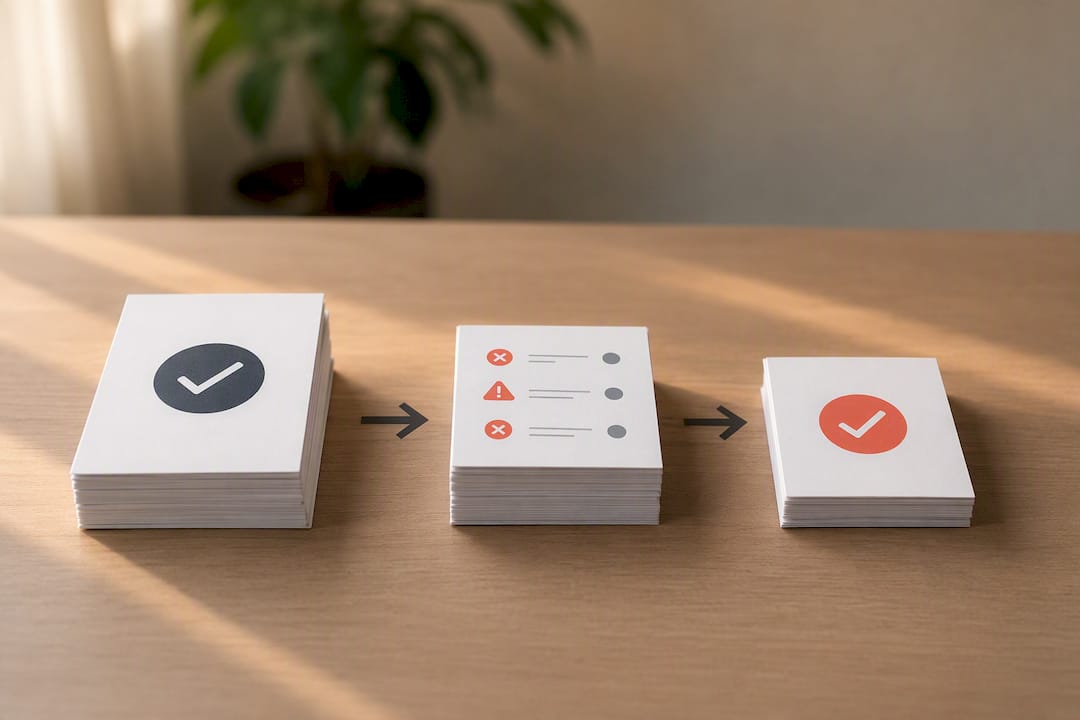
The conventional advice, “practice more,” isn’t wrong, it’s just incomplete. What actually moves your score is pairing volume with a tight error log: question type, error cause, time lost. Convert your ten most frequent mistakes into weekly 20-minute drills, and you’ll fix in a month what unstructured practice might take all semester to address.
Bocconi’s own leadership has pointed to steady, methodical study habits as a success factor for incoming students, and that principle applies just as much before admission as after it. If you take one thing from this article, let it be this: run the mock, log the error, drill the pattern, repeat. Skip the temptation to chase a bigger question bank before you’ve mined the one you already have. Tools that combine study techniques with honest self-assessment can reinforce this habit outside the test itself, but the discipline of reviewing your own errors is what actually compounds.
**
FAQ
Where Can I Find Practice Exercises for the Bocconi Test?
Bocconi’s own admissions pages offer an official sample test and download area, while independent platforms like Prepadmit and book collections such as Alpha Test or Hoepli provide additional worked exercises and timed simulations.
What GPA Do You Need to Graduate With Honors (110) at Bocconi?
Graduating with a summa cum laude equivalent at Bocconi generally requires maintaining a consistently high average across your exams, though the exact threshold varies by program and specific grading policy, so check your program’s official guidelines directly.
What Are the Hardest Exams at Bocconi?
Difficulty varies by program and student background, but quantitative-heavy courses in economics, statistics, and finance are commonly cited as the most demanding by current students, largely due to pacing and cumulative problem sets.
What Counts as a Good Score on the Bocconi Test?
A good score depends on the specific program and admissions cycle, but consistently answering the majority of the roughly 50 questions correctly across all four sections within the 75-minute window puts you in a strong competitive position.
Recommended
Related articles
Ready to ace your admission test?
Discover PrepAdmit, the platform that helps you succeed at top university admission tests.
Discover PrepAdmit