How Exam Repetition Builds Familiarity and Boosts Scores

How Exam Repetition Builds Familiarity and Boosts Scores
How exam repetition builds familiarity with test content
Exam repetition works. Not because you see the same questions twice, but because each attempt forces your brain to actively retrieve information rather than passively recognize it. That distinction is what separates students who improve from those who plateau.
The core mechanism is called the testing effect: taking practice tests on studied material produces greater long-term retention than restudying alone. Every time you pull an answer from memory under timed conditions, you strengthen that memory trace. Do it enough times, and recall stops feeling effortful. It becomes automatic.
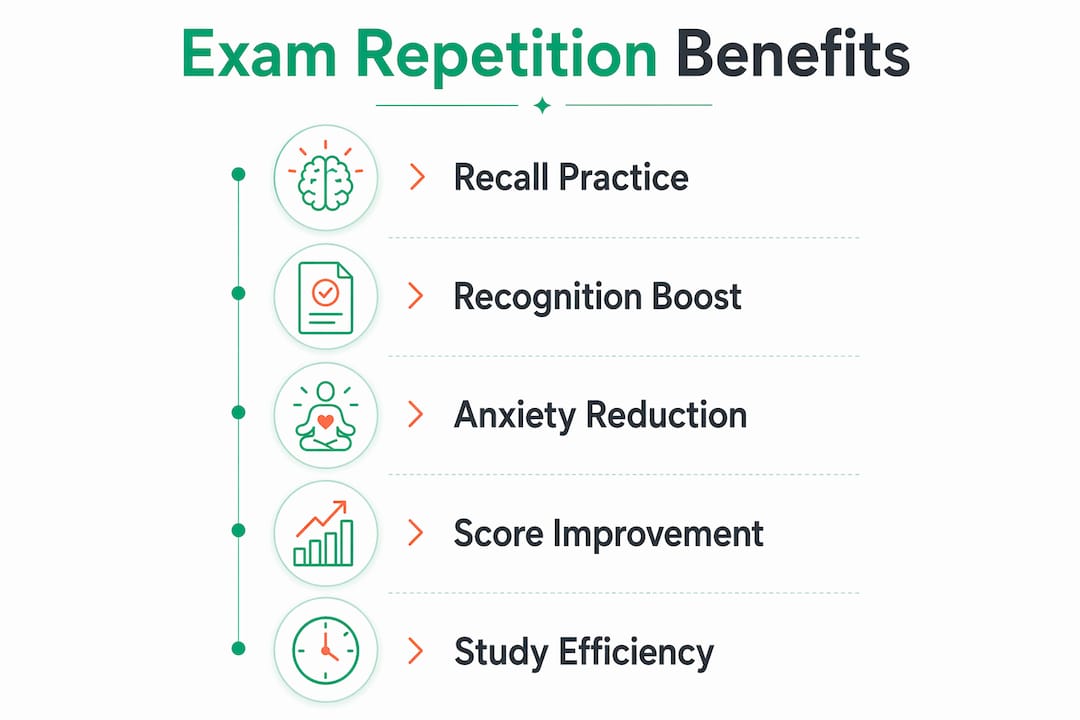
Here is what consistent exam repetition delivers:
- Improved recall speed. Repeated retrieval transforms effortful recollection into automatic familiarity, so answers surface faster during the real test.
- Reduced test anxiety. When the exam format feels predictable, your brain shifts from panic mode to pattern-recognition mode.
- Better score outcomes. Repeat exam takers show meaningful score improvements driven by familiarity, reduced anxiety, and targeted review of weak areas.
- Deeper understanding. Retrieval practice redirects attention from surface-level reading to genuine comprehension.
Students using Prepadmit’s structured practice system report meaningful score improvements consistent with research on structured repetition. That figure reflects what the research predicts: structured repetition, not passive review, is what moves scores.
Table of Contents
- Why your brain responds so well to repeated testing
- Why students struggle to use repetition correctly
- Effective methods that actually build exam familiarity
- How repetition prepares you for university-level exams
- Best practices for making exam repetition work for you
- Key Takeaways
Why your brain responds so well to repeated testing
The psychological and cognitive benefits of exam repetition go deeper than most students realize.
- The testing effect is real and well-documented. Practice tests outperform restudying and all other non-testing comparison conditions in meta-analyses spanning hundreds of studies.
- Spaced repetition compounds gains. Successive relearning sessions spaced over time dramatically reduce the time needed for recall while increasing long-term retention. Cramming produces the opposite effect.
- Anxiety drops as exams become routine. Repeated exposure to exam conditions lowers cognitive load during high-stakes situations. The test stops feeling like a threat and starts feeling like a familiar task.
- The Remember-to-Know shift. Cognitive science describes a transition where conscious, effortful recall gradually becomes automatic familiarity. You stop “trying to remember” and simply know. This shift happens through repeated retrieval, not rereading.
- Low-stakes quizzing builds a growth mindset. The American Association of School Administrators endorses frequent low-stakes quizzing as superior to high-stakes testing for durable learning. Regular quizzes make you comfortable with being evaluated, which carries directly into exam day.
Why students struggle to use repetition correctly
Knowing that repetition works and actually doing it well are two different things. Most students hit one of these walls:
- Passive review feels easier. Students default to rereading because it feels productive. It is not. Rereading creates a false sense of familiarity without building the retrieval strength that exams actually test.
- Active retrieval feels uncomfortable. Getting answers wrong during practice is discouraging. Motivation is a key barrier to adopting retrieval-based strategies, even when students know they work better.
- Cramming undermines the process. Blocked, last-minute practice sessions produce short-term recognition but weak long-term retention. Spacing is not optional; it is the mechanism.
- Misconceptions about academic rigor. Some students believe that retaking or repeating exams means lowering standards. Research on retake policies shows the opposite: repetition promotes deeper comprehension, not shortcuts.
- Cognitive fatigue without structure. Unplanned repetition leads to burnout. Without a schedule and a feedback loop, students repeat the same mistakes rather than correcting them.
Effective methods that actually build exam familiarity
Getting repetition right requires more than doing more practice tests. Structure and feedback are what separate effective repetition from wasted effort.
- Space your sessions deliberately. Combining spaced review with active retrieval transforms learned material into durable knowledge accessible under pressure. A science-backed spaced repetition plan distributes sessions across days and weeks, not hours.
- Use feedback after every attempt. Practice testing with corrective feedback confirms correct answers and pinpoints errors. Without feedback, you can repeat wrong answers indefinitely. With it, each session closes a gap.
- Match practice format to the real exam. Testing effects are stronger when the practice test format matches the final test format. If your target exam uses multiple-choice and short-answer, your practice sessions should too.
- Apply repetition differently by subject. In math, work the same problem types repeatedly with varied numbers until the method is automatic. In language exams, use spaced flashcard systems to cycle vocabulary until recognition is instant. The principle is the same; the tool changes.
- Incorporate low-stakes quizzes early. Start quizzing yourself before you feel ready. Frequent low-stakes testing establishes a routine that reduces anxiety by making assessment a regular, less intimidating experience.
- Track your performance and adjust. Identify which question types or topics consistently cost you points. Shift repetition toward those areas. Progress tracking is not optional; it is how you avoid repeating strengths while ignoring weaknesses.
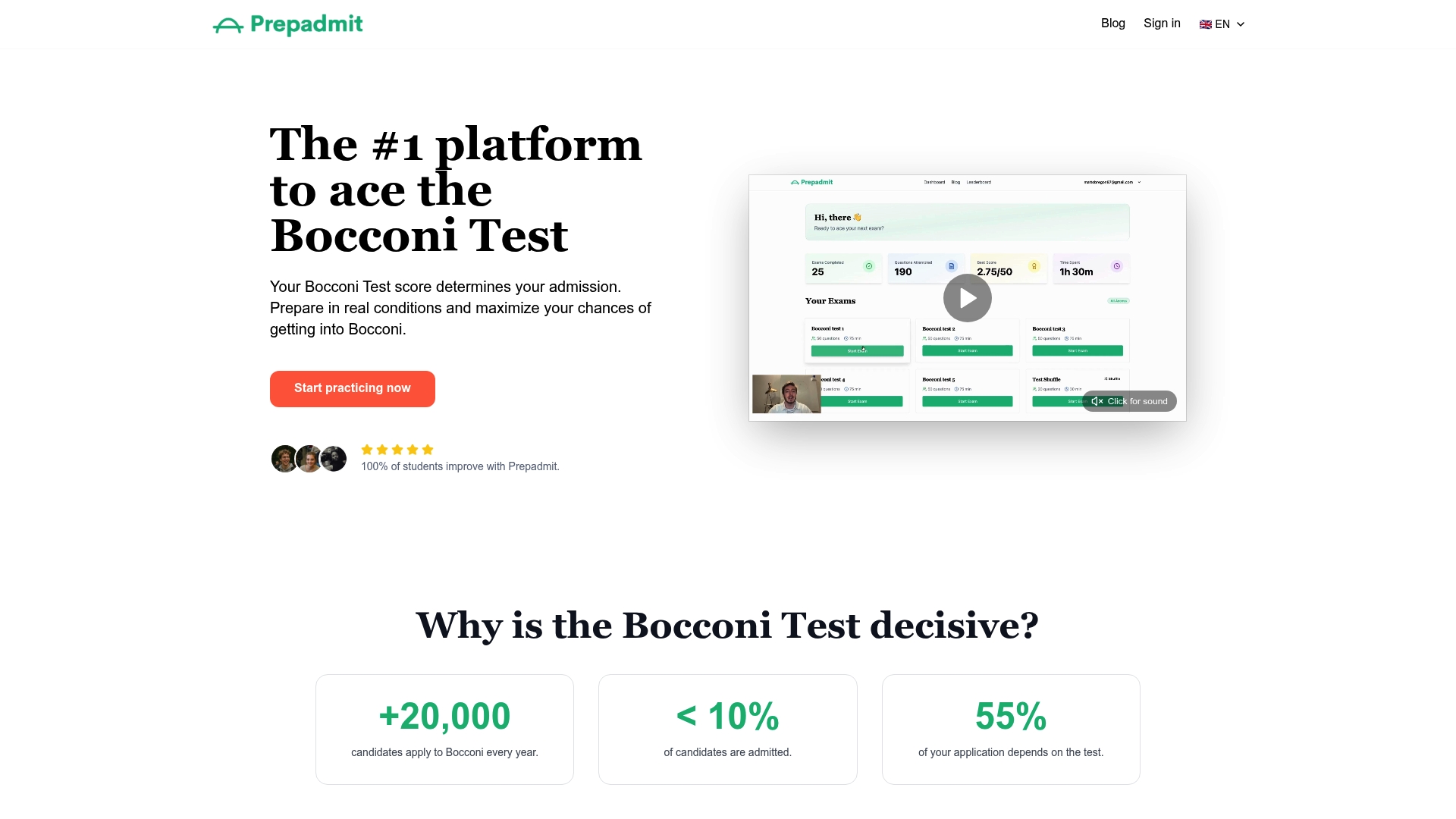
- Simulate real exam conditions. Prepadmit’s platform replicates actual exam conditions using official past papers, with detailed corrections and peer ranking. That kind of exam simulation removes the surprise factor entirely.
Pro Tip: Set a fixed weekly session count before you start. Three focused sessions per week with feedback beats seven rushed ones without it.
How repetition prepares you for university-level exams
The habits you build through exam repetition in high school carry further than your admissions test.
- Repetition builds transferable skills. Students who practice retrieval regularly develop stronger time management, test-taking strategy, and problem-solving instincts. These skills do not reset after admission.
- University exams are harder and less familiar. High-stakes university assessments often use unfamiliar formats and expect application of concepts, not just recall. Students trained on repetition handle that shift better because they are used to working under uncertainty.
- Deeper comprehension, not rote memorization. Well-designed repetition policies encourage genuine understanding rather than surface-level memorization. That is exactly what university-level coursework demands.
- Anxiety reduction has lasting effects. Students who enter university already comfortable with high-stakes testing perform more consistently under pressure. The confidence built through a structured revision plan does not disappear after one exam.
- Lifelong learning habits form early. Retrieval practice is a skill. Students who master it before university arrive with a learning method that scales to any subject or professional certification they encounter later.
Best practices for making exam repetition work for you
Pull these together and you have a system, not just a habit.
- Start with active retrieval, not rereading. Open with a practice test before you review notes.
- Space sessions across multiple days. Retention compounds with time between attempts.
- Use low-stakes quizzes to build confidence before high-stakes attempts. Platforms like Prepadmit let you practice in a low-pressure environment before the real thing.
- Track every session. Know your score, your weak areas, and your trend line.
- Match your practice format to your target exam. Format alignment strengthens the testing effect.
- Adjust your repetition schedule based on performance data, not on how confident you feel.
- Commit to consistency. A structured approach to exam confidence built over weeks outperforms any last-minute surge.
If you are preparing for the Bocconi Test, Prepadmit gives you official past papers, on-demand tests, detailed corrections, and real-time peer ranking. Students using the platform average a 34% score improvement. That is what structured, feedback-driven repetition looks like in practice.

Key Takeaways
Exam repetition builds familiarity by converting effortful recall into automatic recognition, reducing anxiety, and producing measurable score gains when practice is spaced, feedback-driven, and format-matched.
| Point | Details |
|---|---|
| Active retrieval beats rereading | Practice testing produces stronger long-term retention than passive review in every major study. |
| Spaced sessions compound gains | Distributing repetition across days dramatically improves retention compared to cramming. |
| Feedback closes the loop | Corrective feedback after each practice session prevents repeating errors and accelerates improvement. |
| Format matching strengthens results | Testing effects are larger when practice exam format matches the real exam format. |
| Prepadmit’s average gain | Students on Prepadmit’s structured platform report an average score improvement of 34%. |
Recommended
Related articles
Ready to ace your admission test?
Discover PrepAdmit, the platform that helps you succeed at top university admission tests.
Discover PrepAdmit