Exam Confidence Building: Proven Strategies for Students

Exam Confidence Building: Proven Strategies for Students
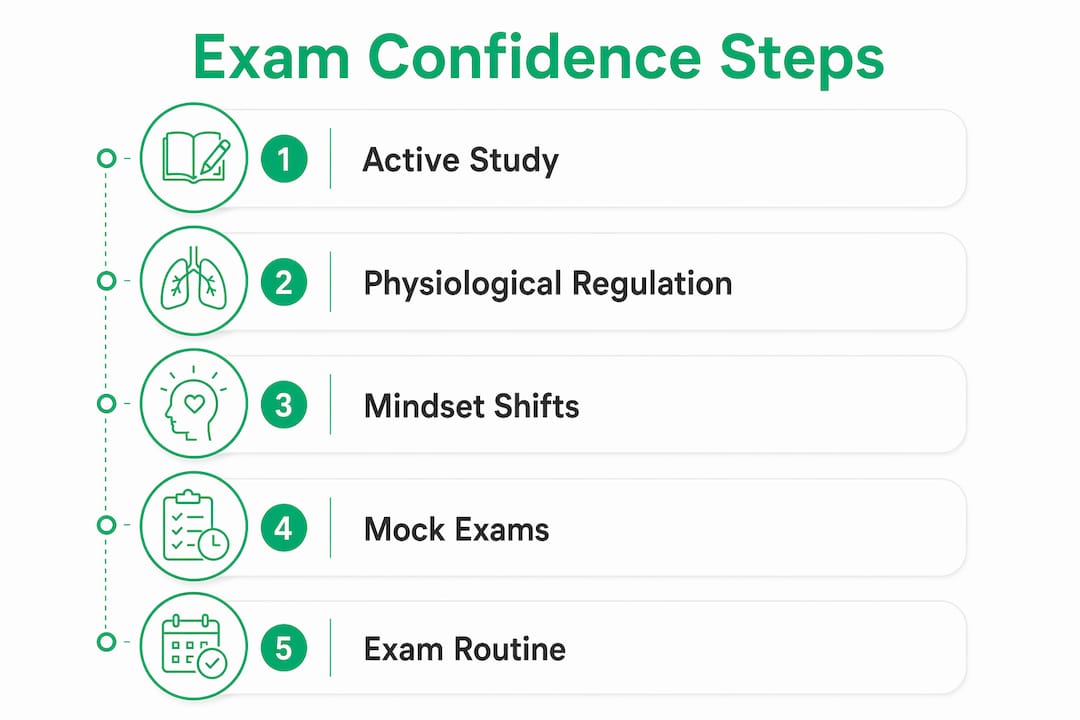
Exam confidence building is the process of developing genuine preparedness and emotional control so you can enter any test calm and capable. It is not positive thinking or wishful optimism. It is a skill built through evidence-based study methods, physiological self-regulation, and deliberate mindset shifts. Confidence is downstream of competence, meaning no amount of self-talk replaces actual practice under realistic conditions. Students who understand this distinction stop chasing a feeling and start building a track record.
What are the proven study methods for building exam confidence?
Active retrieval practice is the single most effective study method for building test-taking confidence. Self-testing reduces exam anxiety because it gives you accurate feedback on what you actually know, not what you think you know. Passive review, like rereading notes or highlighting, creates an illusion of mastery. That illusion collapses under timed exam pressure, which is exactly when anxiety spikes.
The difference between active and passive study is concrete. Passive review means reading a chapter again. Active retrieval means closing the book and writing down everything you remember, then checking your gaps. Over repeated sessions, recall becomes automatic. That automaticity is what confidence feels like during an exam.

Mock exams and timed practice sessions add another layer. Simulating test day conditions repeatedly lowers your nervous system’s threat response by making the environment familiar. Students who sit five mock exams before the real one are far less likely to experience panic because the exam feels like another practice session. The unknown becomes known.
Spaced repetition compounds these gains. Structured study schedules give students a sense of control and reduce uncertainty about what they have and have not covered. Mapping topics across weeks, not days, improves retention and prevents the last-minute cramming that spikes cortisol and wrecks sleep.
Key habits that build study-based confidence:
- Test yourself daily. Use flashcards, past paper questions, or blank-page recall instead of rereading.
- Schedule mock exams. Sit at least one full timed practice test per week in the final month before your exam.
- Use spaced repetition. Review material at increasing intervals using a science-backed study schedule rather than massing all review into one session.
- Track your gaps. After each practice session, note which topics you missed and return to them first next time.
- Limit cramming. Stop new material intake 24 hours before the exam to let consolidation happen.
Pro Tip: Plan your study over four to six weeks, not four to six days. Students who spread practice across multiple weeks enter exams with a documented track record of success, which is the most reliable source of confidence.
How can physiological techniques regulate nervousness during exams?
Physiology precedes psychology. When your body enters threat mode, rational thinking becomes harder. Reasoning cannot override the body’s threat response once it is fully triggered, which is why telling yourself to “calm down” rarely works. You need a physical intervention first.
Box breathing is the most accessible tool. Inhale for four counts, hold for four, exhale for four, hold for four. Repeat three to four times. This activates the parasympathetic nervous system and slows your heart rate within minutes. Practice it during study sessions so it becomes automatic under pressure.
The 5-4-3-2-1 grounding method works during mid-exam panic. Thirty seconds of sensory focus can restore productive attention for the following exam minutes. Name five things you can see, four you can feel, three you can hear, two you can smell, and one you can taste. This pulls your nervous system out of threat mode by anchoring it in the present.
Posture matters more than most students realize. Sitting upright and rolling your shoulders back signals safety to the brain. Slouching or hunching cues threat response and increases nervousness. Adjust your posture the moment you sit down in the exam room.
Practical physiological techniques to practice before test day:
- Box breathing: Use it before each practice test so it becomes a conditioned response.
- 5-4-3-2-1 grounding: Practice during study breaks to build the habit.
- Posture check: Set a reminder to sit upright every 20 minutes during study sessions.
- Cold water: Splash cold water on your wrists before entering the exam room to trigger a calming reflex.
Pro Tip: Use a physical anchor consistently during practice tests. If you always take three box breaths before starting a mock exam, your body will automatically begin calming down when you repeat that action on test day.
What mindset shifts support stable exam confidence?
Confidence is not the absence of nerves. Effective exam confidence transforms anxiety into heightened awareness rather than eliminating nervousness entirely. A student who feels nothing before a high-stakes exam is either overconfident or disengaged. Modest nervousness signals that you care and that your brain is preparing to perform.
The most damaging mindset pattern is catastrophic thinking. Thoughts like “my life is ruined if I fail this” are factually inaccurate and cognitively expensive. Replacing catastrophic thoughts with realistic affirmations reduces anxiety and improves performance. A realistic replacement sounds like: “This exam is one data point. I have prepared, and I will do my best.”
Reappraising anxiety as excitement is a research-supported technique. The physiological signatures of anxiety and excitement are nearly identical: elevated heart rate, heightened attention, faster breathing. Telling yourself “I am excited” instead of “I am anxious” redirects the same energy toward performance rather than avoidance.
Confidence and complacency are not the same thing. Complacency says “I know this already.” Confidence says “I have practiced this enough to trust my recall.” The distinction matters because complacent students stop testing themselves, which erodes the very competence that confidence depends on.
Mindset shifts that build lasting exam confidence:
- Name the thought, then challenge it. Write down your worst exam fear, then write three reasons it is unlikely or manageable.
- Reframe anxiety as readiness. Your nervous system is preparing you to perform, not warning you to flee.
- Build consistent routines. Predictable pre-exam rituals reduce cognitive load and signal to your brain that the situation is under control.
- Avoid post-exam comparisons. Discussing answers with peers immediately after an exam fuels anxiety without changing outcomes.
How to build a reliable exam day routine that boosts confidence?
The night before an exam determines more than most students admit. Pre-exam routines including eight hours of sleep and laying out materials the night before reduce decision fatigue and baseline anxiety. Every small decision you make on exam morning costs mental energy. Eliminate those decisions the night before.
A reliable exam day routine follows a clear sequence:
- Pack everything the night before. ID, pens, calculator, water, and any permitted materials go in your bag before you sleep.
- Sleep at least eight hours. Sleep consolidates memory. Cramming through the night trades long-term recall for short-term fatigue.
- Eat a balanced breakfast. Protein and complex carbohydrates sustain blood sugar through a long exam. Avoid heavy sugar, which causes energy crashes.
- Arrive early. Rushing to an exam triggers adrenaline before you even open the paper. Arriving ten minutes early lets your nervous system settle.
- Start with an easy question. Starting with an easy question builds momentum and prevents negative thought cycles from forming early in the exam.
- Flag and skip tough questions. The first difficult question should be flagged and deferred, not feared. Moving forward preserves mental momentum and prevents panic cascades.
- Limit study in the final hour. Stop reviewing material at least one hour before the exam starts. Your brain needs time to settle into a calm baseline.
Pro Tip: Practice your exam day routine during mock tests. Eat the same breakfast, arrive at your desk at the same time, and use the same calming techniques. Familiarity is the fastest path to calm.
Timed practice tests are the best way to rehearse this routine before the real exam. Students who treat mock sessions as dress rehearsals arrive on test day with a practiced script, not a blank page.
Key Takeaways
Exam confidence building requires competence earned through active practice, physiological regulation, and realistic mindset shifts working together.
| Point | Details |
|---|---|
| Active retrieval beats passive review | Self-testing builds automatic recall and accurate self-assessment, which lowers anxiety. |
| Physiology before psychology | Use box breathing or the 5-4-3-2-1 method before trying to reason your way out of panic. |
| Confidence is not calm, it is readiness | Modest nervousness is normal and useful; reframe it as heightened alertness, not failure. |
| Exam day routine reduces decision fatigue | Pack materials the night before, sleep eight hours, and start with an easy question. |
| Practice cycles build the track record | Repeated mock exams create documented evidence of competence, the true source of confidence. |
What I have learned about exam confidence after years of watching students prepare
Most students treat confidence as something they either have or do not have on exam day. That framing is the core mistake. Confidence is a byproduct of a track record, and track records are built in the weeks before the exam, not the morning of.
The students I have seen struggle most are not the ones who studied least. They are the ones who studied passively. They read their notes, felt familiar with the material, and assumed familiarity meant readiness. Then the exam asked them to retrieve under pressure, and the illusion collapsed. Only active stress-testing of retrieval strengthens neural pathways for exam recall. Passive confidence is a trap.
The other pattern worth naming: students who skip the physiological work. They know box breathing exists. They have heard of grounding techniques. But they never practice these tools during study sessions, so they are useless under pressure. A technique you have never rehearsed is not a tool. It is just information.
What actually works is boring and consistent. A six-week study plan with weekly mock exams, daily retrieval practice, and a fixed pre-exam routine will outperform any last-minute intensity sprint. The students who walk into exams calmest are not the ones who studied hardest the night before. They are the ones who made the exam feel familiar weeks earlier.
Modest anxiety on exam day is not a warning sign. It is a signal that your brain is engaged and ready to perform. The goal is never to eliminate nerves. The goal is to have enough practice behind you that nerves become fuel rather than noise.
— quentin
How Prepadmit supports your exam preparation
Prepadmit is built around the exact methods that build genuine exam confidence: active retrieval through official past papers, timed mock exams that simulate real test conditions, and detailed answer corrections that show you exactly where your gaps are.
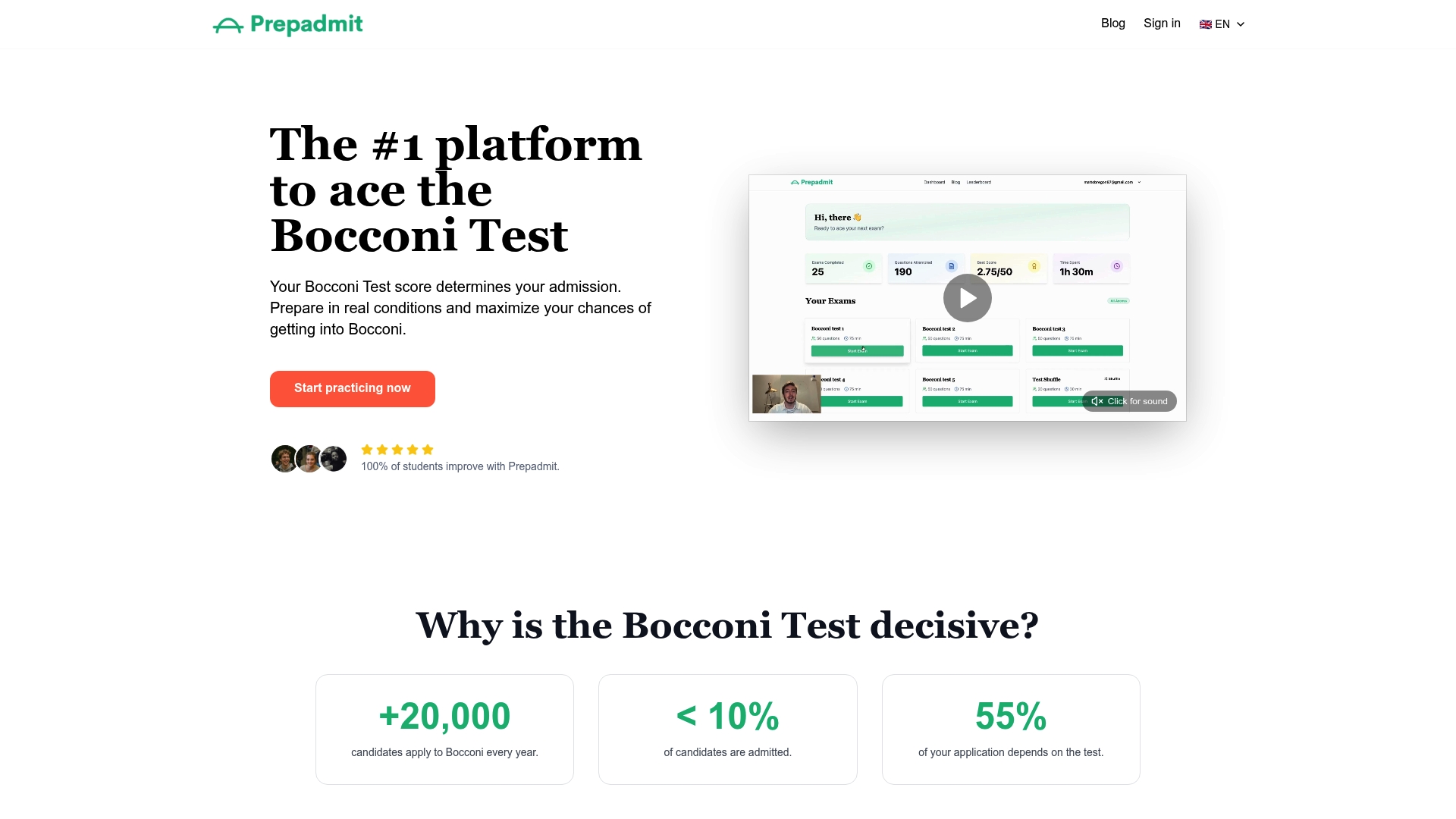
Students using Prepadmit report an average score improvement of 34%, which reflects what happens when preparation is structured, tracked, and repeated. The platform’s leaderboard and progress tracking add a motivation layer that keeps practice consistent across weeks, not just days. If you are preparing for the Bocconi Test and want a preparation system that replaces guesswork with a documented track record, Prepadmit’s practice platform gives you the tools to build confidence that holds up on test day.
FAQ
What is exam confidence building?
Exam confidence building is the process of developing genuine preparedness and emotional control through active study methods, physiological regulation, and mindset management. It produces confidence grounded in competence, not optimism.
How long does it take to build exam confidence?
A structured preparation cycle of four to six weeks, including weekly mock exams and daily retrieval practice, is enough to build a reliable track record. Confidence grows as your documented evidence of competence accumulates.
Does nervousness mean I am not confident?
Modest nervousness before an exam is normal and useful. Effective exam confidence transforms anxiety into heightened alertness rather than eliminating nerves entirely. The goal is to channel nervousness, not remove it.
What is the fastest way to calm down during an exam?
The 5-4-3-2-1 grounding method and box breathing are the fastest physiological interventions. Thirty seconds of sensory focus or four rounds of box breathing can restore productive focus within minutes.
How do mock exams improve confidence?
Repeated mock exams make the exam environment familiar, which lowers the nervous system’s threat response. Students who sit multiple timed practice tests before the real exam are far less likely to experience panic because the situation no longer feels unknown.
Recommended
Related articles
Ready to ace your admission test?
Discover PrepAdmit, the platform that helps you succeed at top university admission tests.
Discover PrepAdmit