Student Budget Exam Prep: A Practical 2026 Guide

Student Budget Exam Prep: A Practical 2026 Guide
Student budget exam prep is the process of planning and managing your exam preparation expenses so that studying stays both effective and affordable. Most students underestimate the full cost of getting ready for a high-stakes test. Registration fees, prep materials, tutoring, travel, and retakes can push a single exam cycle well past $1,000 if you go in without a plan. Programs like College Board SAT fee waivers, the AAMC Fee Assistance Program, and platforms like Kaplan show that structured financial planning, not just hard studying, separates students who reach their target scores from those who run out of money before they get there. This guide breaks down every cost category, shows you where to cut spending without cutting quality, and gives you a tiered framework you can apply today.
What are the typical costs in a student exam preparation budget?
A student exam preparation budget covers six main categories: registration fees, prep materials, tutoring, practice tests, travel and logistics, and retakes. Each category carries a wide cost range depending on the exam and how much support you need.
| Budget Line | Low Estimate | Mid Estimate | High Estimate |
|---|---|---|---|
| Registration fee | $0 (waived) | $60 (SAT) | $355 (MCAT) |
| Prep books and apps | $0 (library/free) | $50–$100 | $200–$400 |
| Online course or subscription | $0 | $100–$200 | $500–$2,000 |
| Private tutoring | $0 | $200–$400 | $1,000+ |
| Practice tests | $0 | $30–$60 | $150+ |
| Travel and test-day logistics | $10 | $50–$100 | $200+ |
| Retake fees | $0 (waived) | $60–$100 | $355 |
The SAT costs $60 per registration, while the MCAT runs $355 per attempt. That gap matters when you are building a realistic exam prep budgeting strategy. A typical mid-level SAT budget totals roughly $900 for one prep and test round. That figure represents the middle ground between going fully free and hiring a private tutor for every session.

Variability by exam type is real and significant. SAT prep materials are widely available for free through Khan Academy. MCAT prep, by contrast, often requires paid question banks, AAMC practice tests, and content review books that together can exceed $500 before you add a single tutoring hour. Knowing your exam’s cost profile before you spend a dollar is the first move in smart budgeting for students.
Score reporting and sending scores to colleges adds another layer of cost that most students forget. The SAT charges per score send after the first four free reports. Build this into your budget from day one.
How can students reduce exam prep costs using fee waivers and assistance programs?
Fee waivers are the single most powerful tool in cost-effective exam prep, and most eligible students never apply for them. The programs below remove or dramatically reduce the largest line items in your budget.
College Board SAT fee waivers cover registration costs entirely for eligible students. SAT fee waivers apply to 11th- and 12th-grade students who receive public assistance, are enrolled in Federal TRIO programs, or meet other income-based criteria. You request the waiver through your school counselor, not directly from College Board. This means the earlier you talk to your counselor, the better your chances of getting the paperwork done before registration deadlines.
The AAMC Fee Assistance Program is the equivalent tool for pre-med students. It reduces MCAT registration from $355 to $145 and waives AMCAS application fees worth roughly $1,068. It also unlocks free official MCAT prep materials. Combined, these benefits remove thousands of dollars from the cost of applying to medical school. Kaplan’s Fee Assistance Program adds up to 60% off MCAT courses for students already approved by AAMC’s FAP, stacking discounts on top of the original reduction.
Here is what to do to access these programs:
- Contact your school counselor in September or October of your junior year for SAT waivers.
- Apply to AAMC FAP at least two months before your planned MCAT registration date.
- Check whether your state offers additional test fee assistance through its education department.
- Ask your college financial aid office whether prep costs can be added to your Cost of Attendance estimate.
Pro Tip: Combining a fee waiver with free prep resources like Khan Academy for the SAT or AAMC’s free materials for the MCAT can bring your total exam prep cost to near zero. Apply for the waiver first, then build your study plan around what is free.
Fee waivers not only cut registration costs. When combined with free resources, they effectively remove the two largest financial barriers to exam prep at once.
What tiered budget strategies help students plan cost-effective exam preparation?
A tiered approach to exam prep budgeting means you start with free resources and only spend money when your performance data tells you that you need to. This is the most disciplined and efficient model for students managing limited funds.
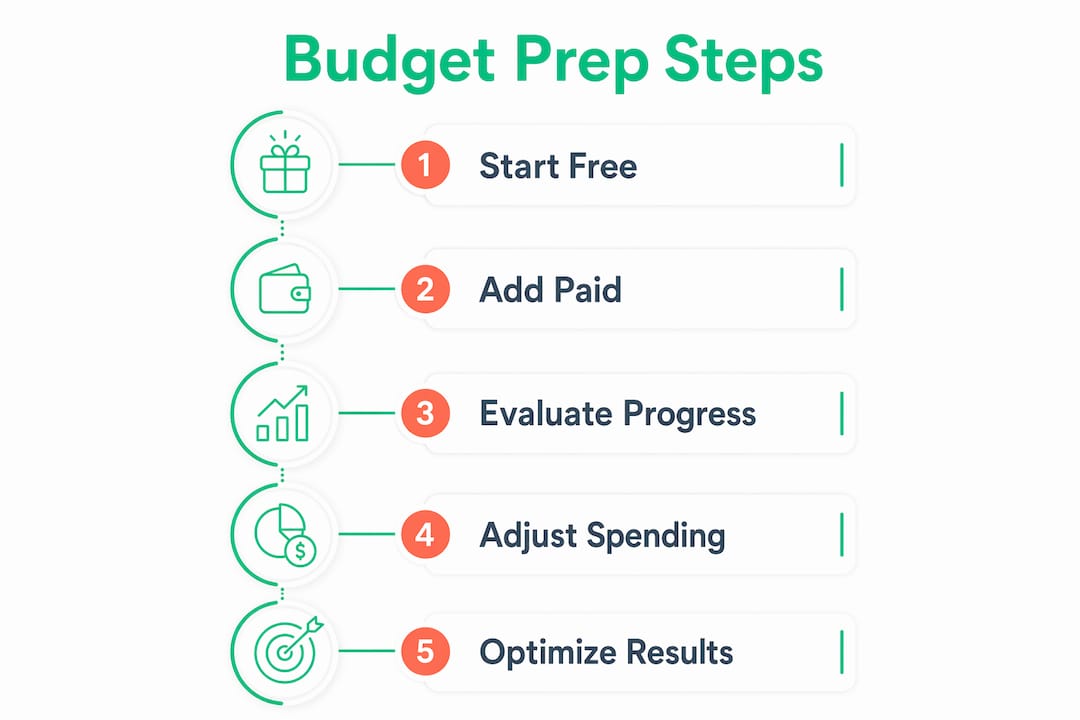
The MCAT on a budget model from JackWestin illustrates this well. It assumes 15 to 20 hours of study per week over three months and escalates spending in stages based on diagnostic results. The same logic applies to any standardized test.
Follow these steps to build your own tiered budget:
- Take a free diagnostic test. Use official free materials: College Board’s free SAT practice tests, AAMC’s free MCAT sample, or your exam’s official free resources. Your baseline score tells you exactly where your gaps are.
- Build a free study plan first. Khan Academy for the SAT, JackWestin’s free MCAT content, and official prep guides from test makers cost nothing. Spend four to six weeks here before buying anything.
- Add low-cost subscriptions only if needed. If your diagnostic shows specific content gaps, a $20 to $50 monthly subscription to a targeted question bank addresses the problem without a large upfront cost.
- Consider a structured course if self-study stalls. Online courses from reputable providers run $100 to $500 and work well for students who need structure. Commit to one only after free resources have been exhausted.
- Reserve tutoring as a last resort. Private tutoring is the most expensive option and the most effective for targeted gaps. Use it surgically, not as a default.
A staged budget approach allows you to adjust spending dynamically based on performance data rather than guessing upfront. This prevents the common mistake of spending $2,000 on a full prep course before knowing whether you actually need it.
Pro Tip: Set a spending trigger before you start. For example: “If my practice score is within 10% of my target after six weeks of free prep, I will not buy a course.” This removes emotion from the spending decision and keeps your budget exam prep plan on track.
Understanding the advantages of on-demand prep is especially useful at the mid-tier stage, where flexibility and cost control matter most.
What common budgeting pitfalls should students avoid when preparing for exams?
Most exam prep budgets fail not because students spend too much on books, but because they forget entire cost categories. These are the mistakes that cause financial stress mid-prep.
- Ignoring retake costs. A second attempt at the MCAT costs another $355. A second SAT costs another $60. Students who do not budget for retakes often scramble to find money at the worst possible time.
- Skipping travel and logistics. Test centers are not always nearby. Gas, parking, a hotel the night before, and food on test day add up. Retake and travel expenses are consistently underestimated and cause last-minute stress.
- Assuming financial aid covers prep costs. Federal Cost of Attendance guidelines exclude most test prep class costs from eligible aid categories. Do not plan your budget assuming your aid package will cover a Kaplan course.
- Buying generic materials without diagnosing gaps first. A $400 prep book set that covers material you already know is wasted money. Diagnostics first, purchases second.
- No contingency fund. Illness, a rescheduled test date, or a last-minute tutoring session all cost money. A contingency fund of $100 to $200 prevents these surprises from derailing your plan.
Budget prep works best for self-motivated students with clear content gaps. If you struggle with accountability or have major knowledge deficits, investing in structured guidance early is more cost-effective than repeating the exam multiple times.
COA financial aid limits can create misunderstandings about what prep expenses are covered. Strategic planning around these categories is necessary for realistic budgeting.
How can students practically apply budget exam prep principles for success?
Applying smart budgeting for students means turning the framework above into a written, trackable plan before you spend a single dollar. Here is how to do it.
Pro Tip: Create a simple spreadsheet with five columns: expense category, estimated cost, actual cost, date paid, and notes. Update it weekly. Students who track spending in real time are far less likely to overspend or forget a cost category.
Start by drafting your personal exam prep budget worksheet. List every category from the table in Section 2, fill in your best estimates, and mark which items you can cover with fee waivers or free resources. This takes 30 minutes and gives you a clear picture of your total exposure.
| Approach | Free Resources | Paid Resources |
|---|---|---|
| SAT prep | Khan Academy, College Board practice tests | Prep books, tutoring sessions |
| MCAT prep | AAMC free sample, JackWestin free content | Question banks, structured courses |
| Bocconi Test prep | Official past papers, free practice sets | Prepadmit platform, on-demand tests |
Track your spending and your scores together. If your score is improving on free resources, do not add paid tools. If progress stalls after four weeks, that is your signal to move to the next tier. The role of mock exams in tracking real progress is well documented. Regular practice tests tell you whether your current budget allocation is working.
Talk to your school counselor or college financial aid office early. They often know about local scholarships, state programs, or institutional resources that cover exam costs. Early planning also gives you time to apply for fee waivers before deadlines close. Students who leverage federal aid strategies alongside free prep resources consistently reduce their total exam costs without reducing preparation quality.
Key takeaways
Effective student budget exam prep requires a tiered spending plan, proactive use of fee waivers, and a separate contingency fund for retakes and logistics.
| Point | Details |
|---|---|
| Define your full cost picture | Include registration, materials, travel, retakes, and score reporting before spending anything. |
| Use fee waivers first | College Board and AAMC programs can reduce costs to near zero for eligible students. |
| Start free, escalate carefully | Begin with official free diagnostics and resources before committing to paid courses or tutoring. |
| Avoid COA assumptions | Federal financial aid rarely covers test prep classes; plan your budget independently of aid packages. |
| Track spending and scores together | If free resources are moving your score, do not add paid tools until progress stalls. |
Why budget clarity changed how I think about exam prep
Most students treat exam prep as a study problem. I think it is equally a financial planning problem, and the two are harder to separate than anyone admits. When you do not know what you are going to spend, you either overspend out of anxiety or underspend out of denial. Both hurt your score.
The students I have seen struggle most are not the ones who could not afford prep. They are the ones who spent money in the wrong order. They bought a $500 course before taking a single diagnostic. They hired a tutor for general review instead of targeting a specific weak area. They forgot to budget for a retake and then could not afford one when they needed it.
Budget clarity does something that no study guide can do. It removes the background stress of financial uncertainty so you can focus on the actual work. Knowing you have a contingency fund, knowing your fee waiver is approved, knowing your spending is tracked: these things free up mental space that goes directly into studying.
My honest advice is to spend one hour on your budget before you spend one hour on prep materials. That hour will save you more money and more stress than any shortcut you find later.
— quentin
Prepare smarter with Prepadmit
If you are preparing for the Bocconi Test, Prepadmit gives you a cost-effective path to a competitive score without the price tag of private coaching. The platform was built by experts from HEC and Bocconi and delivers official past papers, on-demand practice tests, detailed answer corrections, and peer ranking, all at a fraction of what a tutor would cost. Students using Prepadmit see an average score improvement of 34%, and the platform backs that with a money-back guarantee.
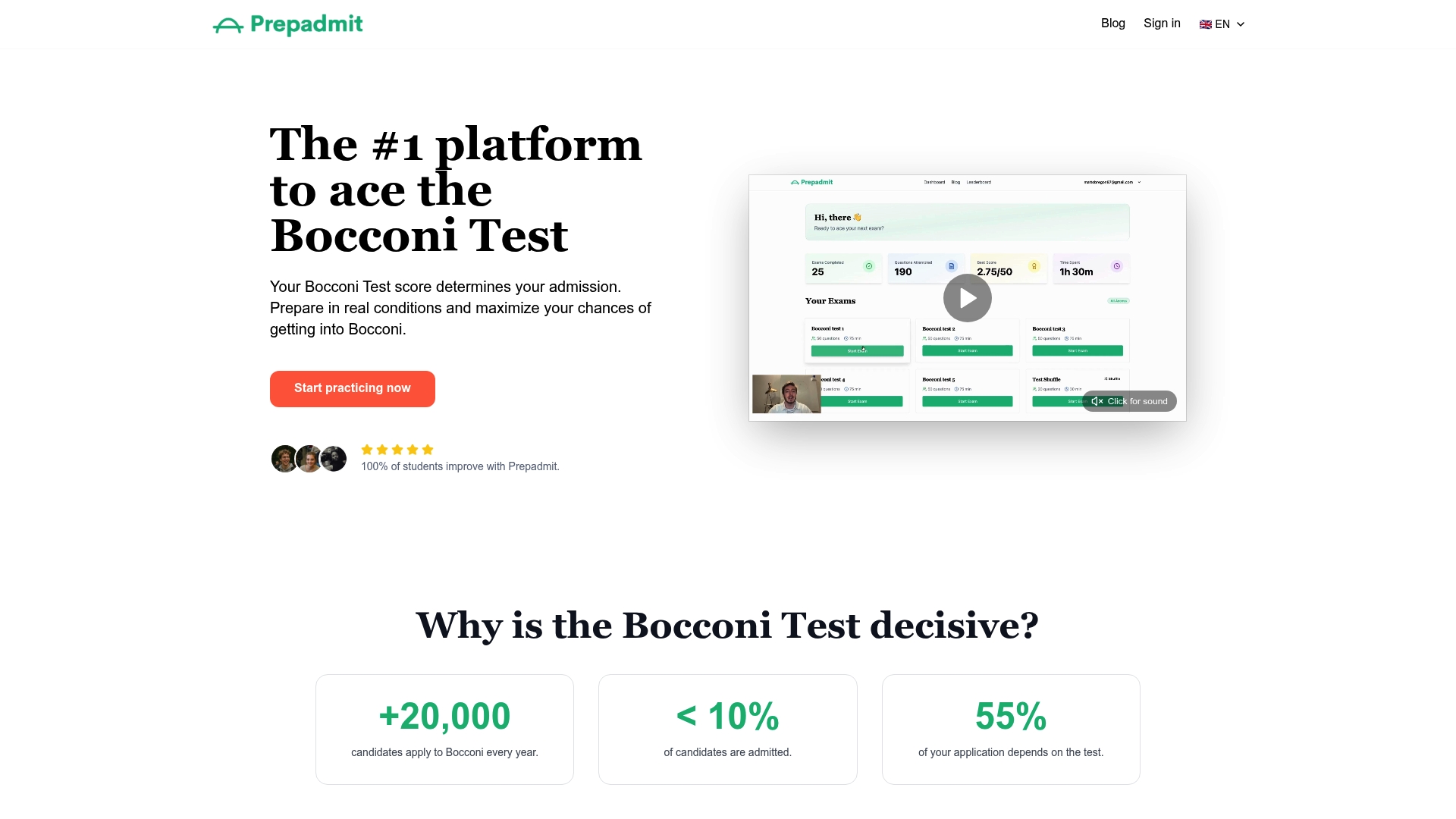
You get the structure of a full prep course and the flexibility of self-paced study, which fits directly into a tiered budget strategy. Start with the free resources, track your progress, and use Prepadmit to close the gaps that matter most. Visit Prepadmit to explore the platform and see which plan fits your budget and timeline.
FAQ
What is student budget exam prep?
Student budget exam prep is the practice of planning and managing all costs associated with standardized test preparation, including registration, materials, tutoring, and retakes, to keep spending affordable without sacrificing score outcomes.
What should I include in a study budget for exams?
A complete exam study budget includes registration fees, prep books or apps, online courses or subscriptions, tutoring, practice test costs, travel and test-day logistics, score reporting fees, and a contingency fund for retakes.
How do I qualify for SAT or MCAT fee waivers?
SAT fee waivers are available to eligible 11th- and 12th-grade students through their school counselors. The AAMC Fee Assistance Program covers MCAT registration reductions and free prep materials for income-eligible pre-med students.
Does financial aid cover exam prep costs?
Federal financial aid’s Cost of Attendance typically excludes test prep classes from eligible expenses. Students should budget for prep costs separately and not assume their aid package will cover them.
How much should a student budget for exam prep?
A mid-level budget for one SAT prep and test round runs roughly $900. MCAT prep can range from under $200 using free resources and fee waivers to over $2,000 with full courses and private tutoring. Starting with free resources and choosing prep tools wisely keeps most students well under the high-end estimate.
Recommended
Related articles
Ready to ace your admission test?
Discover PrepAdmit, the platform that helps you succeed at top university admission tests.
Discover PrepAdmit