Bocconi English-Taught Programs: What You Need to Know

Bocconi English-Taught Programs: What You Need to Know
If you’ve been researching Bocconi University and wondering whether you can study there without speaking Italian, you’re not alone. Understanding what is Bocconi English-taught programs means matters before you invest months into an application. Bocconi, based in Milan, is one of Europe’s top universities for economics, management, finance, and social sciences. The good news is that most programs are fully available in English, designed specifically for international students. This guide covers what those programs actually look like, what the admission process requires, and what your daily academic life would feel like once you get in.
Table of Contents
- Key Takeaways
- What Bocconi English-Taught Programs Actually Offer
- How the Bachelor curriculum is structured
- Admissions requirements and the application process
- Student life and the campus experience
- My honest take on preparing for Bocconi’s English programs
- How Prepadmit can help you get into Bocconi
- FAQ
Key Takeaways
| Point | Details |
|---|---|
| Full English instruction available | Bocconi offers both undergraduate and graduate degrees taught entirely in English, no Italian required to enroll. |
| Competitive international admissions | Seats are split evenly between Italian and international students, making each pool highly selective. |
| Second language still required | Even in English programs, all Bachelor students must study an additional foreign language to graduate. |
| Bocconi Test matters for undergrads | Undergraduate applicants need strong entrance exam scores, including the Bocconi Test or SAT/ACT results. |
| Career-focused global environment | About 50% of students in English classes are international, creating a genuinely global learning experience. |
What Bocconi English-Taught Programs Actually Offer
Bocconi’s undergraduate and graduate programs in English span a wide range of disciplines. You are not limited to one or two niche tracks. The breadth is one of the things that surprises most prospective students.
At the undergraduate level, Bocconi offers Bachelor of Science degrees that typically run three years. These cover areas like economics, management, finance, international politics and government, law, data science, and philosophy combined with politics and economics. Each of these is taught entirely in English. You do not need Italian to attend lectures, complete assignments, or pass exams.
At the graduate level, the options expand further. Master programs, which run two years, include disciplines like finance, marketing management, data science and business analytics, accounting, and international management. Many of these are among the most sought-after in Europe.
Bocconi also offers something less common among European universities: genuinely interdisciplinary programs. For example, some tracks combine business with arts and cultural management, or law with economics. These are not surface-level combinations. The curricula actually integrate methods and frameworks from multiple fields.
At the postgraduate level, SDA Bocconi School of Management was ranked number one worldwide for tailor-made corporate programs in the 2026 Financial Times ranking. That kind of recognition signals the caliber of education you would access at the graduate level.
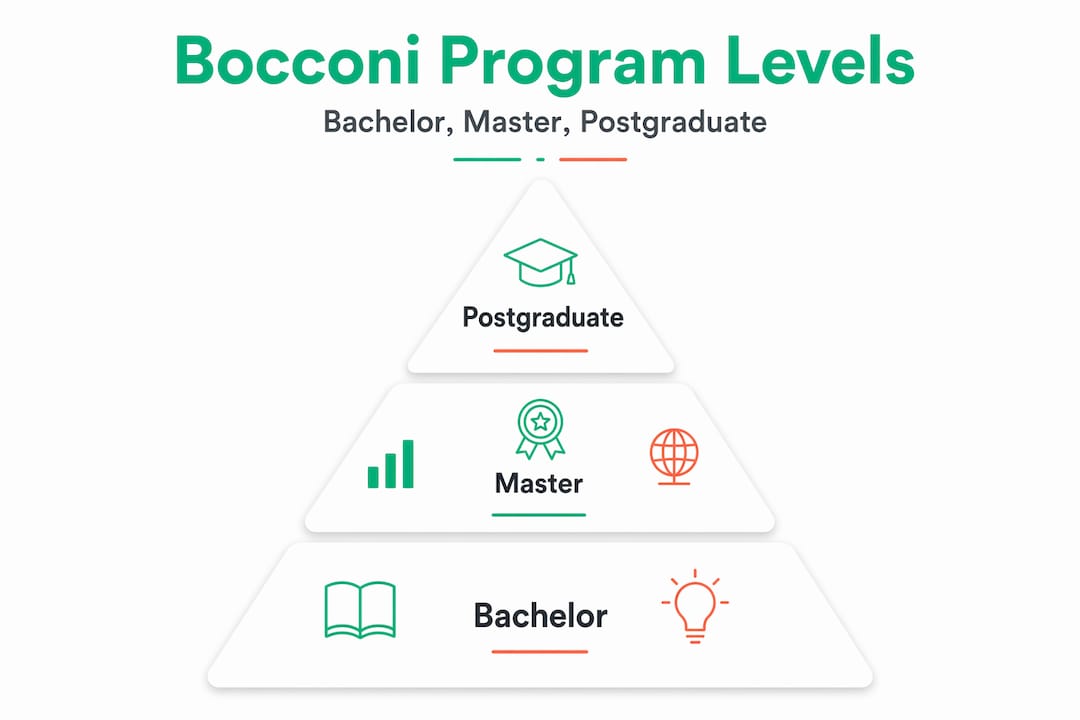
Here is a quick comparison to orient you:
| Level | Duration | Example Programs |
|---|---|---|
| Bachelor of Science | 3 years | Economics, Finance, Management, Law, Data Science |
| Master of Science | 2 years | Finance, Marketing Management, Business Analytics |
| SDA Corporate Programs | Varies | Executive education, custom company programs |
How the Bachelor curriculum is structured
Knowing a program exists in English is one thing. Knowing what you will actually do day to day is another. Bocconi’s BSc curriculum structure follows a clear three-phase progression:
- Year one. You take foundational courses in your chosen field along with compulsory subjects like mathematics, statistics, and computer science. These are not light introductions. They are designed to build serious analytical foundations from the start.
- Year two. You move into more specialized courses within your major. The difficulty increases. You begin connecting theory to real-world cases. Group projects and presentations become more common.
- Year three. You choose electives to deepen your specialization or explore related fields. You may also complete a thesis or a capstone project. This is where your academic identity takes shape.
Beyond content knowledge, Bocconi builds skills that many universities treat as optional extras. These include soft skills seminars, quantitative reasoning workshops, and digital literacy training. Every student, regardless of their track, is expected to be comfortable working with data.
One requirement surprises many applicants: English instruction does not exempt you from learning a second foreign language. All Bachelor students must achieve proficiency in an additional language as a graduation requirement. Most students choose Italian, which is a practical choice given that you will be living in Milan. Others choose French, Spanish, German, or Chinese.
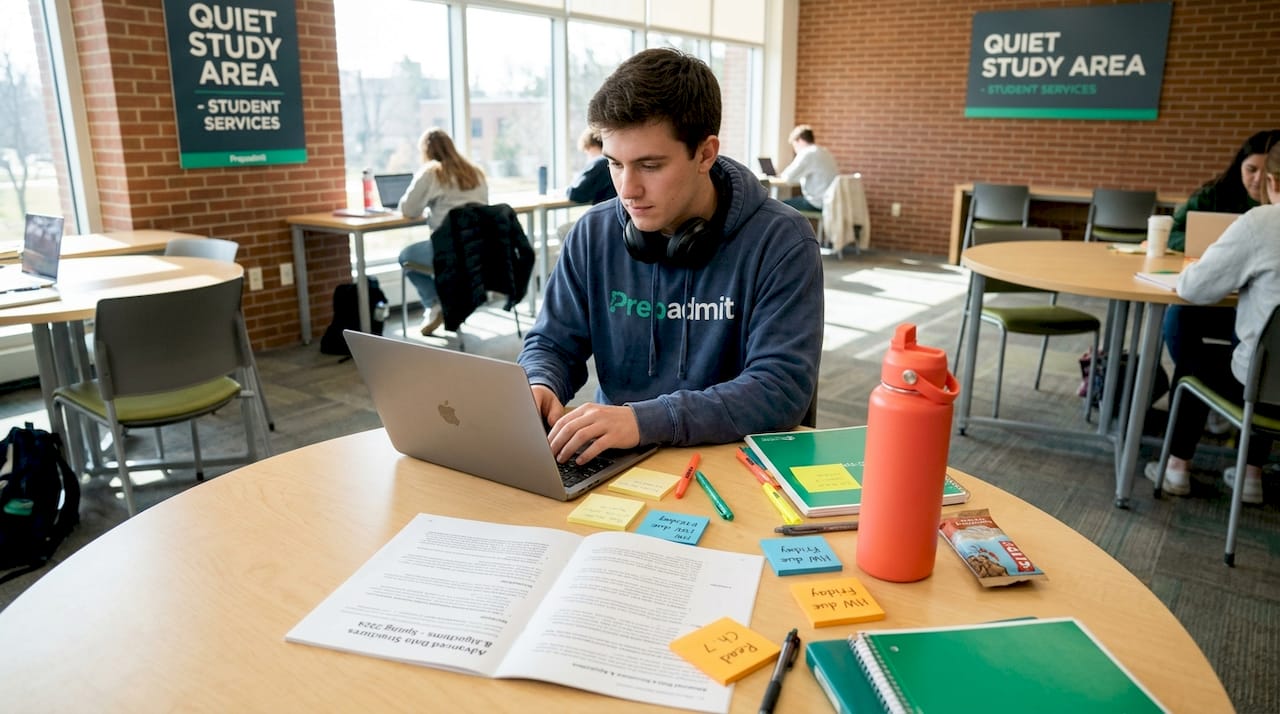
The curriculum also emphasizes active participation and experiential learning, combining law, business, and digital technologies. Passive learning is not the norm here. Expect case studies, guest lectures, and hands-on projects from the first semester.
Pro Tip: If you want to enroll and immediately feel at ease in Milan, start learning basic Italian before your arrival. You will not need it for class, but you will need it for everyday life, and your language requirement will feel far less stressful.
Admissions requirements and the application process
Getting accepted to Bocconi is genuinely competitive. Understanding the process clearly gives you a real advantage over applicants who treat it as a guessing game.
For international students applying to English-taught programs, the key requirements include:
- English proficiency test scores. Accepted tests include IELTS, TOEFL iBT, PTE Academic, and Duolingo English Test. Minimum score thresholds vary by program and must be confirmed on the Bocconi website for each cycle.
- Bocconi Test or standardized test results. Undergraduate applicants are evaluated using the Bocconi Test, which assesses mathematical reasoning, critical thinking, and reading comprehension. SAT or ACT scores may also be submitted. Knowing the Bocconi application process including test advantages and deadlines is critical before you begin.
- Academic records. Your high school grades and any additional transcripts are reviewed. Strong academic performance across core subjects strengthens your application significantly.
- Motivation letter and supporting documents. Some programs require a letter explaining your interest and goals. These are reviewed seriously and should not be treated as formalities.
One detail that catches many international applicants off guard: Bocconi splits available seats equally between Italian and international students. This means you are competing only against other international applicants for roughly half the spots. The competition within that pool is intense. Strong academic records and excellent test scores are non-negotiable.
Also worth noting: international students must obtain a student visa and health insurance to study in Italy. Most programs have no Italian language pre-requisite for enrollment, which simplifies things considerably.
Pro Tip: Start your Bocconi Test preparation at least three to four months before your application deadline. The quantitative sections can be challenging even for strong math students, and familiarity with the format matters as much as raw ability.
Student life and the campus experience
Academics aside, understanding what life looks like inside Bocconi’s English-taught programs helps you decide if the environment fits your personality and goals.
About 50% of students in English-taught classes are international. This is not a marketing claim. It reflects a deliberate policy to create a genuinely global classroom. Your peers will come from across Europe, Asia, the Americas, and beyond. The diversity of perspectives in seminars and group projects reflects that.
What does the campus atmosphere actually feel like? A few things stand out:
- High academic pressure. Bocconi is best suited for students who can handle a demanding, rigorous environment with a global cohort. Students who coast through high school often find the adjustment significant.
- Career preparation built in. Guest lecturers from the business community appear regularly. Career services are active and well-connected to European and global employers.
- Study abroad options. Students can access exchange programs with partner universities worldwide, expanding both their professional networks and their global perspective.
- Milan as your backdrop. The city is a major European hub for finance, fashion, design, and technology. Internship and networking opportunities in Milan go far beyond what most university cities can offer.
“The combination of a globally diverse student body, a demanding curriculum, and direct access to the business world through Milan makes Bocconi one of the few places where academic rigor and real-world relevance genuinely reinforce each other.”
If you’re also considering support for Italian language learning during your time there, resources like Italian tutors online can help you meet your second language requirement more efficiently.
My honest take on preparing for Bocconi’s English programs
I’ve worked with a lot of students who want to study at Bocconi, and the most common mistake I see is treating English fluency as the main obstacle. It’s not. Most international applicants are perfectly capable in English. What trips people up is the combination of quantitative intensity and competitive pressure happening at the same time.
In my experience, students who do well at Bocconi share one quality: they are genuinely comfortable being pushed. The curriculum is not forgiving in the way that some universities are. If you miss a concept in week two, it compounds by week six. That’s not a criticism of the university. It’s how serious academic programs work.
What I tell every aspiring Bocconi student is this: your preparation should not stop at getting accepted. It should build the habits you need to survive the first semester. That means practicing quantitative reasoning regularly, not just before the entrance test. It means being honest with yourself about whether you enjoy analytical thinking or just tolerate it.
The international community at Bocconi is one of its genuine strengths. I’ve seen students arrive uncertain and leave with networks that span four continents. But that only happens if you engage. Passively attending class in a global university wastes the most valuable part of the experience.
The role of mock exams in test success for Bocconi applicants is something I feel strongly about. Realistic practice under timed conditions changes your performance in ways that reading study guides simply does not. I’ve seen this work consistently.
— quentin
How Prepadmit can help you get into Bocconi
Getting accepted to Bocconi requires more than good grades. The Bocconi Test is a real obstacle, and most students underestimate how much targeted preparation changes their score.
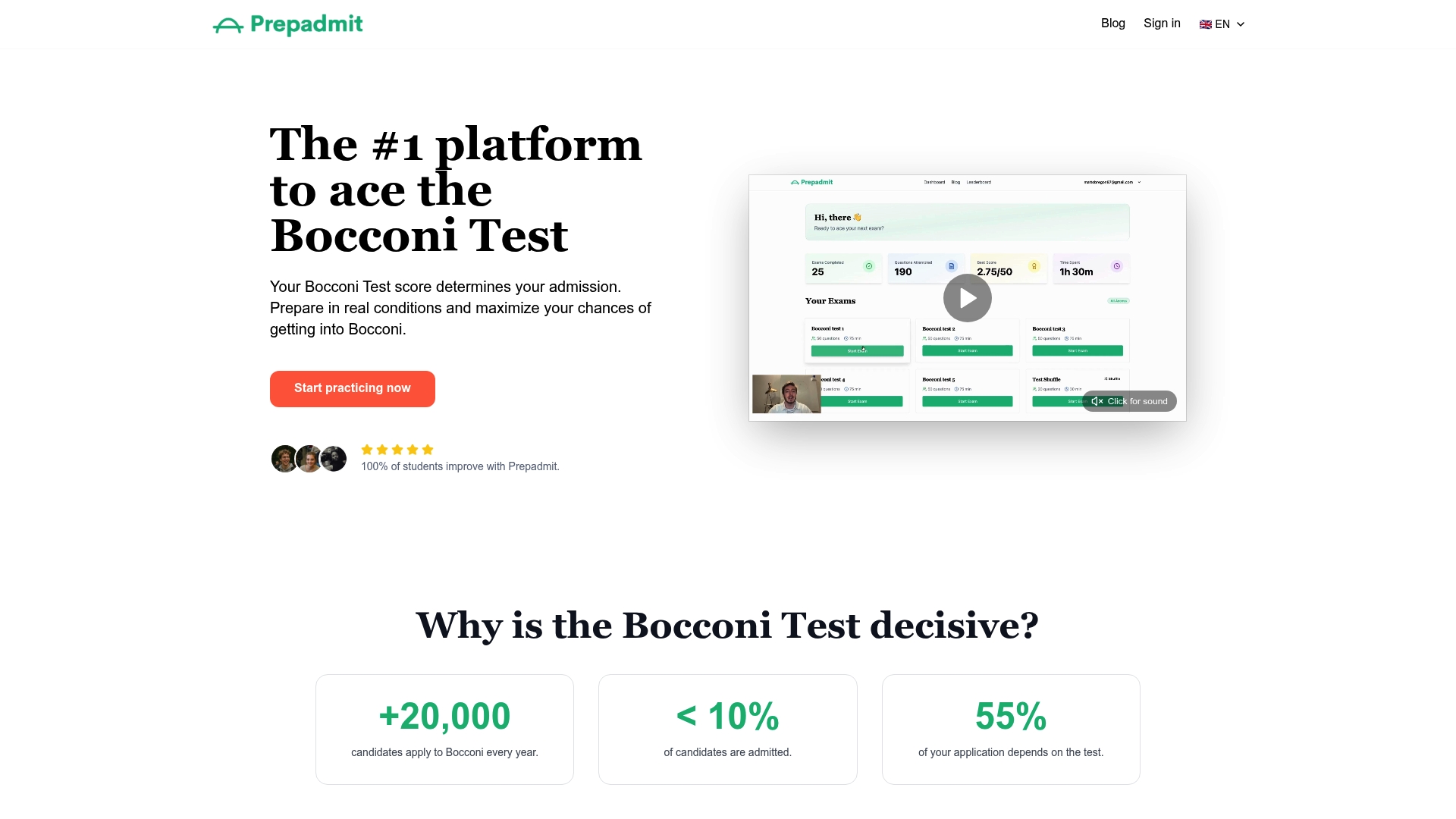
Prepadmit was built specifically for this challenge. The platform offers mock exams based on official past papers, on-demand practice tests, detailed answer corrections, and skill-specific training modes. You can track your progress over time and see exactly where you need to improve. The average score improvement among Prepadmit users is 34%, and the platform comes with a money-back guarantee.
If you are serious about studying at Bocconi, start your Bocconi Test prep with Prepadmit today. It’s the most cost-effective way to close the gap between where you are now and where you need to be on exam day.
FAQ
What is Bocconi’s English-taught program list?
Bocconi offers fully English-taught Bachelor of Science and Master of Science programs in fields including economics, management, finance, data science, law, and international politics. Both undergraduate and graduate degrees are available entirely in English.
Do I need to speak Italian to study at Bocconi?
No. Most programs have no Italian language requirement for admission. However, all Bachelor students must learn a second foreign language, and many choose Italian since they live in Milan.
What English tests does Bocconi accept for admission?
Bocconi accepts IELTS, TOEFL iBT, PTE Academic, and the Duolingo English Test. Minimum score requirements vary by program and must be checked for each application cycle.
How competitive is Bocconi for international applicants?
Very competitive. Bocconi splits seats evenly between Italian and international students, so international applicants compete in their own pool for roughly half the available places. Strong grades and high test scores are both required.
Does the Bocconi Test affect English-program admissions?
Yes. The Bocconi Test is a core component of undergraduate admissions and covers mathematical reasoning, critical thinking, and reading comprehension. SAT and ACT scores may also be submitted as alternatives.
Recommended
Related articles
Ready to ace your admission test?
Discover PrepAdmit, the platform that helps you succeed at top university admission tests.
Discover PrepAdmit