Why Admission Test Preparation Matters for Students

Why Admission Test Preparation Matters for Students
Admission test preparation is the focused process of improving your readiness and performance on standardized college entrance exams through practice, strategy, and targeted study. The SAT and ACT are not just hoops to jump through. They are signals that admissions offices use to predict your academic success, and standardized test scores carry more predictive weight for first-year college GPA than high school grades alone. Understanding why admission test preparation matters gives you a concrete advantage before you ever sit down on test day.
How do admission tests function as academic readiness indicators?
Standardized tests like the SAT and ACT serve as equalizing metrics across thousands of high schools with different grading standards, course rigor, and teacher expectations. A 4.0 GPA from one school may mean something very different from a 4.0 at another. Test scores cut through that variability.
Research from the Overdeck Family Foundation confirms just how much weight scores carry. The GPA difference between students with perfect SAT scores and those with moderate scores is 0.47 points in first-year college performance. By contrast, the GPA difference between a 4.0 and a 3.2 high school student is less than 0.1 points. That gap tells you something important: test scores are a stronger predictor of how you will actually perform in college than your transcript alone.
The College Board’s National SAT Validity Study reinforces this point. Admissions offices do not treat scores as arbitrary numbers. They treat them as research-backed signals of academic readiness, confirmed through collaboration with universities and research institutions. This is why preparing deliberately for these tests is not optional if you are serious about competitive admissions.
The ACT follows the same logic. ACT readiness benchmarks are tied to specific outcomes in first-year college courses, and students who meet those benchmarks show measurably better results. Preparation that pushes your score above those thresholds does not just look better on paper. It reflects a genuine shift in your academic readiness.
| Readiness signal | What it predicts |
|---|---|
| SAT score (high) | 0.47 GPA advantage in first-year college courses |
| High school GPA (4.0 vs 3.2) | Less than 0.1 GPA difference in college performance |
| ACT composite around 20 + Silver NCRC | Readiness identification rises from 33% to 67% |
| WorkKeys Silver NCRC | Recognized by over 6.2 million earners as a career credential |
What makes admission test preparation effective and impactful?
Effective preparation is not about reading textbooks for hours. It is about replicating real test conditions, diagnosing your weak spots, and fixing them before test day.

The College Board is direct on this: full-length practice tests taken under identical timing and conditions reliably predict your actual SAT score. Many official practice test sections have appeared as real SAT sections, which means the difficulty and style match exactly. That predictive accuracy only holds when you treat the practice test like the real thing, including the time pressure.
Here is what separates students who improve from those who plateau:
- Timed, full-length sessions. Skipping the clock removes the single hardest variable on test day. Always time yourself.
- Late-cycle diagnostics. Practice test scores are most useful when taken close to your exam date, not at the start of prep. Early scores label you; late scores calibrate you.
- Section-specific targeting. If your Math score is dragging down your composite, focus study time there rather than reinforcing what you already do well.
- Error review over re-testing. Going back through every wrong answer, understanding why it was wrong, and categorizing the error type builds faster than simply taking another test.
- Consistent scheduling. Short, regular study sessions outperform weekend cramming every time.
Pro Tip: Schedule your final full-length practice test no more than two weeks before your actual exam date. According to College Board guidance, this is when practice scores are most predictive of your real result.
Research from Tiber Tutor on mock exam performance shows that students who complete structured mock exams under realistic conditions consistently outperform those who study passively. The simulation itself is the training.
How do college score policies like superscoring affect preparation strategies?
Superscoring is the practice of combining your best section scores from multiple test dates into a single composite score. Most colleges superscore the SAT, meaning they take your highest Math score from one sitting and your highest Evidence-Based Reading and Writing score from another. The result is a composite that is higher than any single test date produced.
This policy has a direct impact on how you should prepare and when you should retake. According to SAT score policy guidance, some colleges require all scores from every test date, while others only consider the highest sitting or the superscore. Knowing each school’s policy before you register changes your entire strategy.
Here is how to use score policies to your advantage:
- Research every target school’s policy. Check each college’s admissions page for their official score reporting requirement. Do not assume they all superscore.
- Identify your weakest section. If your Math score is significantly lower than your Reading score, a targeted retake focused on Math can raise your superscore without risking your stronger section.
- Plan retakes strategically. If a school superscores, a second attempt focused on one section carries low risk and high reward. If a school sees all scores, consider whether the improvement is worth the exposure.
- Avoid unnecessary retakes. Taking the test four or five times without a focused plan rarely improves results and can raise questions for admissions readers at schools that see all attempts.
Understanding score policies transforms test prep from a generic study grind into a targeted strategy. You are not just preparing for a test. You are preparing for a specific admissions outcome at specific schools.
What broader advantages does test preparation provide beyond test day?
Test prep builds skills and credentials that extend well past the exam itself. The discipline, time management, and analytical thinking you develop during preparation carry directly into college coursework and professional environments.
The ACT WorkKeys assessment is one of the clearest examples of this. WorkKeys measures applied workplace skills, and the National Career Readiness Certificate (NCRC) is awarded to students who meet specific score thresholds. Over 6.2 million individuals have earned the Silver NCRC, and the credential is recognized by employers as a signal of job performance, productivity, and retention potential.
The broader benefits of structured test preparation include:
- Confidence on test day. Students who have completed multiple timed practice sessions report significantly less anxiety during the actual exam.
- Dual pathway recognition. The ACT dual assessment model combines academic and career readiness scores, raising readiness identification from 33% to 67% when both thresholds are met. That is a meaningful jump in how colleges and employers perceive your profile.
- Academic discipline. Consistent study schedules, error analysis, and self-assessment are habits that transfer directly to college coursework.
- Stronger applications overall. A higher test score strengthens every other part of your application by raising the floor of your academic profile.
Pro Tip: If your school offers the ACT WorkKeys alongside the standard ACT, take it seriously. Earning a Silver NCRC alongside a strong ACT composite opens both college and career doors simultaneously.
How can students maximize their admission test preparation outcomes?
Maximizing your prep is less about studying harder and more about studying smarter. The students who see the biggest score gains follow a structured plan, not a frantic last-minute push.
- Start early. Give yourself at least three to four months before your target test date. This allows time for multiple practice cycles, error review, and a realistic retake if needed.
- Use official materials. College Board and ACT both publish free official practice tests. These are the most accurate representations of what you will face on test day.
- Balance your study plan. Spend more time on weak sections, but do not abandon your strong ones entirely. Maintaining your strengths while closing gaps is the fastest path to a higher composite.
- Prioritize sleep and wellness. Fatigue is one of the most underestimated performance variables. A well-rested student consistently outperforms an exhausted one, even with less total study time.
- Track your progress. Use practice test scores, section breakdowns, and error logs to measure improvement over time. Progress tracking keeps you motivated and shows you exactly where to focus next.
- Research your schools early. Knowing your target score range for each college helps you set a realistic goal and decide when you have prepared enough to register.
Platforms like Prepadmit are built specifically around this kind of structured, data-driven preparation, offering mock exams, skill-specific practice, and progress tracking in one place.
Key takeaways
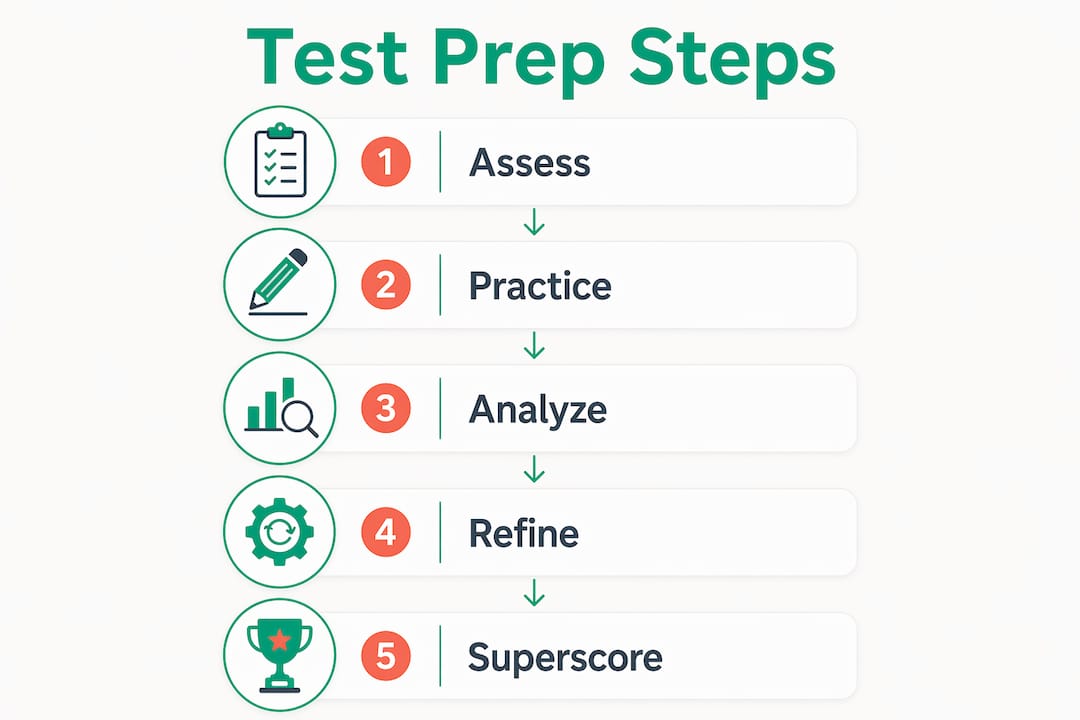
Admission test preparation directly improves scores, strengthens your academic readiness signal, and gives you a strategic edge through score policy knowledge, targeted retakes, and skills that extend into college and career.
| Point | Details |
|---|---|
| Scores outpredict GPA | Standardized test scores show a 0.47 GPA advantage in college, far exceeding the impact of high school grades. |
| Practice tests calibrate readiness | Full-length timed practice tests taken close to exam day are the most accurate predictor of your real score. |
| Superscoring rewards strategy | Researching each college’s score policy lets you target weak sections in retakes and maximize your composite. |
| Dual assessment opens more doors | Combining ACT and WorkKeys scores raises readiness recognition from 33% to 67%, benefiting both college and career paths. |
| Early, structured prep wins | Starting three to four months out with a balanced study plan consistently produces better results than last-minute cramming. |
The case for treating test prep as a long-term investment
Most students I talk to treat test prep as something to get through. They buy a prep book, skim a few chapters, take one practice test, and show up hoping for the best. That approach almost never produces the score they need.
What actually works is treating the test like a skill, not a subject. You do not get better at tennis by reading about it. You get better by playing under match conditions, reviewing your mistakes, and adjusting your technique. The same logic applies here. The students who improve the most are the ones who take realistic, timed practice tests, go back through every error with genuine curiosity, and adjust their study focus based on what the data tells them.
The superscoring insight is one that most students miss entirely. They retake the test without a plan, hoping their overall score goes up. But if you know a school superscores and your Math is the weak section, you can walk into your second attempt focused entirely on Math. That is not luck. That is strategy.
The broader readiness angle also matters more than people realize. The ACT dual assessment model shows that combining academic and career readiness credentials nearly doubles the percentage of students recognized as ready. Test prep is not just about getting into college. It is about demonstrating that you are ready for what comes after.
Start earlier than you think you need to. Use official materials. Track your errors. Know your schools’ score policies. That combination, done consistently, is what separates applicants who get in from those who wonder what went wrong.
— quentin
Start your preparation with Prepadmit
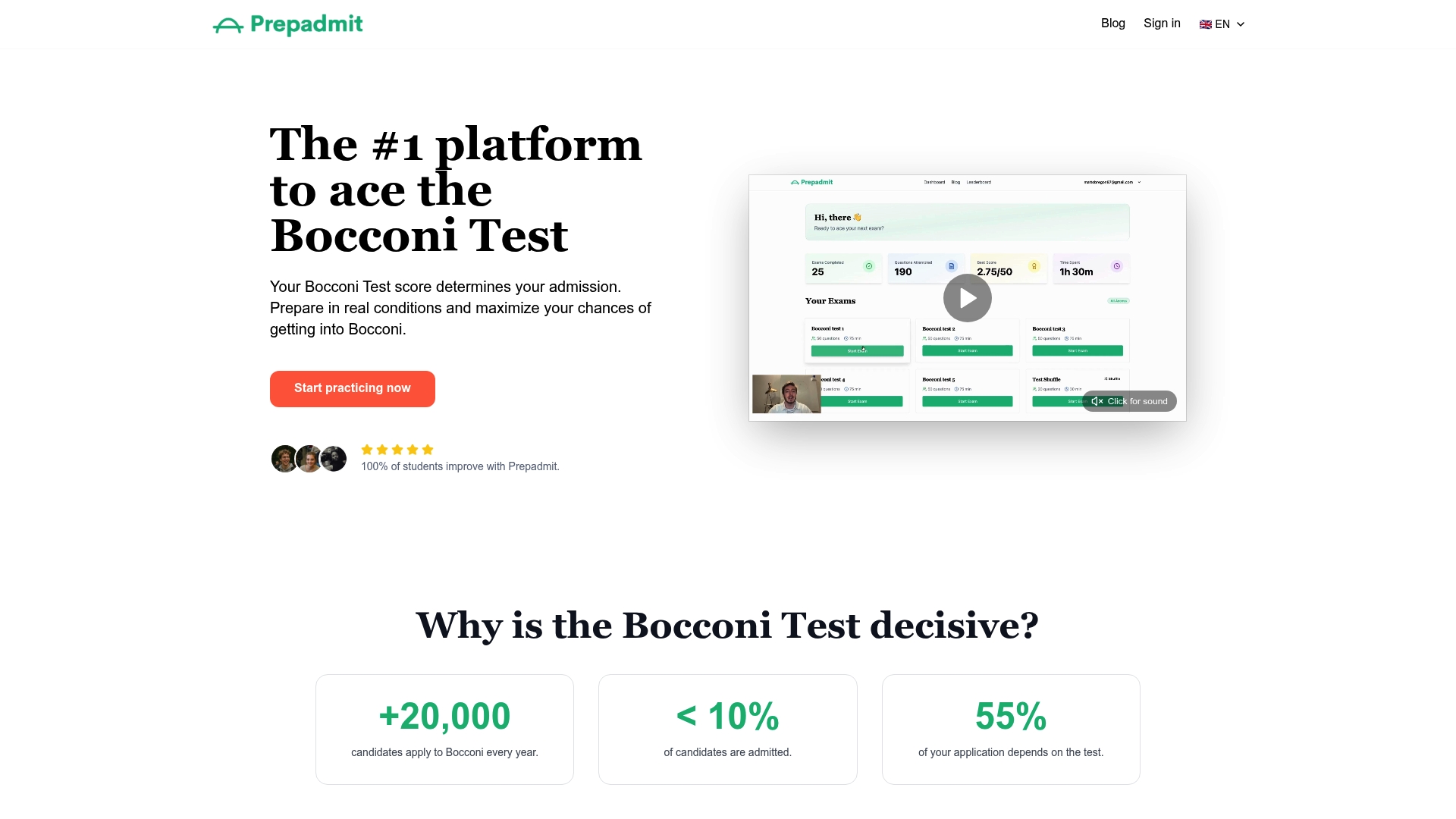
Prepadmit is built for students who want a real edge on competitive admissions tests. The platform offers full mock exams under realistic conditions, skill-specific practice modes, detailed answer corrections, and progress tracking that shows you exactly where you stand. It was developed by experts from HEC and Bocconi University, and students using it see an average score improvement of 34%. At a fraction of the cost of private coaching, it delivers the structured, data-driven preparation that actually moves scores. If you are serious about your admissions outcome, start preparing on Prepadmit today and give yourself the advantage that consistent, targeted practice provides.
FAQ
Why does admission test preparation matter for college applications?
Admission test preparation matters because standardized test scores are among the strongest predictors of first-year college GPA, carrying more weight than high school grades alone. Deliberate prep raises your score, strengthens your academic profile, and signals readiness to admissions offices.
How do practice tests help you prepare for the SAT or ACT?
Full-length practice tests taken under timed, realistic conditions reliably predict your actual exam score, especially when scheduled within two weeks of your test date. They also identify weak sections so you can focus your remaining study time where it counts most.
What is superscoring and how does it affect my prep strategy?
Superscoring combines your best section scores from multiple test dates into a single composite. If your target schools superscore, you can plan retakes around improving one specific section rather than repeating the entire exam without a focused goal.
Can test preparation help with career readiness, not just college admissions?
Yes. The ACT WorkKeys assessment awards the National Career Readiness Certificate to students who meet score thresholds, and over 6.2 million individuals have earned this credential. Combining a strong ACT composite with a Silver NCRC nearly doubles the percentage of students recognized as ready for both college and career.
How early should you start preparing for college entrance exams?
Starting three to four months before your target test date gives you enough time for multiple full-length practice cycles, error review, and a strategic retake if your score does not yet meet your target range.
Recommended
Related articles
Ready to ace your admission test?
Discover PrepAdmit, the platform that helps you succeed at top university admission tests.
Discover PrepAdmit