Types of Bocconi Prep Programs for High Schoolers

Types of Bocconi Prep Programs for High Schoolers
Choosing the right prep strategy for the Bocconi admission test is one of the most consequential decisions you’ll make during your application process. With so many types of Bocconi prep programs available, from free self-study guides to premium one-on-one coaching, picking blindly wastes both time and money. The Bocconi test rewards structured thinking and logic, not rote memorization, which means your prep format matters as much as how hard you study. This article breaks down each program type clearly so you can match your choice to your timeline, budget, and learning style.
Table of Contents
- Key takeaways
- Types of Bocconi prep programs available
- 1. Self-study programs
- 2. Group bootcamps and live online prep sessions
- 3. One-on-one personal coaching
- 4. Online platform prep with on-demand tests
- 5. Free resources and official practice materials
- 6. Hybrid preparation models
- 7. Comparison of Bocconi prep program types
- My honest take on choosing a Bocconi prep program
- How Prepadmit prepares you for every type of Bocconi exam challenge
- FAQ
Key takeaways
| Point | Details |
|---|---|
| Know your starting point | Take a diagnostic before choosing any program to understand your score gaps and study priorities. |
| Match format to your style | Self-study suits disciplined learners; bootcamps add peer support; one-on-one coaching maximizes personalization. |
| Mock tests are non-negotiable | Regular timed practice under real conditions is the single biggest driver of score improvement. |
| Budget shapes your options | Program costs vary widely, so compare features and value before committing to any prep course. |
| Start early for best results | Beginning prep at least six weeks before your test date gives you room to adjust and improve. |
Types of Bocconi prep programs available
Before exploring each program type in detail, you need a clear picture of what separates one option from another. Not all Bocconi prep courses are built the same, and the right choice depends on several factors specific to your situation.
Here are the core criteria to evaluate before you commit:
- Format: Programs fall into three main categories. Self-study, group bootcamps, and one-on-one coaching each deliver a different learning experience and require different levels of discipline from you.
- Test coverage: A strong program covers all Bocconi test question types including logic, verbal comprehension, and numerical reasoning. Partial coverage leaves gaps on exam day.
- Diagnostics and personalization: The best programs start with an assessment. A free diagnostic test gives you an instant score breakdown by category so your study time goes toward your actual weaknesses.
- Practice test access: Mock exams are the backbone of effective prep. Check how many are included and whether feedback explains your mistakes or just marks them wrong.
- Cost and value: Bocconi preparation options range from under €50 to several hundred euros. Price does not always correlate with quality, so read what is actually included.
- Flexibility: Some programs lock you into a fixed weekly schedule. Others let you study when it fits your school workload. Know which model fits your life before signing up.
Pro Tip: Before comparing any programs, write down your test date, your available study hours per week, and your honest self-assessment of discipline. These three facts will immediately narrow your options.
1. Self-study programs
Self-study is the most accessible entry point among all the types of prep courses you’ll find for the Bocconi test. These programs typically combine question banks, worked solution guides, score tracking tools, and practice tests into one package you work through at your own pace.
The appeal is obvious. You control the schedule, the cost is lower than any coached alternative, and you can revisit difficult material as many times as you need. For students who already have strong study habits and roughly three months before their test date, self-study can deliver real results.
That said, the limitations are real too. Without a coach reviewing your work, it is easy to practice incorrectly and reinforce bad habits. You also lose the accountability that comes with a structured program.
- Start with a diagnostic to identify your weakest question categories
- Work through section-specific practice before attempting full timed tests
- Track your scores over time and revisit sections where improvement stalls
- Simulate real conditions by timing yourself strictly during practice tests
Since the Bocconi test rewards logic over memorized content, self-study only works if your materials teach you how to think through problems rather than just what to memorize.
Pro Tip: If you choose self-study, block out one full mock exam every two weeks on your calendar from day one. Treat those dates as fixed. The role of mock exams in building pacing and reducing errors under pressure is too significant to skip.
2. Group bootcamps and live online prep sessions
Group bootcamps occupy the middle ground between self-study and private coaching. They give you structure, live instruction, peer motivation, and regular mock tests without the price tag of personalized coaching.
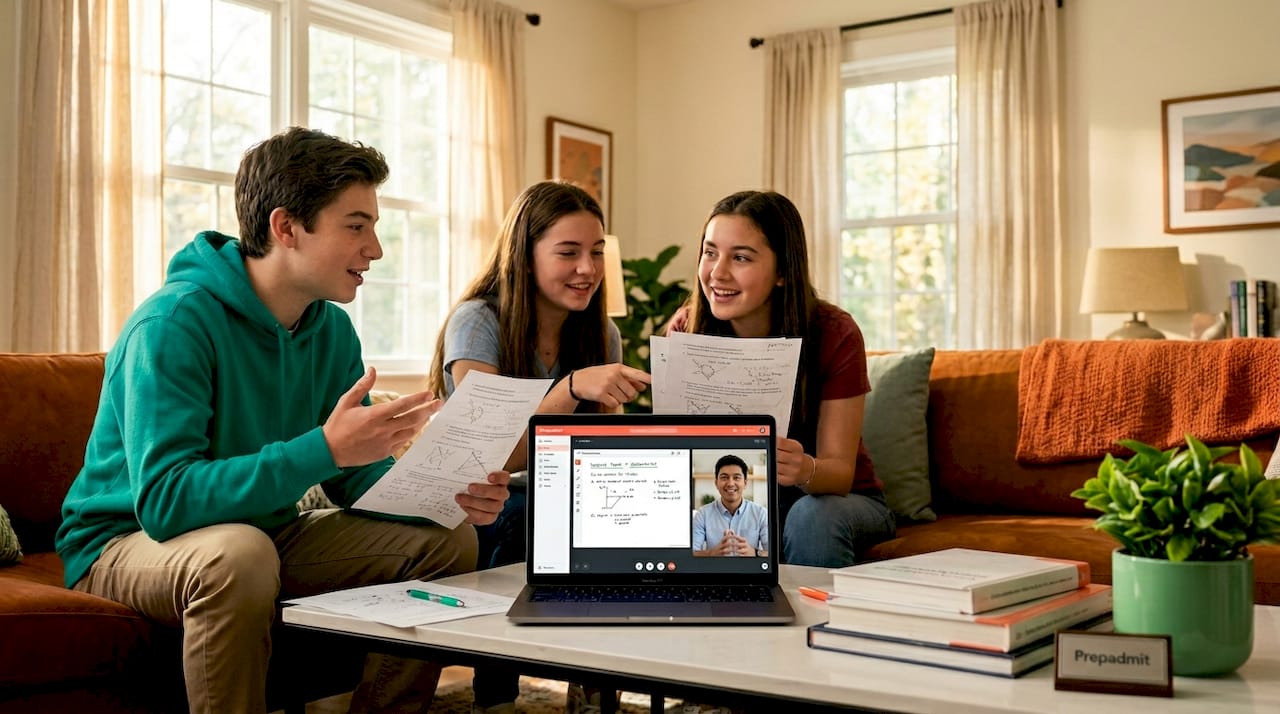
A typical bootcamp runs over six weeks with weekly live coaching sessions focused on Bocconi test question types and strategic problem-solving approaches. Each session builds on the last, and you sit mock exams under timed conditions throughout the course. Coaches review your scores and give you specific feedback on your performance.
The peer environment is genuinely underrated as a prep tool. Watching classmates improve and discuss approaches forces you to engage more critically with the material than solo study typically does.
- Weekly live classes with expert instruction on all major test sections
- Mock exams run under realistic timed conditions with score feedback
- Peer cohort for motivation and shared problem-solving discussions
- Fixed schedule provides structure for students who struggle with self-pacing
The main limitation is personalization. A coach running a group session cannot redesign your study plan based on your individual diagnostic results. If you have specific weak areas that need heavy attention, a bootcamp may not allocate enough time to them.
Bootcamps are the best balance of support, structure, and cost for most high school applicants who have six or more weeks before their test and want more than self-study materials provide.
3. One-on-one personal coaching
Personal coaching is the most intensive Bocconi admission prep available and comes with a price that reflects it. Every session is built around your diagnostic results, your most recent mock test scores, and the specific patterns of errors you keep making.
VIP one-on-one coaching typically includes eight or more hours of sessions, a study plan that adjusts after every meeting, unlimited mock test feedback, direct communication with your coach between sessions, and in many cases guidance on the broader university application. That last point matters if you are applying to Bocconi from outside Italy and need support navigating the full process.
The value is straightforward. You are not sharing a coach’s attention with eleven other students. When you make a consistent mistake in logic questions, your coach spots it and corrects it immediately. Progress tends to be faster than any other format.
- Personalized study plan adjusted after every session based on your latest results
- Direct coach communication via messaging for questions between sessions
- Unlimited mock test feedback with detailed error analysis
- University application guidance alongside test prep
- Fastest route to score improvement for students with limited time before the exam
Pro Tip: If you pursue one-on-one coaching, use the time between sessions to attempt practice questions and note every question that confuses you. Arriving to each session with specific problems ready is what separates students who improve quickly from those who show up passively.
4. Online platform prep with on-demand tests
Distinct from traditional self-study bundles, dedicated online platforms take a technology-driven approach to Bocconi prep courses. Instead of static PDFs or workbooks, these platforms let you take on-demand tests that simulate real exam conditions, track your progress across sessions, and benchmark your scores against other users preparing for the same test.
This type of program works particularly well for students who prefer learning by doing. Rather than studying theory first and testing later, you are testing constantly and learning from your mistakes through detailed explanations attached to every answer. The best platforms also include skill-specific practice modes so you can isolate the question types giving you the most trouble.
The peer ranking feature found on the best platforms adds a layer of real-world context. Knowing where your score sits relative to other applicants gives you a clearer sense of how much improvement you need before test day.
Cost is typically lower than bootcamps or coaching, making online platforms one of the most affordable Bocconi prep options for budget-conscious students who still want structure and measurable progress.
5. Free resources and official practice materials
Free resources represent the lowest barrier to entry among all Bocconi preparation options. Official past papers, sample questions published by Bocconi directly, and open-access study guides all belong in this category.
For students exploring whether they want to pursue Bocconi at all, free materials are a reasonable starting point. They give you a feel for the question types and difficulty level without any financial commitment.
However, free resources rarely include feedback mechanisms, adaptive study paths, or mock test simulations under real conditions. The CISIA TOLC-E test, which covers logic, verbal comprehension, and basic math at around €35 to register, gives you one official data point about your readiness. That is not enough preparation on its own.
Free resources work best as a supplement to a paid program, not as your only source of prep. Use them for extra practice once you have covered the core material in a structured course.
6. Hybrid preparation models
Some students build their own hybrid approach by combining two program types. A common setup is using an online platform for daily practice and question volume, then joining a bootcamp in the final four weeks before the exam for structure and mock test feedback from a live coach.
This model can be highly effective if you plan it deliberately. Starting prep earlier than six weeks before the test gives you the time needed to complete a structured initial phase and then shift into exam simulation mode with genuine feedback. Late starters who try to do everything in three weeks rarely have enough time to absorb and apply feedback before test day.
The risk with hybrid approaches is spreading your attention too thin. If you are simultaneously managing two programs with different materials and approaches, you may spend more time managing the prep than actually practicing.
7. Comparison of Bocconi prep program types
Here is a direct comparison of all the program types covered above so you can evaluate which fits your situation.
| Program type | Format | Duration | Personalization | Cost range | Best for |
|---|---|---|---|---|---|
| Self-study bundle | Self-paced | Flexible | Low | Low | Disciplined, independent learners |
| Online platform | Self-paced with tech | Flexible | Medium | Low to medium | Data-driven, practice-focused students |
| Group bootcamp | Live online cohort | 6 weeks | Medium | Medium | Students needing structure and peers |
| One-on-one coaching | Private sessions | Flexible | High | High | Students wanting maximum score gains |
| Free resources | Self-paced | Flexible | None | Free | Early exploration, supplemental practice |
| Hybrid model | Mixed | Flexible | Variable | Variable | Students with longer timelines and clear goals |
The honest trade-off is this: more personalization costs more money and more time coordination. If your timeline is tight and your budget is limited, an online platform or bootcamp will serve you better than trying to improvise a hybrid. If you have the budget and a clear diagnostic showing specific weak areas, one-on-one coaching closes those gaps faster than any other format.
Balanced prep programs that combine diagnostics, a tailored curriculum, and repeated mock testing consistently produce the best results for Bocconi test performance.
My honest take on choosing a Bocconi prep program
I’ve seen students make the same mistake repeatedly. They skip the diagnostic, pick a program that sounds impressive, and spend six weeks working through material that doesn’t target their actual weaknesses. Then they arrive at the test surprised that their score doesn’t reflect all those hours of effort.
What I’ve learned from tracking student outcomes is that the diagnostic step is not optional. It is the single most clarifying action you can take before choosing any prep format. A tailored preparation roadmap built from your diagnostic results makes every other decision easier: how long to prep, which question types to prioritize, and how much personalization you actually need.
I also think people underestimate how much mock exams matter psychologically. The students who improve the most are not always the ones who study the most hours. They are the ones who run timed mock tests regularly, sit with the discomfort of their mistakes, and adjust their approach before the next attempt.
My practical recommendation: treat prep as skill-building, not content review. The Bocconi test is not asking you to recall facts. It is asking you to think under time pressure. The only way to get better at that is to practice doing exactly that, repeatedly, with feedback, in realistic conditions.
Start early. Take the diagnostic. Pick one program type and commit to it fully.
— quentin
How Prepadmit prepares you for every type of Bocconi exam challenge
Prepadmit was built specifically for students preparing for the Bocconi test, and it covers every program type discussed in this article.
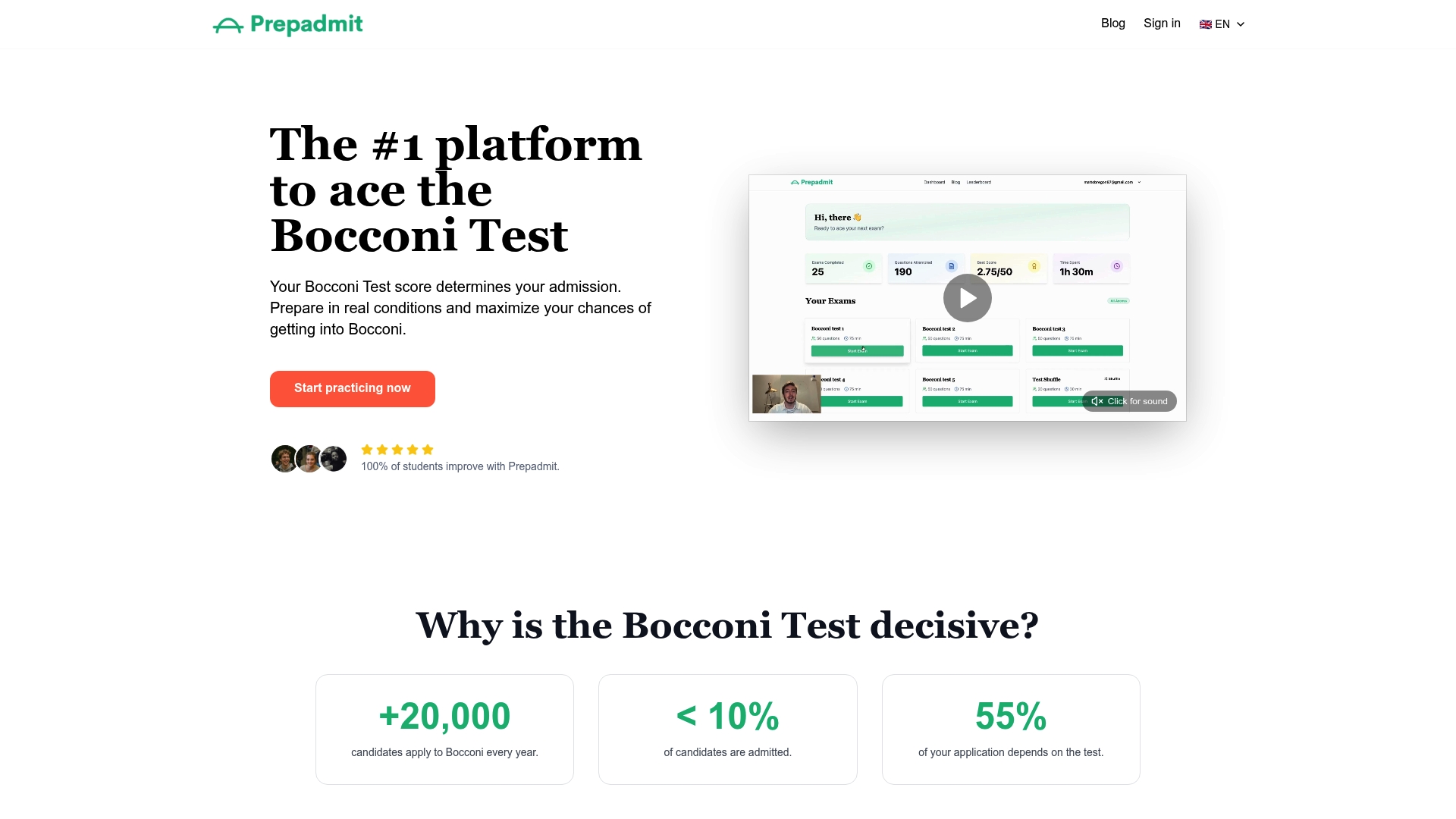
Start with the free diagnostic on Prepadmit to get your personalized score breakdown by category. From there, you can choose the self-study track, join a structured six-week group bootcamp with live coaching, or opt for the VIP one-on-one coaching program for maximum personalized attention. Every option includes on-demand mock tests built from official past papers, detailed feedback on every answer, and progress tracking against other applicants. Prepadmit was developed by experts from HEC and Bocconi, and users average a 34% score improvement. Explore your Bocconi prep options and find the path that fits your timeline and goals.
FAQ
What are the main types of Bocconi prep programs?
The main types are self-study bundles, online prep platforms, group bootcamps, and one-on-one coaching. Free official materials exist but work best as a supplement rather than a standalone prep strategy.
How do I know which Bocconi prep program fits me?
Start with a diagnostic assessment to identify your score gaps, then match your prep choice to your timeline, budget, and study style. Students with limited time and specific weak areas benefit most from personalized coaching.
How early should I start Bocconi admission prep?
Starting at least six weeks early gives you enough time for a full prep cycle with mock tests and feedback-driven adjustments. Earlier is better if your diagnostic reveals significant gaps.
Are mock tests really necessary for Bocconi prep?
Yes. Mock exams under timed conditions build pacing, reduce errors, and train you to think under pressure. They are the most effective single activity in any Bocconi study program.
What is the cost difference between Bocconi prep program types?
Free resources cost nothing; online platforms and self-study bundles typically range from low to medium cost; group bootcamps fall in the medium range; and one-on-one VIP coaching sits at the higher end. The right choice depends on what level of personalization your score goals actually require.
Recommended
Related articles
Ready to ace your admission test?
Discover PrepAdmit, the platform that helps you succeed at top university admission tests.
Discover PrepAdmit