The Real Role of Past Papers in Exam Prep

The Real Role of Past Papers in Exam Prep
Most students who struggle with the Bocconi admissions test have one thing in common. They did past papers. Lots of them. And they still underperformed. The role of past papers in exam prep is widely misunderstood — not because the tool is flawed, but because most students treat it like a content review exercise rather than a performance training system. This guide breaks down exactly how past papers work, why they work, and how Bocconi applicants can use them to actually move the needle on test day.
Table of Contents
- Key takeaways
- Why past papers matter beyond content review
- Bocconi’s test format and why it changes everything
- A step-by-step approach that actually works
- Combining past papers with other study methods
- My honest take on why most students get this wrong
- How Prepadmit helps you practice the right way
- FAQ
Key takeaways
| Point | Details |
|---|---|
| Reflection beats repetition | Doing past papers without error analysis rarely improves your score. |
| Bocconi has a specific format | Official CISIA materials are the only reliable source for authentic practice aligned to the real test. |
| Timed conditions are non-negotiable | Practicing without a clock trains the wrong habits and leaves you unprepared for time pressure. |
| Penalty strategy requires deliberate practice | The scoring system penalizes wrong answers, so skipping and revisiting questions must be practiced explicitly. |
| Past papers work best in combination | Pair them with concept review and mock exams for full exam readiness. |
Why past papers matter beyond content review
Here is the most common mistake: opening a past paper, reading through the questions, checking the answers, and calling it a study session. That approach gives you the illusion of progress while delivering very little actual improvement.
The real benefits of past paper practice operate on multiple levels at once.
Familiarity with question style. Every exam has a logic to how it asks questions. The Bocconi Online Admission Test uses specific phrasing, structures, and trap options. Until you have seen dozens of those patterns, you will keep making small recognition errors that have nothing to do with your actual knowledge.
Time management under pressure. Practice tests train retrieval under time pressure, not just content knowledge. You can know every concept cold and still run out of time if you have never practiced allocating 60 to 90 seconds per question with a real clock running.

Error-driven learning. When you get a question wrong under timed conditions and then figure out exactly why, that mistake becomes durable learning. It is far more effective than reading a chapter you already half-understand.
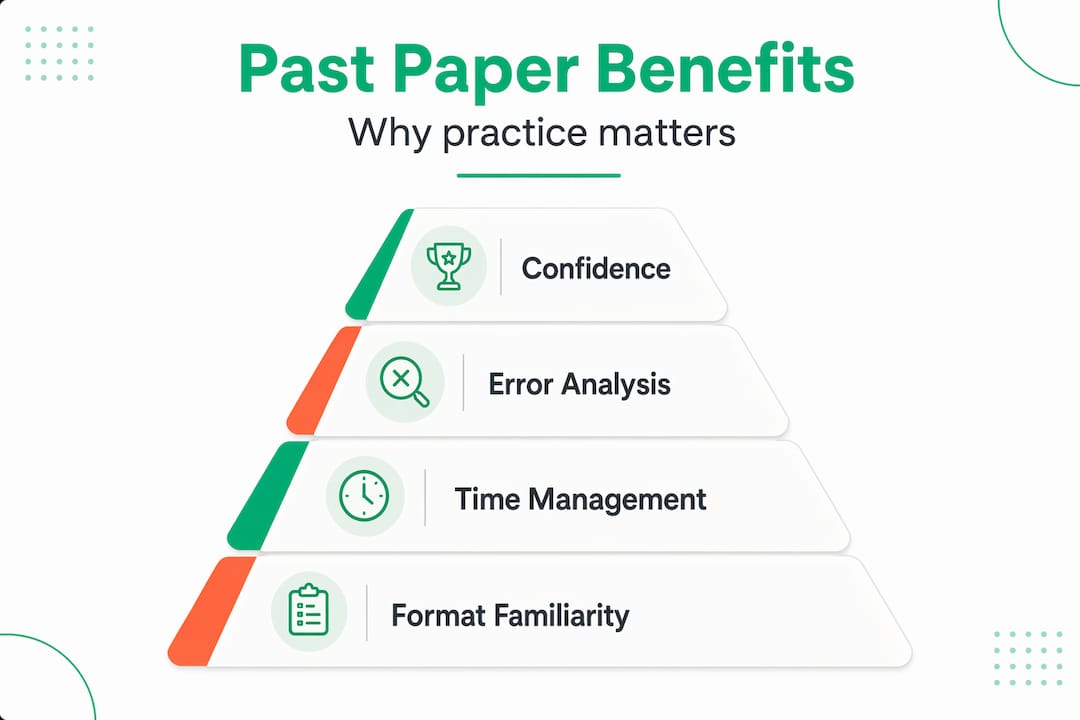
Reduced exam anxiety. Familiarity with format and question types leads to steadier performance on the actual test. The more your brain recognizes the environment, the less cognitive energy it spends on anxiety and the more it reserves for problem-solving.
Pro Tip: After every past paper session, spend at least as much time reviewing your wrong answers as you did completing the paper. The review phase is where the real learning happens.
Repeated exposure to realistic exam conditions builds genuine confidence. Not the kind you talk yourself into, but the kind that comes from having seen and survived the test environment dozens of times before.
Bocconi’s test format and why it changes everything
Applying generic past paper advice to the Bocconi Online Admission Test will only get you so far. This test has specific rules that change how you should practice.
The Bocconi Online Admission Test is administered by CISIA and carries significant weight in the admissions ranking. It includes multiple timed sections covering logic, mathematics, language comprehension, and general knowledge. Each section runs on a strict clock, and the sections do not wait for you.
Here is the detail most students overlook:
| Feature | What it means for your practice |
|---|---|
| Penalty scoring | Wrong answers cost you points, so random guessing is a losing strategy |
| Timed sections | Each section has its own clock, requiring separate pacing practice |
| Computer-based format | Navigation, flagging questions, and screen reading all require familiarity |
| Official source: CISIA portal | Generic practice tests are a poor substitute for CISIA-aligned materials |
The logic section includes 10 questions in 20 minutes with scoring penalties for wrong answers. That means you have two minutes per question, but some questions will take 45 seconds and others may take three minutes. Practicing without accounting for the penalty rule trains you to guess when you are unsure. On the actual test, that habit will cost you points.
The only reliable official materials come from the CISIA portal directly. Using generic practice tests or questions from unrelated exams introduces formats and difficulty levels that do not reflect the real test. This is not a minor issue. It means you could spend weeks practicing and still be surprised by the actual exam.
Pro Tip: Use official CISIA simulations repeatedly under timed conditions to internalize all time constraints, scoring rules, and question types unique to Bocconi. Do not save them for late in your prep. Use them early and often.
For the logic section specifically, adopt a pacing drill mentality. Move quickly through questions you recognize, flag anything uncertain, and return to flagged items in the remaining time. This skip-and-revisit workflow needs to become automatic before test day, which means it must be practiced deliberately.
A step-by-step approach that actually works
Knowing that past papers matter is different from knowing how to use them. Here is a structured approach that turns past paper practice into real score improvement.
-
Start earlier than you think you should. Most students save past papers for the final two weeks. A better approach introduces them at the midpoint of your prep, once you have covered the core content. This gives you time to identify gaps, address them, and return to past papers again before the test.
-
Recreate real exam conditions every time. Sit at a desk. No notes. No phone. Set a timer. Close every other tab. The point is to train your brain to perform in conditions that feel uncomfortable. If practice always feels comfortable, test day will feel like a shock.
-
Mark like an examiner. Do not just check right or wrong. Understand why each answer is correct, including why the wrong options are wrong. This is where strategic past paper use with mark scheme consultation separates students who improve from those who plateau.
-
Keep an error log. After each paper, record every question you got wrong or guessed correctly by luck. Categorize mistakes by skill type: logic, math, reading comprehension, general knowledge. Tracking errors by skill type focuses revision where it matters most and prevents you from rereading sections you already understand.
-
Review your error log before the next paper. Do not wait until the end of your prep. Check your log before each new practice session and spend 15 to 20 minutes drilling the specific skills where you lost points last time.
-
Revisit earlier papers after targeted review. Spaced repetition works. Returning to a paper you previously struggled with, after addressing those weak points, gives you direct evidence of improvement and reinforces the learning.
-
Avoid the rote repetition trap. Doing past papers without reflection rarely produces meaningful score gains. If you cannot explain why you got a question wrong, you will get the same type of question wrong again in two weeks.
Pro Tip: Set a threshold for the penalty scoring system during practice. For example: only attempt a question if you can eliminate at least two of the four options. Practice making that judgment call quickly. This is a penalty-aware strategy you build in practice, not on test day.
Combining past papers with other study methods
Past papers are the sharpest tool in your prep kit, but they are one tool, not the whole kit. Using previous exams for study gives you your best return on time when it works alongside other methods.
Here is what a balanced prep approach looks like in practice:
- Concept review comes first. Past papers will reveal gaps, but you need a baseline of content knowledge before those gaps become useful signals. Start with focused concept study, then layer in past papers once you have enough knowledge to engage meaningfully with the questions.
- Targeted skill drills fill the gaps. When your error log shows repeated losses on a specific logic pattern or math topic, isolate that skill and drill it directly. Then return to past papers to check whether the targeted work paid off.
- Mock exams build pressure tolerance. There is a difference between practicing individual sections and sitting a full test from start to finish under exam conditions. Mock exams build the confidence that comes from performing under real pressure, not just section-by-section practice.
- Speed drills sharpen pacing. For sections like the logic component, pure speed matters. Set a shorter time limit than the real exam occasionally, forcing faster decision-making. When you return to normal timing, the questions feel more manageable.
- Official CISIA simulations are the closest thing to the real test. Use them later in your prep cycle when you want a genuine test experience, not just a practice run.
The students who perform best on the Bocconi test are not the ones who did the most past papers. They are the ones who combined targeted concept review, deliberate error correction, and realistic full-test simulations into a structured, repeatable cycle.
My honest take on why most students get this wrong
I have seen a lot of students approach past papers the wrong way, and the pattern is almost always the same. They stack up a long list of completed papers like a scoreboard and feel prepared because of the volume. But volume without analysis is just repetition. It does not build skills. It builds familiarity with your own mistakes.
What actually drives improvement is process. The 30 minutes you spend after a past paper, methodically working through every wrong answer and understanding the examiner’s logic, is worth more than doing an extra two papers with no reflection. That is not an exaggeration. That review phase is where most of the learning lives.
For Bocconi specifically, I would add one thing: the test is unusual enough that generic preparation is genuinely insufficient. The penalty scoring, the CISIA-specific question style, the computer-based navigation — these are details that only official materials can train you for. Students who practice with non-CISIA materials often feel underprepared on test day not because they lack knowledge, but because the format is unfamiliar.
The fix is simple. Use official materials. Practice under real conditions. Analyze every mistake. Repeat. Students who follow that cycle consistently see real score improvement. The ones who skip the reflection step usually do not.
— quentin
How Prepadmit helps you practice the right way
Prepadmit was built specifically for Bocconi admissions test preparation, and every feature on the platform reflects the strategic approach described in this article.
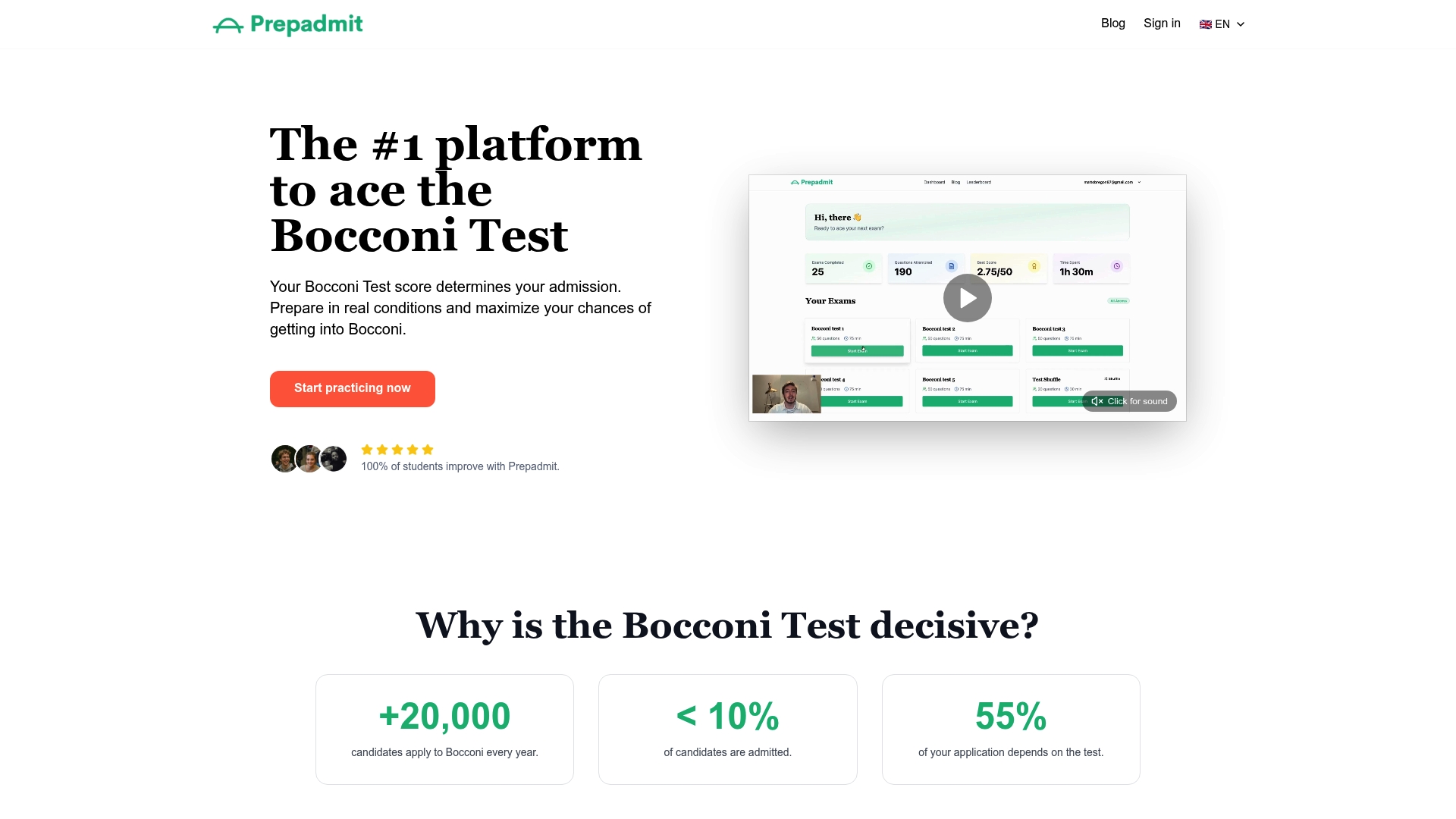
With Prepadmit, you get access to timed practice that mirrors the real CISIA test format, detailed answer corrections that explain not just what is right but why, and skill-specific drill modes that align directly with your error log. The platform tracks your progress over time and lets you see where you rank against other Bocconi applicants, giving you a realistic picture of your position before test day. Users see an average score improvement of 34%. Prepadmit offers that preparation at a fraction of the cost of private coaching. Start practicing on Prepadmit and build the skills, confidence, and strategy you need to get in.
FAQ
What is the role of past papers in exam prep?
Past papers train you to perform under real exam conditions, not just recall content. Used strategically with timed practice and error analysis, they are one of the most effective tools for improving your test score.
How many past papers should I do for the Bocconi test?
There is no fixed number, but quality matters more than quantity. Complete each paper under real timed conditions, analyze every mistake using an error log, and revisit weak areas before the next paper.
Where can I find official past papers for the Bocconi admissions test?
The CISIA portal is the only source for official Bocconi Online Admission Test materials. Generic practice tests from other sources do not accurately reflect the format, difficulty, or penalty scoring of the real test.
How does the penalty scoring system affect past paper practice?
Wrong answers cost points in the Bocconi test, so your practice must train penalty-aware decision-making. During practice, establish a personal threshold for when to attempt a question versus skip it based on your confidence level.
When should I start using past papers in my Bocconi prep?
Introduce past papers at the midpoint of your preparation, once you have covered the core content areas. This timing lets you identify real knowledge gaps, address them with targeted study, and return to papers again before the test date.
Recommended
Related articles
Ready to ace your admission test?
Discover PrepAdmit, the platform that helps you succeed at top university admission tests.
Discover PrepAdmit