Bocconi Campus Life Preparation Abroad: 2026 Guide
Bocconi Campus Life Preparation Abroad: 2026 Guide
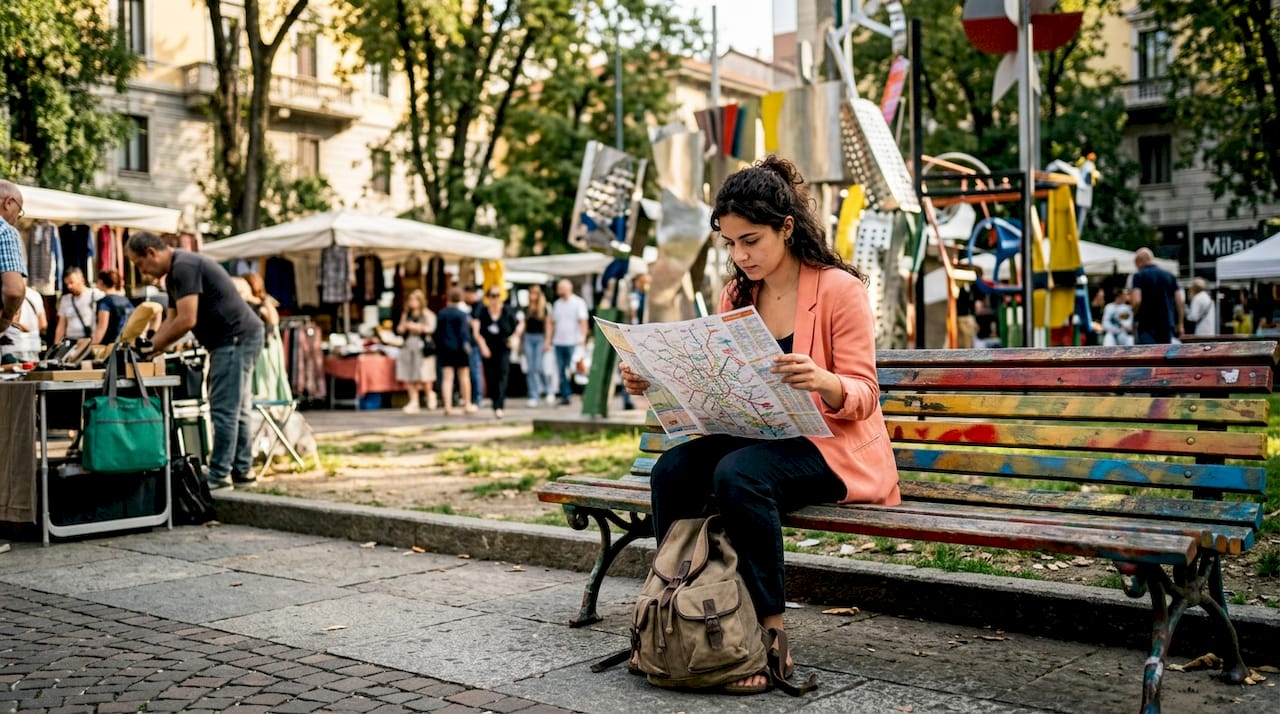
Bocconi campus life preparation abroad means adapting to an urban, independent academic environment in Milan, where roughly 30% of the 15,200 students are international. This is not a traditional campus with dorms, dining halls, and a clear boundary between university and city. Bocconi sits inside Milan’s Porta Romana district, and the city is your campus. Students who arrive expecting a US-style college experience often struggle in the first weeks. Those who prepare for the independence, the career culture, and the multicultural social model thrive from day one.
What does Bocconi campus life preparation abroad actually require?
Bocconi’s campus is integrated into Milan’s urban fabric rather than enclosed in a traditional campus bubble. University buildings blend into city blocks. There is no sprawling green quad where student life naturally concentrates. You navigate the city like a resident, not a student on a protected campus.
This setup has real implications. You will need to find housing independently, commute using public transit, and build your own daily routines without the structure a traditional campus provides. The upside is that you gain city fluency fast. Milan’s Porta Romana neighborhood is walkable, well-connected, and full of cafes and study spots that become part of your routine.
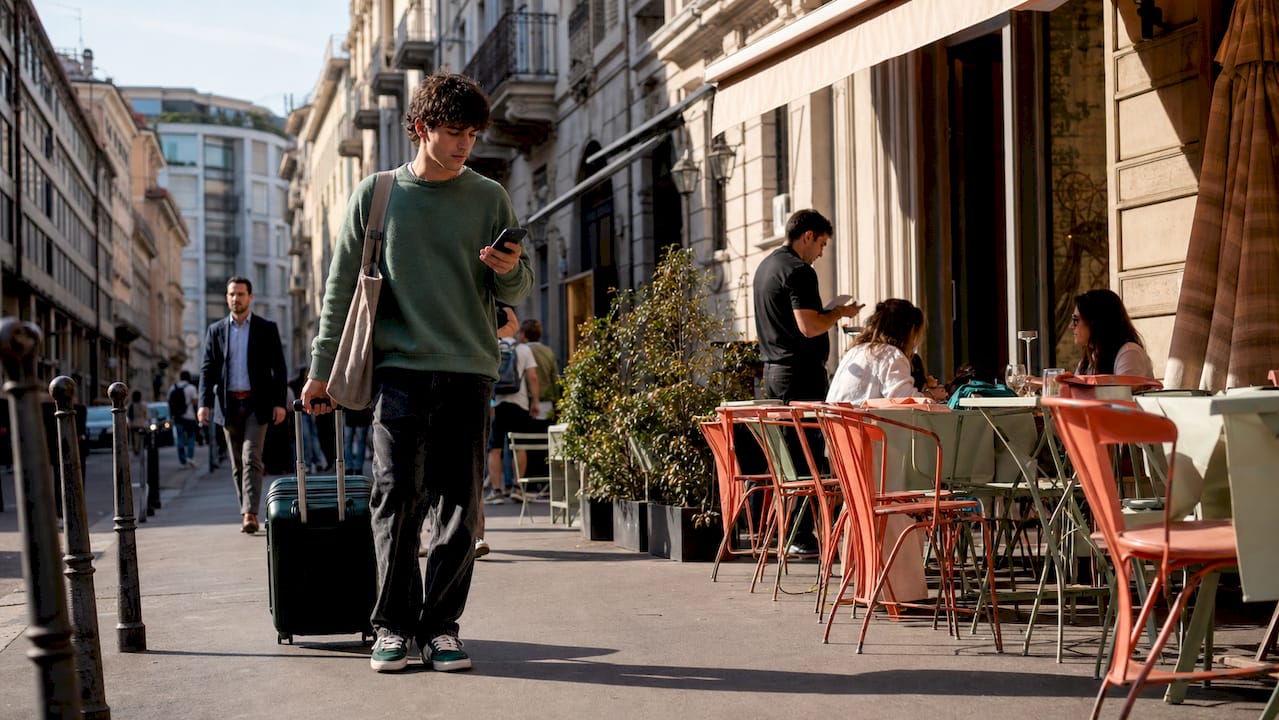
Getting around Milan is affordable. A student metro pass costs approximately EUR 22/month, which covers unlimited rides on the metro, trams, and buses. That price makes public transit the obvious choice over taxis or ride-sharing apps.
Key steps to adapt to Bocconi’s urban setting:
- Download the ATM Milano app before you arrive. It covers all public transit routes and real-time updates.
- Secure housing before your first week. University residences fill up fast, and private rentals in Porta Romana and Navigli are competitive.
- Walk the neighborhood in your first few days. Knowing your local pharmacy, grocery store, and nearest metro stop removes daily friction.
- Learn basic Italian phrases for daily transactions. Shopkeepers and landlords appreciate the effort, even if your Italian is minimal.
Pro Tip: Register for Bocconi’s housing portal the moment your admission is confirmed. Spots in university-affiliated residences go within days of opening.
How to manage academic expectations at Bocconi
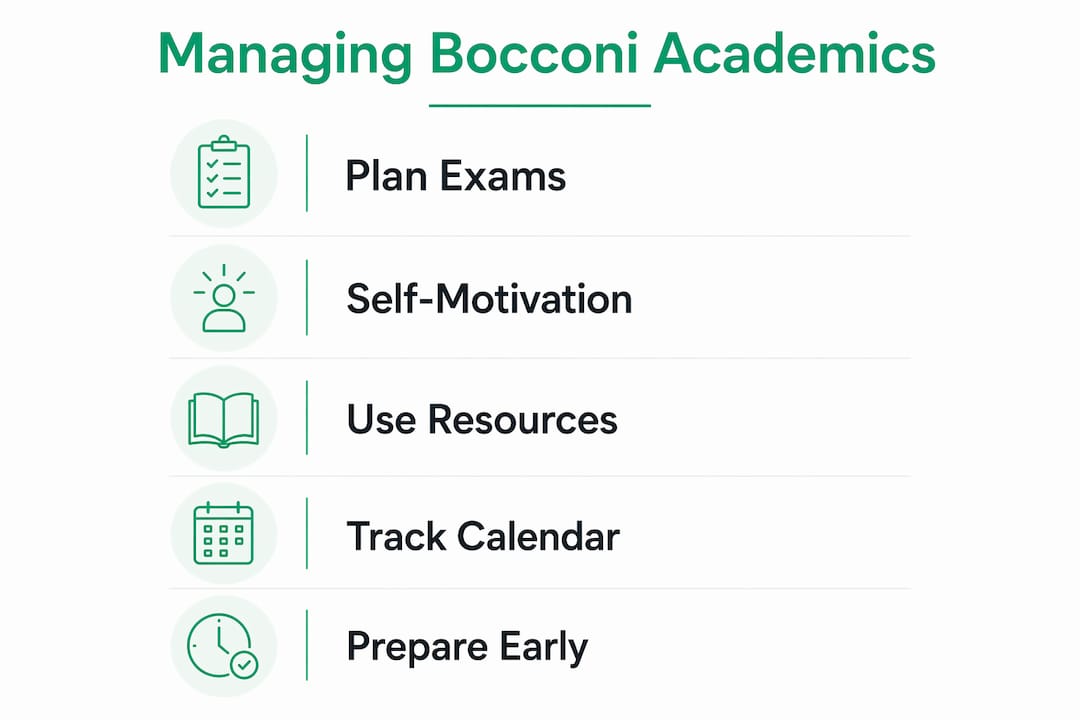
Bocconi’s academic model is exam-focused, with less reliance on group presentations and continuous assessment than most US universities. Your grade in many courses comes down to one or two written exams per semester. That structure rewards students who study consistently over time, not those who cram at the end.
Self-motivation is non-negotiable here. Professors do not chase attendance or send reminder emails. You are expected to manage your own schedule, track deadlines, and show up prepared. Students who come from highly structured high school environments often find the first semester disorienting until they build their own system.
Two requirements stand out for international students. First, compulsory foreign language studies are built into the curriculum. Most students choose Italian or a third language alongside English. Second, structured internship requirements push you to engage with the professional world before graduation. Both requirements are features, not obstacles. They force you to build skills that matter after university.
Practical habits that work at Bocconi:
- Build a weekly study schedule in the first week and treat it like a class commitment.
- Use the Bocconi library system early. Study spaces fill up during exam periods.
- Form small study groups with classmates from different countries. The perspective diversity improves your analysis.
- Start language coursework in the first month. Leaving it late creates a bottleneck before exams.
Pro Tip: Check the Bocconi exam calendar at the start of each semester and work backward. Knowing your exam dates six weeks out lets you plan study intensity without last-minute panic.
What does international student life at Bocconi look like?
Bocconi’s student community is genuinely diverse. About 30% of students are international, and in programs like BIEM, that figure reaches 90%. English-taught classes average around 35% international representation. You will sit next to students from Brazil, South Korea, Germany, and Nigeria in the same lecture.
The social model at Bocconi differs from US universities. There is no central campus hub where everyone naturally gathers. International students must shift from a campus-centric social model to a community-network-based one. Your social life is built deliberately, through associations, events, and neighborhood connections, not passively through proximity.
Here is how students typically build their social network at Bocconi:
- Join a student association in week one. Bocconi has dozens of clubs covering consulting, finance, culture, and social impact. Associations like AIESEC connect you to an international professional network immediately.
- Attend orientation events. Bocconi runs structured welcome programs for international students. These are the fastest way to meet people before classes begin.
- Become a regular somewhere local. Milanese neighborhood culture centers on small, welcoming communities in shops and restaurants. Returning to the same cafe or market builds genuine local relationships over time.
- Attend community festivals. Events like B.lab To The Park (B2P) are structured social opportunities that bring the entire Bocconi community together and create shared experiences outside the classroom.
The cultural adjustment is real but manageable. Italians are warm once you are a known face. Street greetings with strangers are less common than in parts of the US, but regular customers at local spots are treated like community members.
How to engage with Bocconi’s career-focused culture
Bocconi’s career culture starts on day one. Professional attire and conduct are expected from early in the semester, not just at formal events. Students who show up to industry panels in casual clothes stand out for the wrong reasons.
Active participation in career clubs is the primary way students access Bocconi’s corporate network. The Consulting Club, finance associations, and entrepreneurship groups run case competitions, speaker series, and firm visits throughout the year. These are not optional extras. They are the main channel through which students connect with multinational companies and consulting firms.
Key career-building activities to prioritize:
- Attend BOCCONI&JOBS, the university’s annual career fair. Firms recruit directly from this event.
- Join one or two associations with genuine interest, not just for resume padding. Recruiters notice the difference.
- Treat every industry panel as a networking opportunity. Prepare one specific question for the speaker before you arrive.
- Build your LinkedIn profile before you start. Bocconi professionals expect to connect digitally after meeting in person.
The career culture can feel intense if you are not prepared for it. Students who treat Bocconi purely as an academic experience miss the professional development that defines the Bocconi university experience. The two are inseparable here.
What does living in Milan cost for Bocconi students?
A realistic monthly budget in Milan for a Bocconi student runs between EUR 1,200 and EUR 1,700, covering housing, food, transport, and social spending. That range is lower than comparable cities like London or Paris, where equivalent living costs run significantly higher.
| Expense category | Estimated monthly cost |
|---|---|
| Housing (private rental) | EUR 700–950 |
| Food and groceries | EUR 200–300 |
| Public transit pass | EUR 22 |
| Social and dining out | EUR 150–250 |
| Miscellaneous | EUR 100–150 |
Italian food culture works in your favor. Aperitivo, the early evening social ritual, typically costs EUR 10–15 and includes drinks and a buffet spread. It is the most affordable way to socialize in Milan and doubles as a networking setting.
Housing is the biggest variable. University residences cost less than private rentals but fill up fast. Private apartments in Porta Romana, Navigli, and Città Studi are the most popular areas for Bocconi students. Sharing a flat with two or three people brings costs down considerably.
Approximately 30% of Bocconi students receive tuition waivers between 20% and 100% under the Bocconi4Access scheme. That financial support makes the overall cost of attendance more manageable for international students who qualify. Check the financial aid options available before you finalize your budget.
Pro Tip: Cook at home four or five nights a week. Italian supermarkets like Esselunga and Carrefour stock fresh produce at low prices. You eat well and save EUR 150–200 a month compared to eating out daily.
Key Takeaways
Successful Bocconi campus life preparation abroad requires mastering four areas: urban independence, exam-focused academics, deliberate social networking, and early career engagement.
| Point | Details |
|---|---|
| Urban campus adaptation | Secure housing early and learn Milan’s transit system before classes start. |
| Exam-focused academics | Build a consistent study schedule from week one; grades depend on independent preparation. |
| Deliberate social networking | Join student associations immediately to build community in a non-traditional campus setting. |
| Career culture readiness | Attend BOCCONI&JOBS and join career clubs to access Bocconi’s corporate network. |
| Budget planning | Plan for EUR 1,200–1,700 per month and apply for Bocconi4Access financial aid early. |
What I’ve learned about preparing for Bocconi that most guides skip
Most articles about studying at Bocconi focus on logistics: housing, transit, budgets. Those things matter. But the adjustment that catches students off guard is not practical. It is psychological.
Bocconi asks you to be self-directed in a way that feels unfamiliar if you come from a structured high school environment. No one tracks your attendance. No one reminds you about deadlines. The exam calendar is published at the start of the semester, and after that, your performance is entirely your responsibility. Students who thrive are the ones who treat that freedom as a design challenge, not a burden.
The career culture is the other thing guides understate. Bocconi is not a place where you study for four years and then think about your career. The professional environment starts in week one. Students who show up to consulting club events, dress appropriately, and ask good questions at panels build a reputation before they have any work experience. That reputation compounds. By the time you are in your second year, the network you built in year one starts opening doors.
The social piece takes longer than people expect. Milan is not a city that opens up immediately. But the students who integrate best are the ones who stop looking for a campus social life and start building a city social life. Find your neighborhood. Find your cafe. Become a regular. That is how Milan works, and once you understand that, it becomes one of the best cities in the world to live in as a student.
The non-EU admission process is also worth understanding early. Knowing the requirements before you arrive removes a major source of stress in your first semester.
— quentin
Prepadmit and your Bocconi preparation
Getting into Bocconi is the first step. Prepadmit is built specifically to help you pass the Bocconi Test, the entrance exam that determines your admission. The platform uses official past papers, on-demand tests, and detailed answer corrections to simulate real exam conditions. Students who use Prepadmit report an average score improvement of 34%.
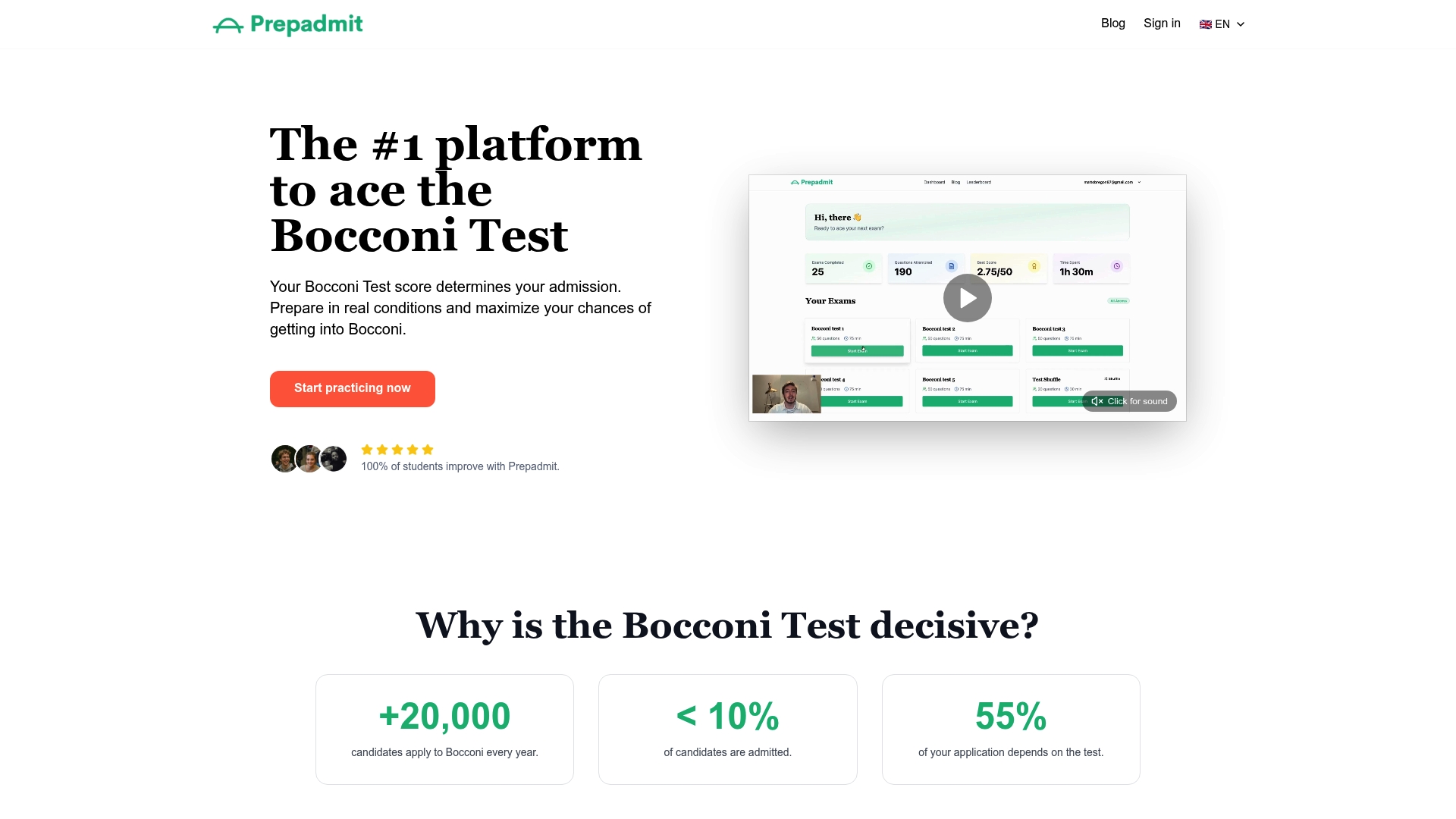
Beyond test scores, Prepadmit gives you a clear picture of where you stand before exam day. The peer ranking system shows how your performance compares to other applicants, so you know exactly where to focus your preparation. If you are serious about Bocconi, start your test prep with a platform built by people who know the exam from the inside.
FAQ
What is Bocconi’s campus like for international students?
Bocconi’s campus is integrated into Milan’s Porta Romana district rather than a traditional enclosed campus. Students navigate the city independently, using public transit and living in private rentals or university residences nearby.
How much does it cost to live in Milan as a Bocconi student?
A realistic monthly budget runs between EUR 1,200 and EUR 1,700, covering housing, food, transport, and social spending. Public transit costs approximately EUR 22 per month with a student pass.
How do international students build a social life at Bocconi?
Bocconi’s social life is built through student associations, career clubs, and community events rather than a traditional campus hub. Joining associations like AIESEC and attending events like B2P in the first weeks is the fastest way to build connections.
Is Bocconi’s academic style different from US universities?
Yes. Bocconi is heavily exam-based with less continuous assessment than most US programs. Students must manage their own study schedules and prepare independently for high-stakes end-of-semester exams.
Does Bocconi offer financial aid for international students?
Approximately 30% of Bocconi students receive tuition waivers between 20% and 100% through the Bocconi4Access scheme. International students should apply for financial aid as early as possible, as awards are competitive.
Recommended
Related articles
Ready to ace your admission test?
Discover PrepAdmit, the platform that helps you succeed at top university admission tests.
Discover PrepAdmit