6–12 Weeks to Start Bocconi Test Prep, Research Backed, Platform Ready

6–12 Weeks to Start Bocconi Test Prep, Research Backed, Platform Ready
Start structured Bocconi Test prep several weeks before your target session, with the exact window set by your diagnostic score. The rule that actually matters: diagnose your baseline first, build a spaced retrieval practice schedule around it, then shift to full timed mocks once you hit consistent topic mastery. A platform like Prepadmit makes that sequence easy to run without a tutor.
TL;DR:
- Starting prep 6 to 12 weeks before the test depends on your diagnostic score, with longer timelines for lower baselines and heavier school schedules.
- Consistent accuracy improvement across three full mocks and steady pacing within time limits are key signals of test readiness.
- Focused retrieval practice, including stopping after three correct answers and scheduling spaced re-tests, outperforms passive review for long-term retention.
- A typical study session includes warming up with easy items, focused drills on weak areas, immediate error analysis, and spaced retests, even with limited time.
- Prepadmit offers an affordable platform with adaptive drills, timed mocks, and progress tracking to help you follow this schedule effectively.
Table of Contents
- When to Start Test Bocconi Prep: Finding Your Window
- How Should You Schedule Retrieval Practice?
- Two Study Plans: 6–8 Week Sprint vs. 12-Week Track
- Which Metrics Tell You You’re Ready?
- What I’d Tell a Student Starting Today
- Turning This Plan Into Action With Prepadmit
- Sources
- FAQ
When to Start Test Bocconi Prep: Finding Your Window
The right start date depends on one number: your diagnostic score. Before picking a calendar date, spend one to two hours on a full diagnostic test that mirrors the real exam’s sections. That single session tells you more about your true timeline than any generic rule of thumb.
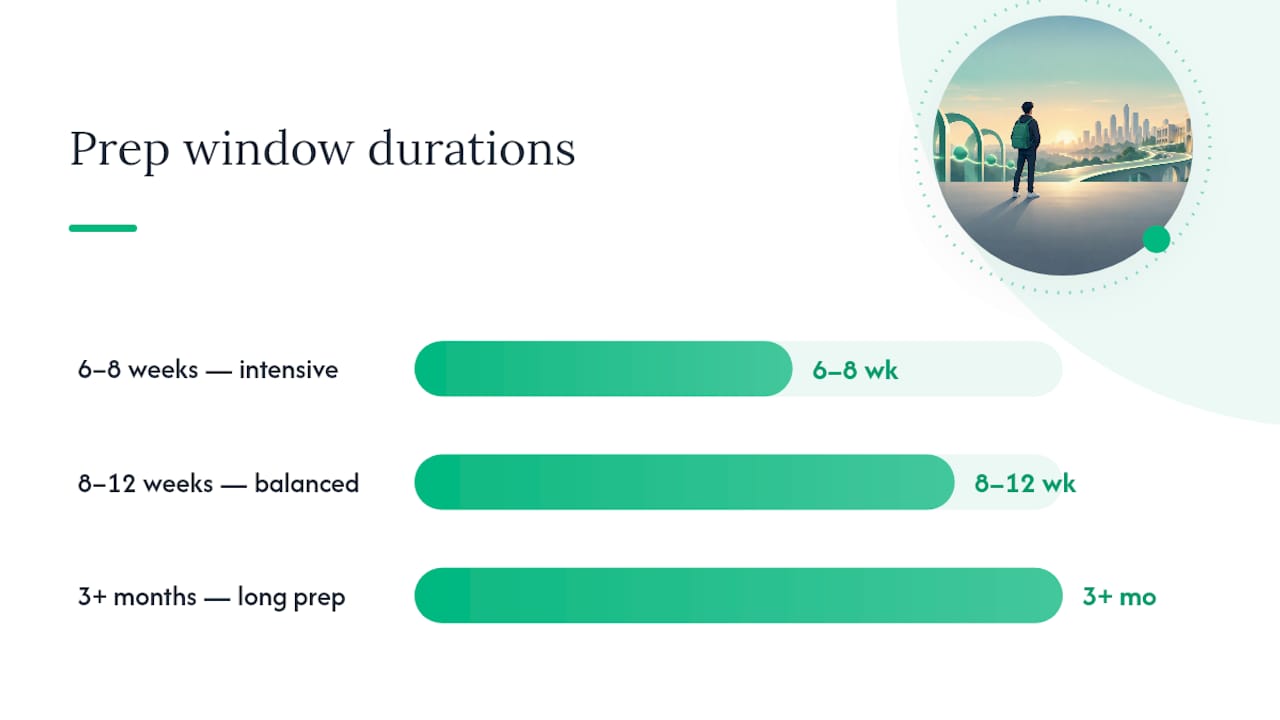
Once you have a baseline, three general preparation windows commonly cover most applicants.
- 6 to 8 week intensive: fits students who already practice logic, math, or reading comprehension regularly and scored close to a competitive range on the diagnostic. This plan typically requires a significant weekly time commitment.
- 8 to 12 week balanced plan: the most common fit. Ideal for a moderate baseline combined with a normal school workload, since it spreads the same total practice hours across more weeks rather than cramming.
- 3+ month long-prep track: suited to a low baseline score, a heavy school schedule, or both. Starting early here lets you keep sessions shorter to avoid burnout.
If you’re in the middle range and juggling a demanding school term, aim for around 10 to 12 weeks. If you already practice similar reasoning or math problems outside school, a focused shorter preparation period may be sufficient.
Whatever window you pick, translate it into a weekly hour budget immediately. Five to six hours a week is typical for the balanced plan; the sprint usually needs closer to eight to ten. That number becomes your actual scheduling constraint, more than the calendar date does.
How Should You Schedule Retrieval Practice?
Active recall beats rereading notes, and the research on retrieval-based learning makes that gap hard to ignore: students who test themselves retain material far longer than those who passively review it. Spacing that testing across days and weeks, rather than cramming it into one sitting, protects against the forgetting curve that wipes out cramming’s short-term gains.
A useful operational rule comes from the research on optimizing schedules of retrieval practice: practice a skill until you get it right three times in a row, then stop drilling it and schedule a spaced re-test later. This “3+3” approach avoids wasted repetition on things you’ve already learned. On a platform, you don’t need a spreadsheet to track this. Skill-specific drill modes that log accuracy per topic let the software surface which items need a re-test and which have earned a rest.
Personalized spaced review outperforms fixed review schedules because it adapts to what you’re actually about to forget, not what a generic calendar assumes. That’s the case for choosing adaptive drill features over a static worksheet.
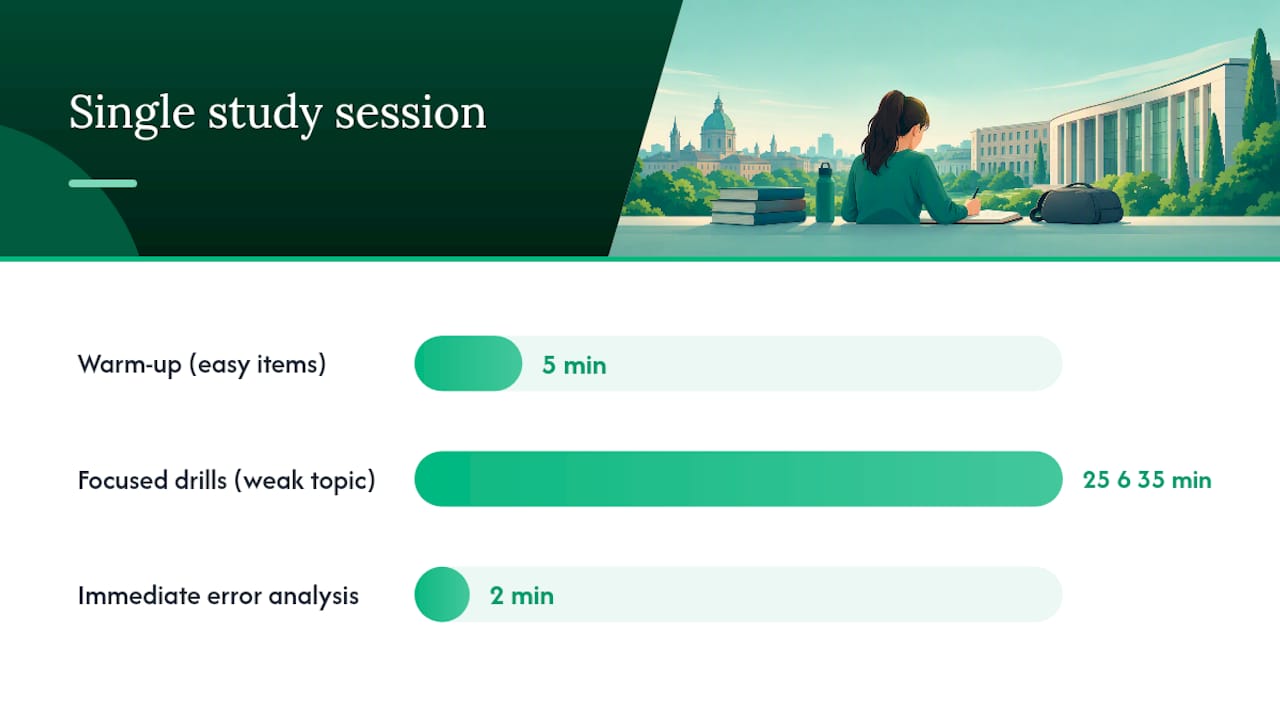
A single study session should follow a consistent shape:
- Five minutes warming up with easy, previously mastered items to build momentum.
- 25 to 35 minutes of focused drills on your current weak topic.
- Immediate correction and error analysis right after each drill, not the next day.
- A short spaced retest slot pulling in items from three or more days ago.
Pro Tip: Don’t skip the error analysis step even when you’re short on time. Reviewing why an answer was wrong takes two extra minutes and often prevents the same mistake from repeating three more times later.
Two Study Plans: 6–8 Week Sprint vs. 12-Week Track
Both plans below assume five sessions a week, adjusted up or down based on the hour budget from your diagnostic result.
6 to 8 week sprint:
- Weeks 1 to 2: build core concepts across math, logic, and reading comprehension, working through official past papers by topic.
- Weeks 3 to 4: shift to focused retrieval drills targeting your weakest skill areas, 30 to 40 minutes per session.
- Weeks 5 to 6 (and beyond, if using the full eight): run full timed mocks every four to five days, alternating with targeted relearning on whatever the mock exposed.
12-week track:
- Weeks 1 to 4: slower content build with daily 30-minute sessions and one light mock at week four to reset the diagnostic baseline.
- Weeks 5 to 8: a full mock every two weeks, filling the gaps with spaced review drills.
- Weeks 9 to 12: weekly full mocks, tapering drill time and increasing error-analysis depth as the official test date approaches.
Both plans lean on the same milestone check: once your score holds steady or improves across three consecutive full mocks, you’re ready to either lock in your pacing strategy or consider yourself test-ready. If scores are still swinging widely, stay in the drill phase longer rather than piling on more mocks. Progress dashboards make this easy to see at a glance instead of guessing from memory, and a structured week-by-week timetable gives you a template rather than a blank calendar.
Which Metrics Tell You You’re Ready?
Four numbers matter more than the rest: per-section accuracy, average time per question, the type of errors you’re making, and your percentile rank against other test-takers.
Treat these as guideposts, not hard cutoffs. Accuracy that holds steady or climbs across three consecutive mock attempts is a stronger readiness signal than any single high score. Pacing matters just as much. If you’re finishing sections with time to spare but missing easy questions, slow down and prioritize accuracy. If you’re running out of time before finishing a section, pacing becomes the priority over squeezing out a few extra correct answers.
- Per-section accuracy trending upward across attempts, not just on your best day.
- Average time per question compared against the section’s time limit.
- Error categories: careless mistakes versus genuine knowledge gaps need different fixes.
- Percentile rank against peers, tracked over multiple mocks rather than one.
Prepadmit’s peer-ranking data gives a practical, if platform-specific, way to judge this: watching your rank climb across several mocks, alongside stable accuracy, is a reasonable signal you’re closing in on test-day readiness.
What I’d Tell a Student Starting Today
Short, repeated sessions beat occasional marathons. Five 40-minute sessions a week build more durable recall than one exhausting three-hour block, and they’re easier to sustain alongside schoolwork. The mistakes I see most often: cramming in the final week, skipping error analysis because it feels slower than moving to the next question, and over-memorizing formulas while ignoring the reasoning skills that actually drive score gains. Run your diagnostic honestly, respect the milestone checks, and adjust your plan instead of forcing it.
— quentin
Turning This Plan Into Action With Prepadmit
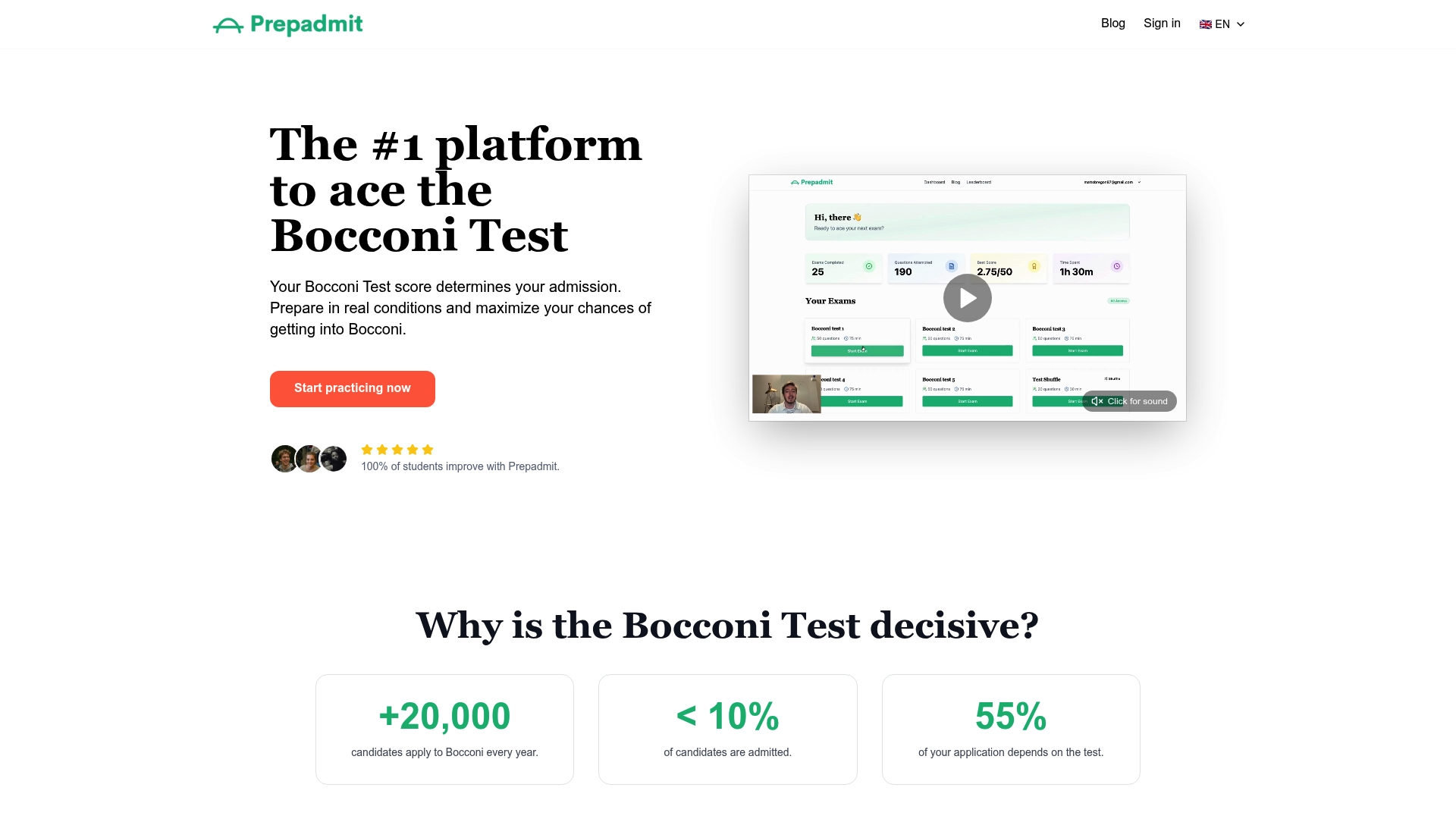
A platform like Prepadmit facilitates the schedule outlined above, offering an affordable alternative to private coaching. It provides features like practice tests based on past papers, timed mocks for full simulation, adaptive skill-specific drills reflecting retrieval and spacing principles, and progress dashboards to track accuracy trends.
The practical first step is simple: take the diagnostic, pick the study window that matches your baseline, and follow the milestone checks as you go. Prepadmit backs this with a money-back guarantee and reports an average score improvement among users of 34%. If your final week is approaching fast, the platform’s seven-day intensive plan covers targeted drills and official checks in a compressed format. Start your diagnostic on Prepadmit today and build your schedule from there.
Sources
- Retrieval-based learning review
- Optimizing schedules of retrieval practice for durable and efficient learning
- Personalized spaced review benefits (COLT/COLT-like results)
- Online Bocconi test | Bocconi University
FAQ
How Many Weeks Before the Bocconi Test Should I Start?
Most students should start 6 to 12 weeks before their target session, depending on their diagnostic baseline. A lower baseline or a heavy school schedule points toward the longer end, closer to three months.
What Is the Best Way to Structure a Study Session?
A strong session runs a short warm-up, 25 to 40 minutes of focused drills, immediate error analysis, and a spaced retest of older material. This structure applies the retrieval practice principles that outperform passive rereading.
When Should I Switch From Drills to Full Timed Mocks?
Shift to full timed mocks once your accuracy on focused drills is consistently high across a specific topic, generally in the second half of your prep window. Practitioner guidance on the Prepadmit blog recommends starting full simulations as soon as topic mastery feels steady, not perfect.
How Much Does Prepadmit Cost?
Pricing for full platform access is listed directly on the Prepadmit website rather than quoted here, since plans can change. The platform is positioned as a lower-cost alternative to private coaching, backed by a money-back guarantee.
How Do I Know I’m Ready for the Real Test?
Readiness shows up as stable or improving accuracy across three consecutive full mocks, pacing that fits within the section time limits, and a percentile rank that’s holding steady or climbing. If any of those are still volatile, extend the drill phase before scheduling your attempt.
Recommended
Related articles
Ready to ace your admission test?
Discover PrepAdmit, the platform that helps you succeed at top university admission tests.
Discover PrepAdmit