PSI Practice Exams for Bocconi Applicants: Real Mocks

PSI Practice Exams for Bocconi Applicants: Real Mocks
Prepadmit is the recommended source for realistic Bocconi Test practice exams, built from official past papers with timed full-length simulations and progress tracking that mirrors what you’ll face on test day. Here’s why it works:
- Official past papers used: Questions are reconstructed from real Bocconi materials, not generic problem sets.
- Timed full-length simulations: 50 questions, 75 minutes, matching the actual test format exactly.
- Progress tracking and peer ranking: Score reports show where you stand by section and against other applicants.
Your next step: run a free diagnostic mock on Prepadmit to set your baseline before scheduling any full-length practice sessions.
Pro Tip: Don’t skip the diagnostic. Your first score report tells you which of the four sections to target first, so you’re not wasting study hours on areas you’ve already mastered.
Table of Contents
- Why timed mock exams change your Bocconi results
- How to build a study plan around mock exams
- One-page action checklist: what to do this week
- Customer support and refund policies for practice exam providers
- Key Takeaways
- Why the conventional wisdom on Bocconi prep gets this wrong
- Prepadmit gives you the realistic practice you actually need
- Useful sources and next reads
Why timed mock exams change your Bocconi results
Timed full-length simulation is the single highest-leverage practice method for Bocconi applicants. Completing 50 questions in 75 minutes isn’t just about knowing the material. It’s about navigating the test without losing time, managing stamina across four different question types, and making fast decisions under pressure.
Untimed or partial drills don’t replicate that. A student who practices math in isolation may score well on drills but still run out of time on the real test because they haven’t trained the pacing transitions between sections. Timed practice tests expose exactly that gap.
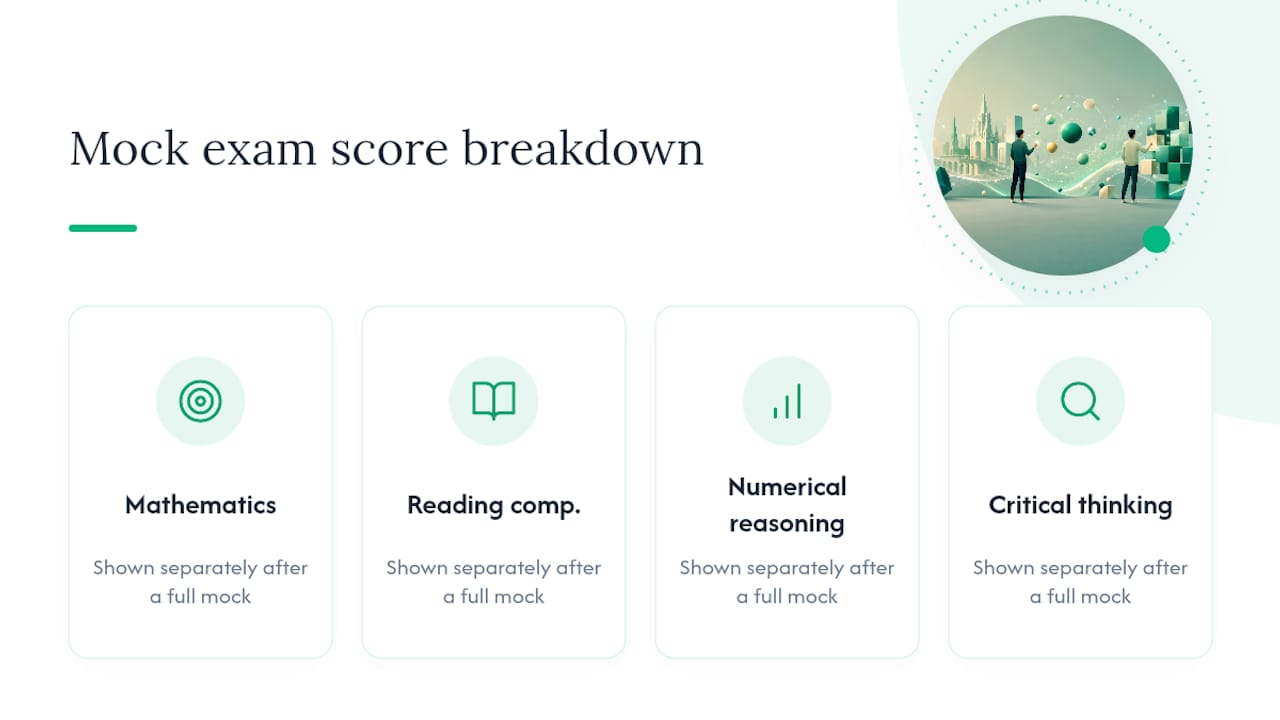
Section-level score reports make the difference concrete. After a full mock, you see not just your total score but your performance in mathematics, reading comprehension, numerical reasoning, and critical thinking separately. That breakdown tells you where your time is best spent next.
The admissions stakes are real. Bocconi’s admissions formula weights the selection test score as the major portion of the ranking, with GPA accounting for the rest. A meaningful improvement in your test score moves your ranking more than almost anything else you can do at this stage.
How to build a study plan around mock exams
Start with a diagnostic mock. Your first full-length timed simulation sets the baseline and tells you which sections to prioritize. Without it, you’re scheduling drills blind.
From there, the cycle is: targeted drills, timed full mock, error analysis, repeat. Mock exams for Bocconi aspirants work best when they’re spaced 7–14 days apart, giving you time to drill weak areas between attempts.
Step-by-step sequence:
- Run the diagnostic mock. Record your per-section scores and identify your two weakest areas.
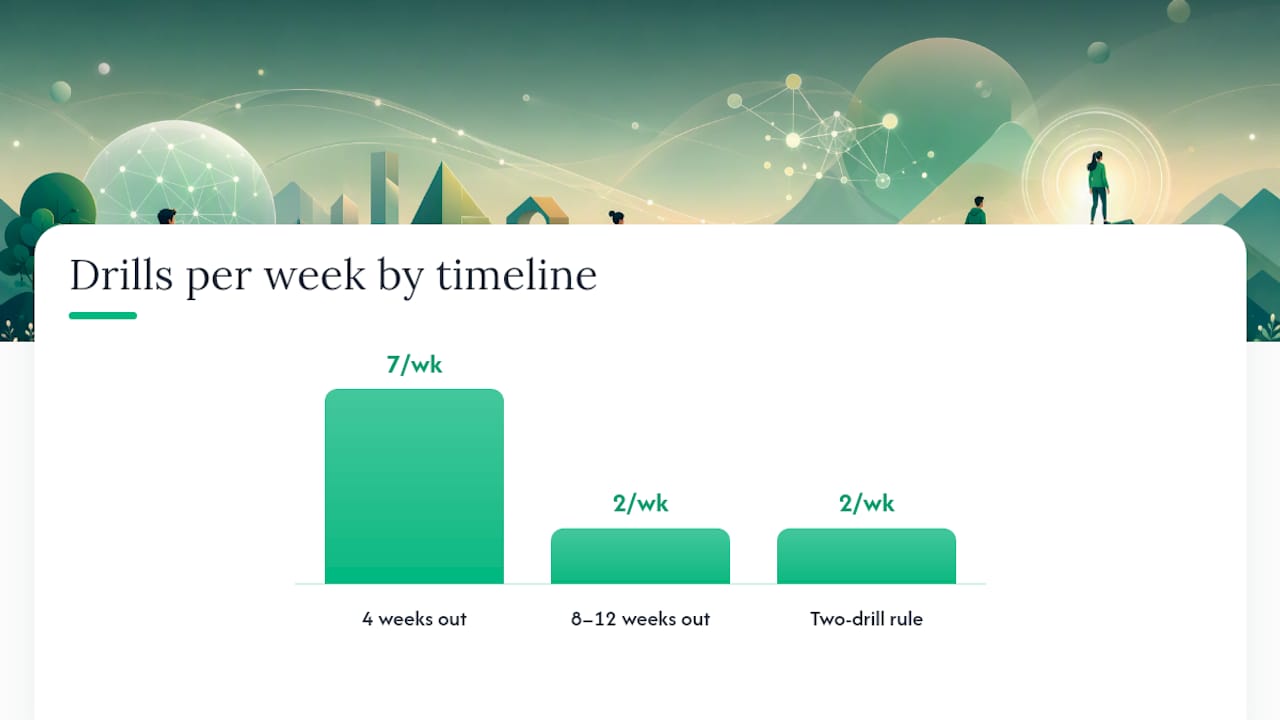
- Schedule targeted drills. Two drills per weak section per week. Use sectional practice for math and numerical reasoning; reading and critical thinking respond better to timed passage sets.
- Take a timed full-length mock every 7–14 days. Treat it like the real test: no interruptions, no pausing.
- Categorize every error after each mock. Was it a concept gap, a careless mistake, or a timing issue? Each type needs a different fix.
- Adjust your drill schedule based on the score report. If numerical reasoning improved but math dropped, shift your drill ratio accordingly.
- Track progress against peers. A ranking dashboard shows whether your score trajectory is competitive for your target program.
Timeline guidance:
- 4 weeks out: One diagnostic, two full mocks, daily drills on your weakest section. Focus on error categorization over volume.
- 8–12 weeks out: One mock every 10 days, two drill sessions per weak area per week. Add a condensed math revision block if mathematics is your lowest section.
- 3+ months out: Build the habit first. One mock per month initially, increasing to every two weeks in the final six weeks. Use the extra time for deeper concept review.
One-page action checklist: what to do this week
- [ ] Run a free diagnostic mock and record your per-section scores.
- [ ] Confirm your device meets the technical requirements (stable internet, compatible browser, no conflicting software).
- [ ] Schedule your first full-length timed mock within the next 7 days.
- [ ] Block two drill sessions per week for your weakest section.
- [ ] After your first mock, list three specific weaknesses from the score report.
- [ ] Check how many real attempts you have left: Bocconi allows up to four attempts per academic year at €60 each, purchased through the webtesting platform.
- [ ] Confirm your test date and count backward to set your mock schedule.
- [ ] On test day: stable internet connection, valid ID, quiet room, and a mobile device ready for the surroundings check required by the proctoring system.
Customer support and refund policies for practice exam providers
Support quality separates a reliable platform from a frustrating one. Before you pay, check that the provider offers a clear channel for technical issues, a documented refund window, and a response time you can count on.
For the Bocconi Test specifically, timing matters. If a platform goes down the week before your real attempt, you need a support team that responds within hours, not days. Look for live chat or email support with a stated response time.
Refund policies vary. Some providers offer a full refund within a set window (typically 7–14 days) if you haven’t accessed the full content. Others tie refunds to a score-improvement guarantee, meaning you get your money back if your score doesn’t improve by a defined threshold. Both are legitimate; the score-improvement guarantee is the stronger signal of confidence in the product.
Prepadmit’s money-back guarantee is part of its documented trust signals. For international applicants accessing the platform from outside Italy, overseas access guidance covers platform availability and any regional restrictions worth knowing before you sign up.
Key Takeaways
Realistic, timed full-length mocks built from official Bocconi past papers are the most direct path to a higher admissions ranking, given that the test score accounts for roughly 55% of Bocconi’s selection formula.
| Point | Details |
|---|---|
| Test score weight | The Bocconi selection test counts for roughly 55% of your admissions ranking; improving it moves your position more than GPA alone. |
| Mock exam format | Full-length practice must match the real test: 50 questions, 75 minutes, with per-section score reports. |
| Study cycle | Run a diagnostic first, then alternate targeted drills and a timed full mock every 7–14 days. |
| Provider checklist | Demand official-paper sourcing, step-by-step corrections, progress tracking, and a money-back guarantee before paying. |
| Prepadmit | Offers official past-paper mocks, adaptive drills, peer ranking, and a reported 34% average score improvement with a money-back guarantee. |
Why the conventional wisdom on Bocconi prep gets this wrong
Most students treat the Bocconi Test like a subject exam: study the content, review formulas, read faster. That framing misses the actual challenge. The test is a timed navigation problem as much as a knowledge test. You have 90 seconds per question on average, spread across four very different question types, with no ability to pause or revisit flagged items freely.
The students who improve most aren’t the ones who do the most drills. They’re the ones who treat every full mock as a data collection event, not a performance. They categorize errors by type after every attempt, adjust their drill schedule based on the score report, and track their ranking trajectory against peers. That’s a different discipline than studying harder.
The other thing most guides understate: the official Bocconi simulation is useful but incomplete. It doesn’t activate proctoring, and it allows post-session review. That’s a different cognitive experience than the real test. Practice platforms that replicate the lockdown environment more closely build a more accurate mental model of what test day actually feels like. That familiarity reduces the performance gap between your mock scores and your real result.
Prepadmit gives you the realistic practice you actually need
Prepadmit is the direct alternative to expensive private coaching for Bocconi Test prep. Where a tutor charges per session with no guaranteed volume of practice, Prepadmit gives you full-length official-paper mocks, adaptive drills across all four sections, per-area score reports, and a peer ranking dashboard at a one-time cost.
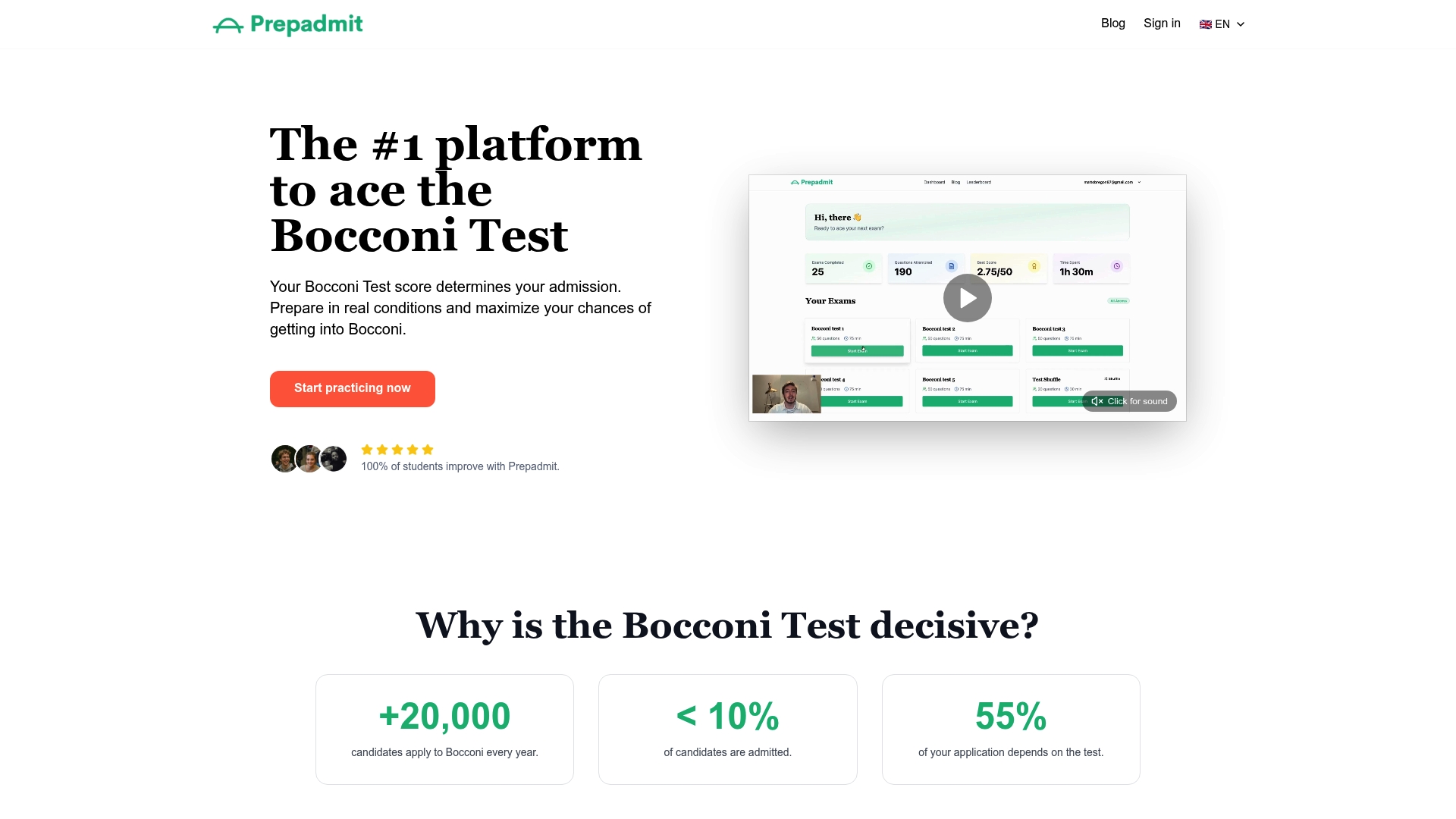
The platform was built by experts from HEC and Bocconi, and it carries a money-back guarantee backed by a reported 34% average score improvement. You get the same diagnostic-to-mock-to-review cycle described in this article, built into the platform so you don’t have to manage it manually.
Sign in to Prepadmit and run your first diagnostic mock today. Your score report will be ready immediately, and your study plan practically writes itself from there.
Useful sources and next reads
- Online Bocconi test | Bocconi University
- Admissions | Bocconi University
- Why Timed Practice Tests Matter for Students — PrepAdmit Blog
- Best Bocconi Test Prep Platforms Compared (2026) — PrepAdmit Blog
Recommended
Related articles
Ready to ace your admission test?
Discover PrepAdmit, the platform that helps you succeed at top university admission tests.
Discover PrepAdmit