Bocconi Test Full Simulation Walkthrough for 2026

Bocconi Test Full Simulation Walkthrough for 2026
A Bocconi Test full simulation walkthrough is a structured practice session that replicates official exam conditions to build the pacing, focus, and decision-making you need on test day. The Bocconi admission test carries 50 to 60% of your total admission score, making it the single most important factor in your application. A competitive result sits above 35 out of 50, and scores below 17 may be considered non-evaluable. Practicing under real conditions is not optional. It is the difference between knowing the material and performing under pressure.
What does a Bocconi test full simulation walkthrough involve?
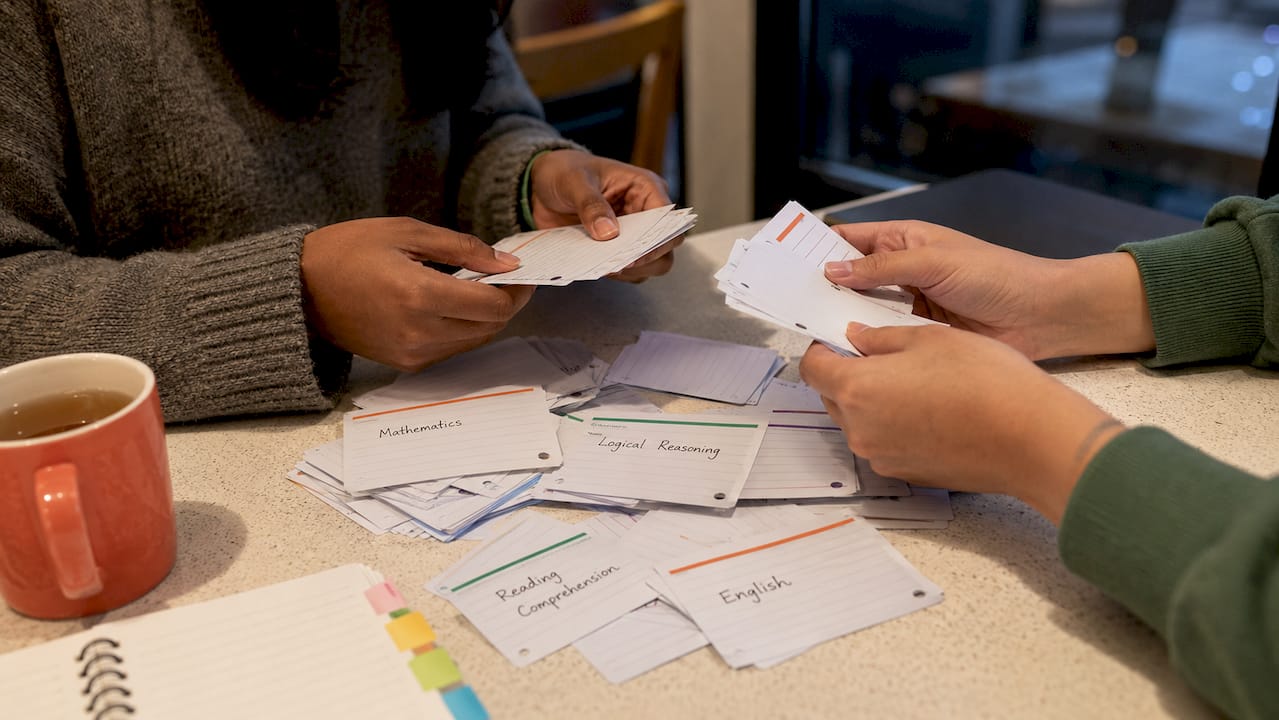
The test itself has four sections: Mathematics, Logical Reasoning, Reading Comprehension, and English. The standard test format includes 10 math questions, 10 logic questions, 10 reading questions, and 30 English questions, totaling 50 items across 90 minutes. A full simulation walkthrough means running through all 50 questions in one sitting, under timed conditions, with no interruptions and no unauthorized aids. The goal is not just to practice answering questions. It is to practice performing under the same cognitive load and time pressure you will face at Bocconi University.
Question order in the real test is randomized across sections, which forces mental flexibility. You cannot settle into a rhythm with one subject type before the next appears. A good simulation replicates this exactly. Prepadmit builds its practice tests to mirror this structure, so you train your brain to switch gears quickly rather than being caught off guard on exam day.
What you need before starting your simulation
Running a simulation without the right setup wastes your time. You need a quiet room, a reliable computer, a stable internet connection, and a timer you can see clearly. If the real test allows a basic calculator, have one ready. If it does not, keep it away from your desk entirely.
Your materials checklist before starting:
- Access to an official CISIA simulator or a vetted third-party platform like Prepadmit
- A printed or digital answer sheet if you want to track your responses manually
- A clock or stopwatch set to 90 minutes
- Water and a cleared desk with no phone, no browser tabs, and no notes
Physical readiness matters as much as technical setup. Sit the simulation when you are rested, not after a long school day. Successful candidates follow an 8 to 12 week structured preparation plan that builds toward full simulations in the final weeks. Running a simulation when you are exhausted gives you misleading data about your actual performance level.
Pro Tip: Set your simulation start time to match the actual exam slot you have booked. If your real test is at 10 a.m., practice at 10 a.m. Your brain performs differently at different times of day, and training at the same hour builds a reliable mental routine.
How to execute a realistic Bocconi exam simulation at home
Follow these steps each time you run a full simulation to get the most accurate picture of your readiness.
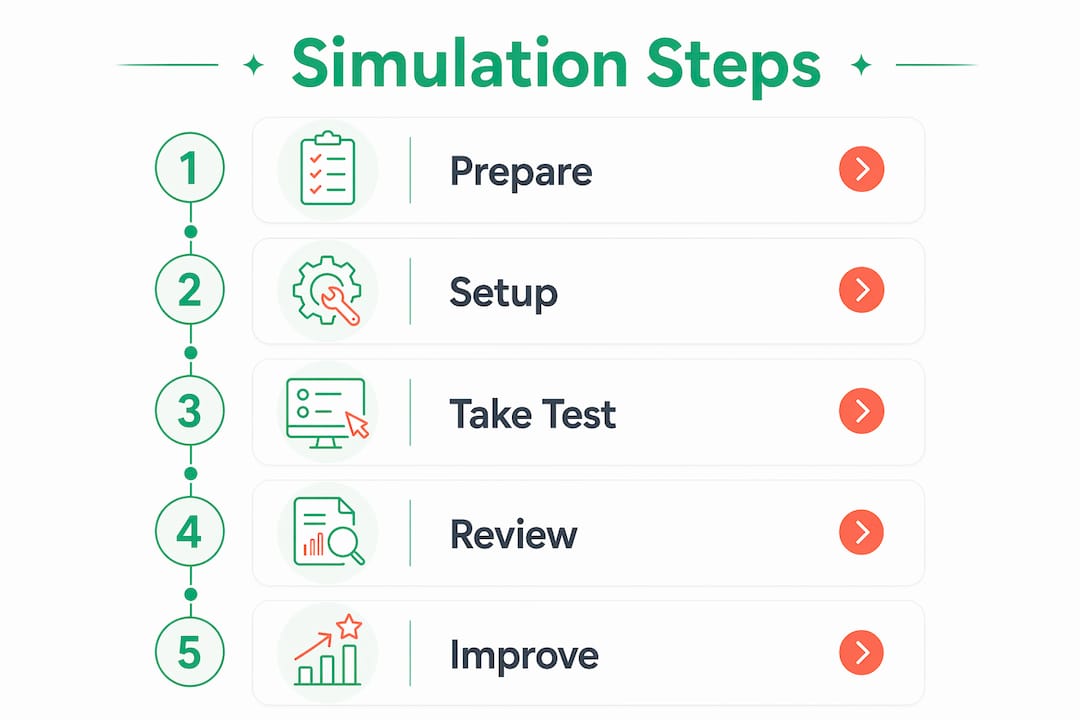
- Log in and set up your platform. Open Prepadmit or your chosen simulation tool, select a full-length mock test, and confirm the timer is active. Do not preview questions before starting.
- Start the clock and commit. Once you begin, treat the session as the real exam. No pausing, no looking up answers, no bathroom breaks beyond what you would take in an actual test center.
- Pace yourself per section. With 90 minutes for 50 questions, you have roughly 1 minute 48 seconds per question on average. The English section has 30 questions, so allocate more time there while keeping math and logic tighter.
- Apply the negative marking rule. The scoring system awards +1 for correct answers, deducts 0.25 for wrong answers, and gives 0 for unanswered questions. If you genuinely cannot eliminate any options, skipping is often the smarter move.
- Flag and move on. If a question takes more than 90 seconds, mark it and continue. Return only if time allows. Stalling on one question costs you points elsewhere.
- Complete the test without stopping. Do not review answers mid-test. Finish all 50 questions, then submit.
- Review your results immediately. After submission, analyze your score by section. Note which question types cost you the most time and which subject areas produced the most errors.
Identifying weak areas early allows you to allocate preparation time more efficiently, which directly improves your overall result. Do not skip the review phase. It is where most of the learning actually happens.
Pro Tip: Keep a simple error log after each simulation. Write down the question type, the section, and why you got it wrong: wrong concept, careless mistake, or time pressure. After three simulations, patterns will appear. Those patterns tell you exactly where to focus next.
Common mistakes students make during simulation practice
Most students run simulations without fixing the habits that hurt their scores. These are the five most common problems and how to correct them.
- Mistiming across sections. Students spend too long on math early and rush through English at the end. Set a section-level time target before you start and stick to it. English alone accounts for 30 of your 50 questions, so it deserves the most clock time.
- Overguessing under pressure. The negative marking rule punishes random guessing. Answering every question without a real reason costs you points. If you cannot eliminate at least two options, leave the question blank.
- Losing focus mid-test. A single distraction can break your concentration for several minutes. Turn off notifications, close every unrelated tab, and tell people in your home that you are unavailable for 90 minutes.
- Skipping the error review. Running five simulations without analyzing your mistakes is the most common wasted effort in Bocconi prep. The mock exam review process is where score improvement actually happens.
- Using the same strategy for every section. Math requires methodical calculation. Logic rewards pattern recognition. Reading rewards skimming for structure. English rewards vocabulary and grammar instinct. Treat each section as a different task, not a uniform block of questions.
Pro Tip: After your third simulation, compare your section scores side by side. If one section is consistently lower, dedicate two focused study sessions to that topic before running your next full simulation. Targeted review between simulations beats running back-to-back tests without reflection.
How Bocconi test simulations are built and what to look for
Understanding how a good simulation is constructed helps you evaluate which tools are worth your time. A reliable simulation replicates the official test on four dimensions: question count, subject distribution, difficulty curve, and scoring mechanics.
| Feature | What to look for |
|---|---|
| Question count | Exactly 50 questions across all four sections |
| Timing | 90-minute countdown with no pause function |
| Scoring | +1 correct, 0.25 deducted for wrong, 0 for blank |
| Difficulty | Mixed difficulty within each section, not grouped by easy to hard |
| Feedback | Immediate score breakdown by section after submission |
Free simulations from providers like Futura offer 60-question tests with realistic timing and immediate score analysis. These are useful for early-stage practice. For structured, ongoing preparation that tracks your progress over multiple sessions, Prepadmit offers tests built specifically to mirror the official CISIA format with detailed answer corrections and peer ranking.
The on-demand testing approach is particularly effective because it lets you run simulations on your own schedule while still enforcing timed, scored conditions. Avoid any platform that lets you pause the clock, shows you answers mid-test, or uses question banks that do not reflect the actual difficulty of the Bocconi test.
Pro Tip: Schedule your real test at least two days before your application deadline. Strategic test scheduling gives score processing time and removes last-minute pressure. Treat that deadline the same way you treat your simulation timer: non-negotiable.
Key takeaways
A full simulation walkthrough is the most direct way to close the gap between knowing the material and scoring above 35 on the actual Bocconi admission test.
| Point | Details |
|---|---|
| Test structure | 50 questions across 4 sections in 90 minutes; English has the highest question count at 30. |
| Scoring strategy | Skip questions you cannot confidently answer; wrong answers cost 0.25 points each. |
| Simulation setup | Use a quiet room, a real timer, and a platform that enforces timed and scored conditions. |
| Error review | Analyze results immediately after each simulation to identify patterns and prioritize weak areas. |
| Preparation timeline | Build toward full simulations in the final weeks of an 8 to 12 week structured study plan. |
Why simulation discipline matters more than raw study hours
Most students I see preparing for the Bocconi test make the same mistake: they study hard but simulate poorly. They read through theory, do isolated practice questions, and then run a simulation with their phone nearby and the timer paused twice. That is not a simulation. That is a comfortable review session dressed up as exam practice.
The students who score above 35 are not always the ones who studied the most. They are the ones who trained their decision-making under real time pressure. The negative marking rule is where most unprepared students lose points. They know the material but panic, guess, and subtract their own score. Running strict simulations teaches you when to commit and when to skip. That judgment is a skill, and it only develops through repetition under pressure.
I also think students underestimate the mental fatigue of 90 minutes of mixed-subject questions. Math to logic to reading to English, all randomized, all timed. Your brain needs to be trained for that specific kind of switching. No amount of subject-by-subject review replicates it. Only full-length, uninterrupted simulations do.
My honest advice: run at least five full simulations before your test date. Review every single one. Track your section scores in a simple spreadsheet. You will see your weak areas clearly within three sessions, and you will have time to fix them before it counts.
— quentin
Start your Bocconi test preparation with Prepadmit
If you are serious about your Bocconi admission, you need more than a few free practice tests. Prepadmit is built specifically for this exam, with realistic simulations that replicate the official CISIA format, detailed answer corrections, and progress tracking that shows you exactly where you are improving.
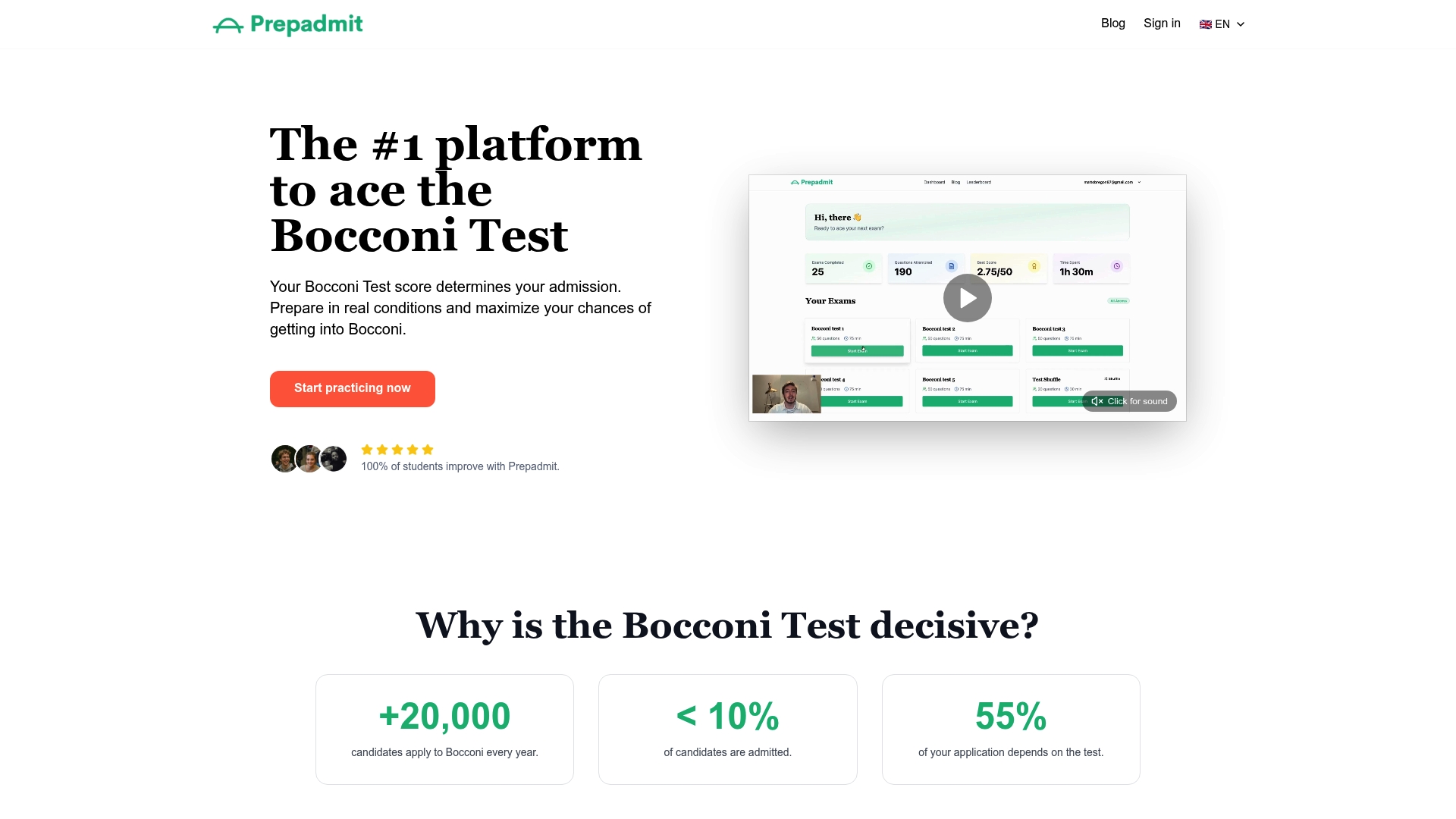
Students using Prepadmit improve their scores by an average of 34%. The platform was developed by experts from HEC and Bocconi, so the question styles and difficulty levels match what you will actually face. You get skill-specific practice modes, peer ranking, and a money-back guarantee. Visit Prepadmit to start your preparation today and give yourself the best possible shot at admission.
FAQ
What is a Bocconi test full simulation walkthrough?
A full simulation walkthrough is a complete, timed practice run of the Bocconi admission test under realistic exam conditions. It covers all 50 questions across four sections in 90 minutes, with official scoring rules applied.
How many questions are on the Bocconi test?
The standard undergraduate Bocconi test includes 50 questions: 10 math, 10 logic, 10 reading comprehension, and 30 English, completed in 90 minutes.
Does the Bocconi test have negative marking?
Yes. Correct answers earn +1 point, wrong answers deduct 0.25 points, and unanswered questions score 0. This makes selective answering a key part of your strategy.
How often should I run full simulations before the test?
Run at least five full simulations spaced across your preparation period. Candidates following an 8 to 12 week plan typically shift to full simulations in the final two to three weeks.
What is a competitive score on the Bocconi test?
A score above 35 out of 50 is generally considered competitive. Scores below 17 may be classified as non-evaluable and excluded from the admission ranking.
Recommended
Related articles
Ready to ace your admission test?
Discover PrepAdmit, the platform that helps you succeed at top university admission tests.
Discover PrepAdmit