Cut Bocconi Test Anxiety With 75 Minute Mock Exams and Pacing Rules

Cut Bocconi Test Anxiety With 75 Minute Mock Exams and Pacing Rules
The fastest way to cut Bocconi test anxiety is to run realistic, timed mock exams and pair them with a short day-of routine. Full 75-minute simulations make the test mechanics familiar, so your brain stops treating exam day as an unknown threat. Add a simple pre-test checklist and pacing rules, and most of the panic drains out before you sit down. Practice resources and Bocconi’s own counseling team can both help you get there.
TL;DR:
- Practice full 75-minute mock exams every one to two weeks and focus on error logging to identify and fix your biggest weaknesses.
- Structure your study plan with spaced repetition, early test booking, and at least one rest day weekly to prevent last-minute panic.
- Confirm technical setup and specific test rules beforehand, and use routine grounding techniques to manage last-day nerves effectively.
- Guess only when you can eliminate two options to maximize accuracy and avoid freezing during the test’s time-constrained questions.
- Seek professional counseling if anxiety persists beyond preparation, as proctored, timed formats create unfamiliar stress environments.
Table of Contents
- Why Bocconi-Specific Anxiety Happens and the Test Facts You Must Know
- Why Realistic Timed Simulations Work, and How to Structure Your Practice
- A Simple Study Plan That Prevents Last-Minute Panic
- Day-of-Test Tactics for the 24 Hours and the 75 Minutes
- Where to Get Help Beyond Self-Study
- How Prepadmit’s Simulations and Tracking Reduce Anxiety and Improve Scores
- What Exposure Practice Actually Teaches You
- Sources
Why Bocconi-Specific Anxiety Happens and the Test Facts You Must Know
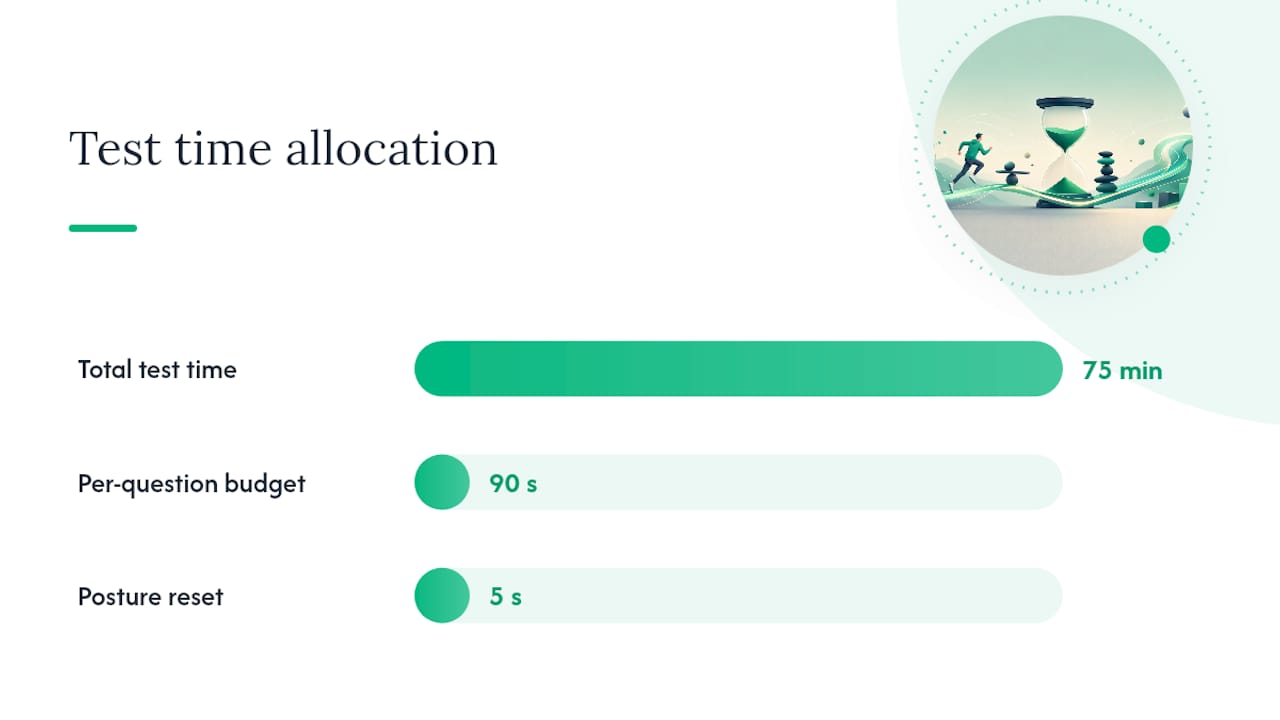
Anxiety usually grows in the gap between what you expect and what you don’t know. The Bocconi Online Test closes that gap the moment you understand its actual shape: 50 multiple-choice questions in 75 minutes, split across math, reading comprehension, numerical reasoning, and critical thinking. That works out to about a minute and a half per question, which is why pacing, rather than raw knowledge alone, strongly influences scores.
Scoring adds its own pressure. You get +1 for a correct answer, 0 for a skipped one, and a penalty for a wrong answer that varies by session, typically a small negative fraction for undergraduate sittings. Always confirm the exact figure in your session’s bando before test day.
A few platform details tend to catch students off guard:
- The test is proctored remotely, so your webcam, room, and ID checks happen live.
- Questions move in sequential order; you often cannot skip ahead and return freely.
- Booking windows and deadlines are fixed, and missing one can cost you an entire session.
Bocconi itself recommends reading the Instructions and Rules of Conduct before test day. Once these mechanics stop being a mystery, a large share of pre-test dread simply has nothing left to attach to.
Why Realistic Timed Simulations Work, and How to Structure Your Practice
Anxiety feeds on uncertainty and on the body’s physical alarm response. A timed mock exam attacks both at once: it removes the surprise factor and lets your nervous system rehearse calm under pressure until pressure stops feeling like an emergency. Bocconi’s own admissions guidance points to this same logic, framing platform familiarity as a direct anxiety reducer rather than a nice-to-have.
A workable mock schedule mixes three formats:
- Full 75-minute simulations that copy the real test, timer and all, run every one to two weeks depending on how close you are to test day.
- Focused drills of 15 to 20 questions on a single weak area, such as numerical reasoning, done two or three times a week.
- Mixed timed blocks of 30 to 40 minutes that combine subjects, useful for practicing the mental switching the real test demands.
To simulate proctoring, sit in the same room you plan to test in, close every other tab, and start a visible countdown timer. Small friction, like getting used to a locked navigation flow, matters more than it sounds. One external breakdown of how online mock exams simulate real tests makes the same point: environment matching, not just content review, is what lowers physiological anxiety on test day.
Review is where the real gains happen. After each mock, build a short error log grouping mistakes by cause, whether it was a content gap, a careless read, or running out of time. A pacing heatmap showing which question ranges ate the most time is often more revealing than your raw score. Close every review session with one or two micro-goals, something like “cut math section time by 20 percent,” which research on mock exam performance links to faster improvement and less anxious rumination between sessions.
Pro Tip: Log every wrong answer with a one-word reason (rushed, guessed, didn’t know). After five mocks, that word list tells you exactly what to fix, not just what you missed.
A Simple Study Plan That Prevents Last-Minute Panic
Panic tends to show up when preparation has been random. A structured calendar removes most of that risk. A dependable cadence starts six to eight weeks out with twice-weekly skill drills, adds one full mock every 10 to 14 days through the middle stretch, ramps to two full mocks a week in the final two weeks, then tapers to a light rehearsal 48 to 72 hours before your booked date.
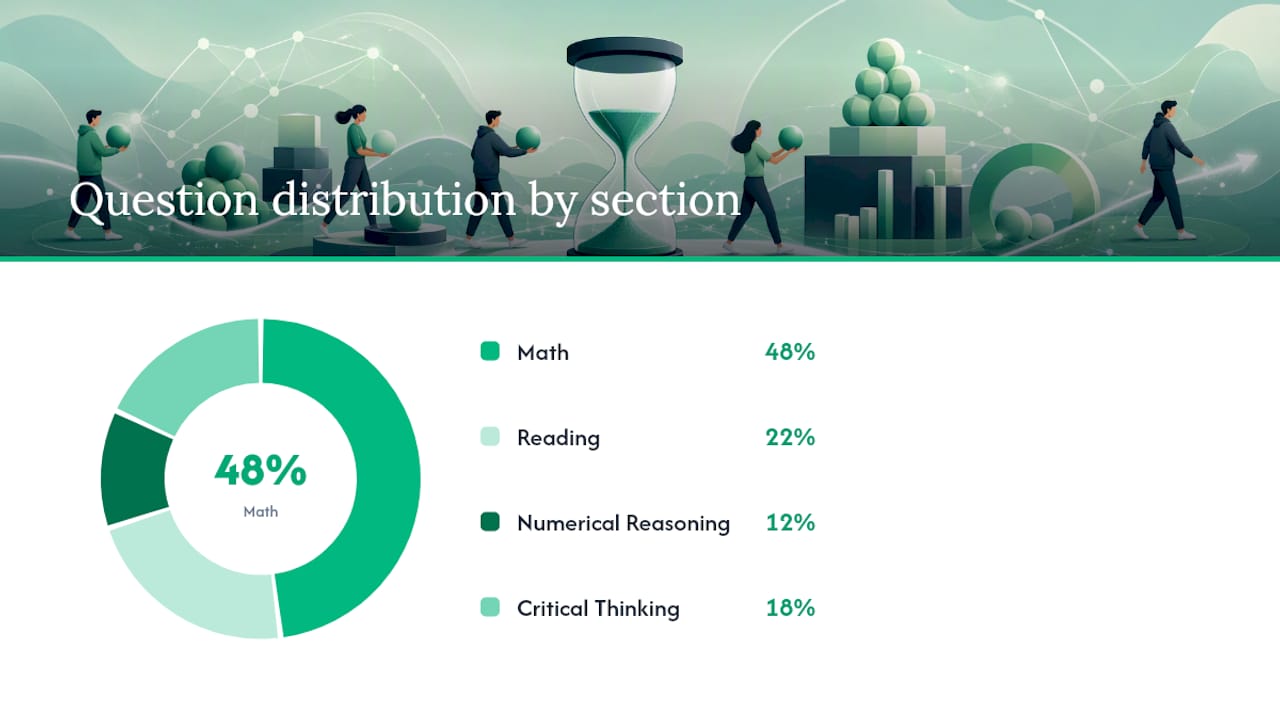
Weight your practice against the actual test, since undergraduate sessions run roughly 24 math questions, 11 reading, 6 numerical reasoning, and 9 critical thinking. Spend more hours where the question count is heaviest.
A few habits keep the plan from collapsing into cramming:
- Use spaced repetition for formulas and vocabulary instead of one long review night.
- Keep an active error log and revisit it weekly, not just after mocks.
- Book your test date early so your calendar has a fixed endpoint to build backward from.
- Schedule at least one full rest day a week; burnout raises anxiety more than it lowers it.
Pro Tip: Treat the two weeks before your test as a taper, not a sprint. Cramming raw content in the final days usually raises anxiety without raising your score.
Day-of-Test Tactics for the 24 Hours and the 75 Minutes
Nerves spike hardest in the last day, which is exactly when a checklist pays off. The night before, prioritize sleep over one more review session, eat a normal meal, and test your device, camera, and internet connection so nothing technical ambushes you at login. Confirm your booking time and set up a quiet, well-lit space in advance.
Three quick grounding techniques, drawn from practical test-anxiety guidance, can defuse a spike of panic in under a minute:
- Box breathing: inhale for four counts, hold four, exhale four, repeat four times.
- 5-4-3-2-1 grounding: silently name five things you see, four you hear, three you can touch.
- Shoulder drop and jaw release: tense both for three seconds, then let go completely.
During the test, given the negative-marking rules, guess only when you can eliminate at least two options; otherwise skip and move on rather than freeze. Around 90 seconds per question is your rough budget across 50 questions in 75 minutes. If panic flares mid-test, a five-second posture reset and a blink break costs almost no time and often stops a spiral before it starts.
Where to Get Help Beyond Self-Study
Some anxiety needs more than a study plan. Bocconi’s Campus Life team runs individual counseling and group workshops, including sessions built specifically around exam stress and pressure management.
Consider reaching out for professional support if you notice:
- Recurring panic attacks, not just occasional nerves.
- Sleep that’s been disrupted for more than a week or two.
- Anxiety that’s spilling into schoolwork, friendships, or daily routines.
A first counseling session is typically a conversation, not a diagnosis. It is there to figure out what kind of support fits you. Parents and school counselors can also help you build a realistic timeline, and it’s worth a reminder that a strong test score alone won’t secure your spot. You still have to submit your formal application before the deadline.
How Prepadmit’s Simulations and Tracking Reduce Anxiety and Improve Scores
Prepadmit builds its practice system around official past papers, timed simulations, targeted skill drills, detailed answer corrections, and peer-ranking dashboards, so you can see exactly where you stand before test day. Schedule mocks on a calendar, mine each one for error patterns, and set a micro-goal before the next attempt. Prepadmit reports an average score improvement and backs its plans with a money-back guarantee, giving you a low-risk way to turn exposure practice into a measurable result.
What Exposure Practice Actually Teaches You
Anxiety around this test rarely comes from not knowing math or grammar. It comes from facing a proctored, timed, unfamiliar interface for the first time under real stakes. Exposure practice fixes that by making the format boring long before it matters. That said, if anxiety is disrupting your sleep or daily life, no amount of mock exams replaces real counseling support. Treat that as a separate, serious step, not an afterthought.
— quentin
This article is general information, not a substitute for advice from a qualified doctor. Consult a qualified healthcare professional about your own circumstances before acting on anything here.
Sources
- Test online Bocconi - Università Bocconi
- Ansia da test: strategie utili per affrontarla - State of Mind
Recommended
Related articles
Ready to ace your admission test?
Discover PrepAdmit, the platform that helps you succeed at top university admission tests.
Discover PrepAdmit