Affordable Exam Preparation: A 2026 Budget Guide

Affordable Exam Preparation: A 2026 Budget Guide
Affordable exam preparation is the strategic combination of budget-friendly study materials, practice tests, and targeted guidance that fits a student’s specific needs and improves competitive exam scores efficiently. For students aiming at Bocconi University, this approach matters more than ever. Private coaching costs can run thousands of dollars, yet mid-range self-paced courses often outperform premium options when they match your learning style. The key is knowing which resources to combine, how much to spend, and where free tools like Khan Academy can carry you before you invest a single dollar.
What makes exam preparation affordable and effective?
Cost-effective test preparation is not just about spending less. It is about spending right. The industry term for this approach is “diagnostic-led budgeting,” and it means you allocate money based on where your actual score gaps are, not on what looks most impressive in a sales page.
Here is what separates affordable prep that works from cheap prep that wastes your time:
- Score gap alignment: Small score improvements are achievable under $300, while larger gaps may warrant $500–$1,500 for the best results per dollar. Spending beyond that threshold rarely produces proportional gains.
- Completion rate: A $200 course you finish beats a $1,500 course you abandon. Consistent practice matters more than the price tag on your materials.
- Fit over price: Experts consistently recommend prioritizing fit over price when selecting prep materials. A self-paced course that matches your schedule and learning style will outperform a live class that does not.
- Practice volume: High-volume practice questions with detailed explanations are the single biggest driver of affordable prep success. They outweigh expensive course subscriptions every time.
For Bocconi Test aspirants specifically, this means choosing resources that simulate the actual exam format, not generic test prep tools built for a different audience.
Pro Tip: Before spending anything, take a free diagnostic test. Your score gap tells you exactly how much to invest and in which areas. Skipping this step is the most common and most expensive mistake students make.

Free vs. budget vs. mid-range: which option fits you?
Not all budget exam prep options are equal. The right choice depends on your current skill level, your target score, and how much time you have before the exam. Here is a direct comparison of the three main tiers.
| Resource Type | Cost Range | Best For | Examples |
|---|---|---|---|
| Free resources | $0 | Building foundational knowledge | Khan Academy, official exam handbooks, YouTube tutorials |
| Budget paid resources | $30–$100 | Practice volume and timed simulations | Affordable question banks, self-paced mini-courses |
| Mid-range options | $100–$500 | Targeted skill gaps, structured programs | Bundled courses, focused tutoring sessions, Prepadmit |
Free resources like Khan Academy are superior for foundational knowledge. Paid budgets are best reserved for high-fidelity timed simulations with performance analytics. That distinction is critical. Many students waste money buying premium content for concepts they could learn for free.
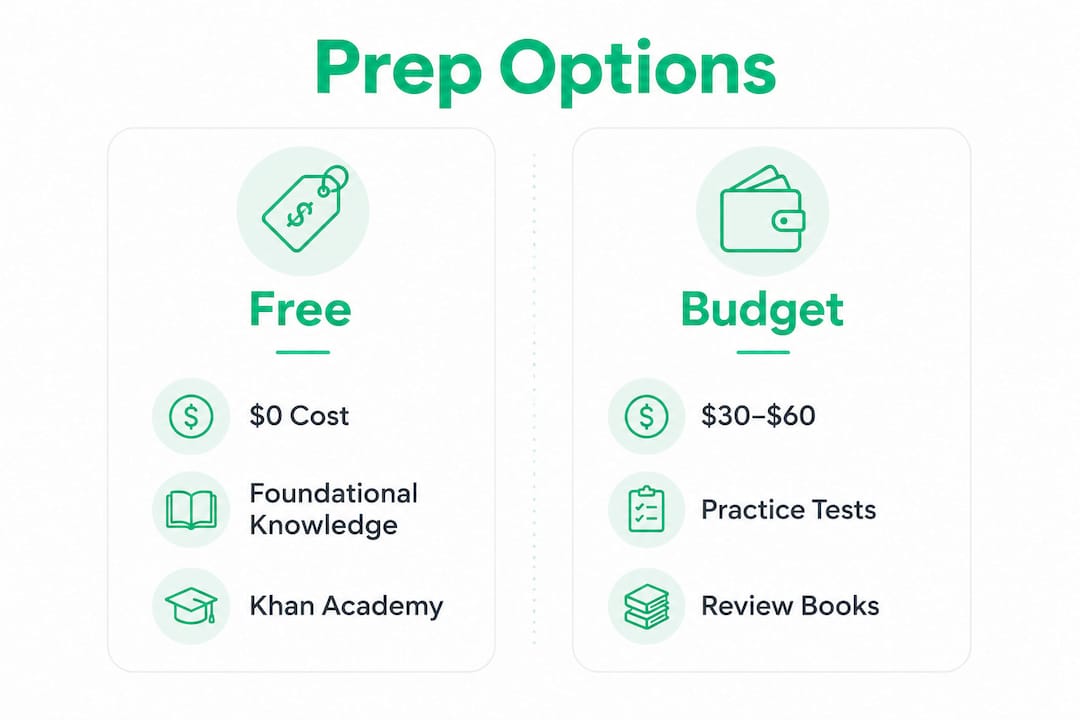
The most cost-effective combination is a single high-quality review book ($30–$60) paired with an affordable practice question bank ($30–$50). Together, they keep your total prep material cost under $100 beyond exam fees. That is a proven strategy used across professional exams from the FE to the MCAT.
Mid-range options make sense when you have identified a specific weakness. A targeted tutoring session on logical reasoning, for example, costs far less than a full premium course and fixes the actual problem.
Pro Tip: Use free official exam handbooks to cover content, then invest in paid timed simulations for speed and accuracy calibration. This hybrid prep approach consistently outperforms buying one expensive all-in-one course.
Why mixing free and paid resources works best
The most effective budget exam prep strategy is not purely free and not purely paid. It is a deliberate mix of both, structured around your diagnostic results.
Here is a practical four-step framework for Bocconi Test candidates:
- Start with free foundational content. Use Khan Academy for math and verbal reasoning basics. Download the official Bocconi past papers. These are free and directly relevant to what you will face on test day.
- Run a diagnostic simulation. Take a timed mock exam under real conditions. Your results tell you exactly which sections need paid attention. This step protects you from buying materials you do not need.
- Invest in targeted paid tools. Spend $30–$100 on a practice question bank or a focused course module that addresses your weak areas. Avoid buying broad premium packages before you know your gaps.
- Simulate the real exam repeatedly. Timed, full-length practice tests are where score gains actually happen. Platforms like Prepadmit offer on-demand Bocconi simulations that replicate real exam conditions with detailed answer corrections.
The financial logic here is straightforward. A failed exam attempt costs far more than a targeted tutoring session. For context, a single failed professional exam attempt can cost $695 in fees alone, plus 8–12 weeks of extra prep time. The same principle applies to university entrance exams. One retake wipes out every dollar you saved on cheap prep.
“Preventive investment in diagnostics and targeted tutoring usually results in better affordability overall by reducing the risk of retakes and wasted study time.” — JackWestin, MCAT Prep Budgeting
Spending slightly more on targeted tutoring for weak areas prevents costly retakes and delivers better return on investment than generic cheap courses that do not fix your actual problems.
How to build a personalized affordable prep plan for bocconi
A personalized plan turns a scattered collection of study materials into a clear path to your target score. Here is how to build one without overspending.
Step 1: Assess your current level. Take a free diagnostic test using official Bocconi past papers or a free practice platform. Record your score by section. This is your baseline.
Step 2: Set a realistic score goal and budget. Decide how many points you need to gain. A small gap (5–10 points) is achievable with free and budget resources. A larger gap may require a structured mid-range course. Match your spending to the gap, not to your anxiety.
Step 3: Select complementary resources. Do not buy three courses that cover the same content. Pick one foundational resource (free or low-cost) and one simulation tool. For Bocconi candidates, a platform that uses official past papers with timed conditions is more valuable than a generic test prep subscription.
Step 4: Prioritize practice volume over content review. Once you understand the material, your time is better spent doing timed practice questions than re-reading notes. Diagnostic-led budgeting means you invest in more practice, not more content.
Step 5: Track your progress weekly. Use a simple spreadsheet or the analytics built into your prep platform. If your score in a specific section is not improving after two weeks, adjust your resource, not your effort level.
Pro Tip: Set a weekly practice target in number of questions, not hours. Forty focused questions with full review beats two hours of passive reading every time.
Staying disciplined is the hardest part of any exam prep for low budget. Remove friction by scheduling your study sessions in advance and treating them like appointments. Students who complete their planned practice volume consistently outperform those who study more hours but skip sessions.
Key takeaways
Affordable exam preparation works best when you match your spending to your actual score gap and combine free foundational tools with targeted paid simulations.
| Point | Details |
|---|---|
| Diagnostic first, spending second | Always run a free diagnostic before buying any paid prep resource to avoid wasted spending. |
| Free tools cover the basics | Khan Academy and official past papers handle foundational content at zero cost. |
| Practice volume beats course price | High-volume timed practice questions drive more score improvement than expensive subscriptions. |
| Avoid retakes at all costs | One failed exam attempt costs more in fees and time than a targeted tutoring session ever would. |
| Fit matters more than price | A mid-range course that matches your learning style outperforms a premium course that does not. |
What i have learned watching students prep on a budget
After working with dozens of Bocconi Test candidates, the pattern I see most often is not a lack of resources. It is a lack of focus. Students buy three different prep books, sign up for two courses, and then use none of them consistently. They spend more than they planned and score less than they hoped.
The students who succeed on a tight budget do one thing differently. They pick fewer resources and use them completely. A single affordable practice platform with real Bocconi past papers, used five days a week for six weeks, beats a scattered collection of premium materials used inconsistently.
The other mistake I see constantly is skipping mock exams to save money. Mock exams are not optional extras. They are the mechanism through which your brain learns to perform under pressure. You can read every prep book ever written and still freeze on test day if you have never practiced under timed conditions. The role of mock exams in Bocconi prep is not a nice-to-have. It is the core of the whole strategy.
My honest advice: spend less on content and more on simulation. Spend less time reading and more time doing. And if you are going to invest in one paid tool, make it one that tracks your performance, shows you where you went wrong, and ranks you against other candidates. That feedback loop is worth more than any lecture series.
— quentin
How Prepadmit makes bocconi prep affordable
Prepadmit is built specifically for students preparing for the Bocconi Test, and it is priced as a real alternative to private coaching at a fraction of the cost.
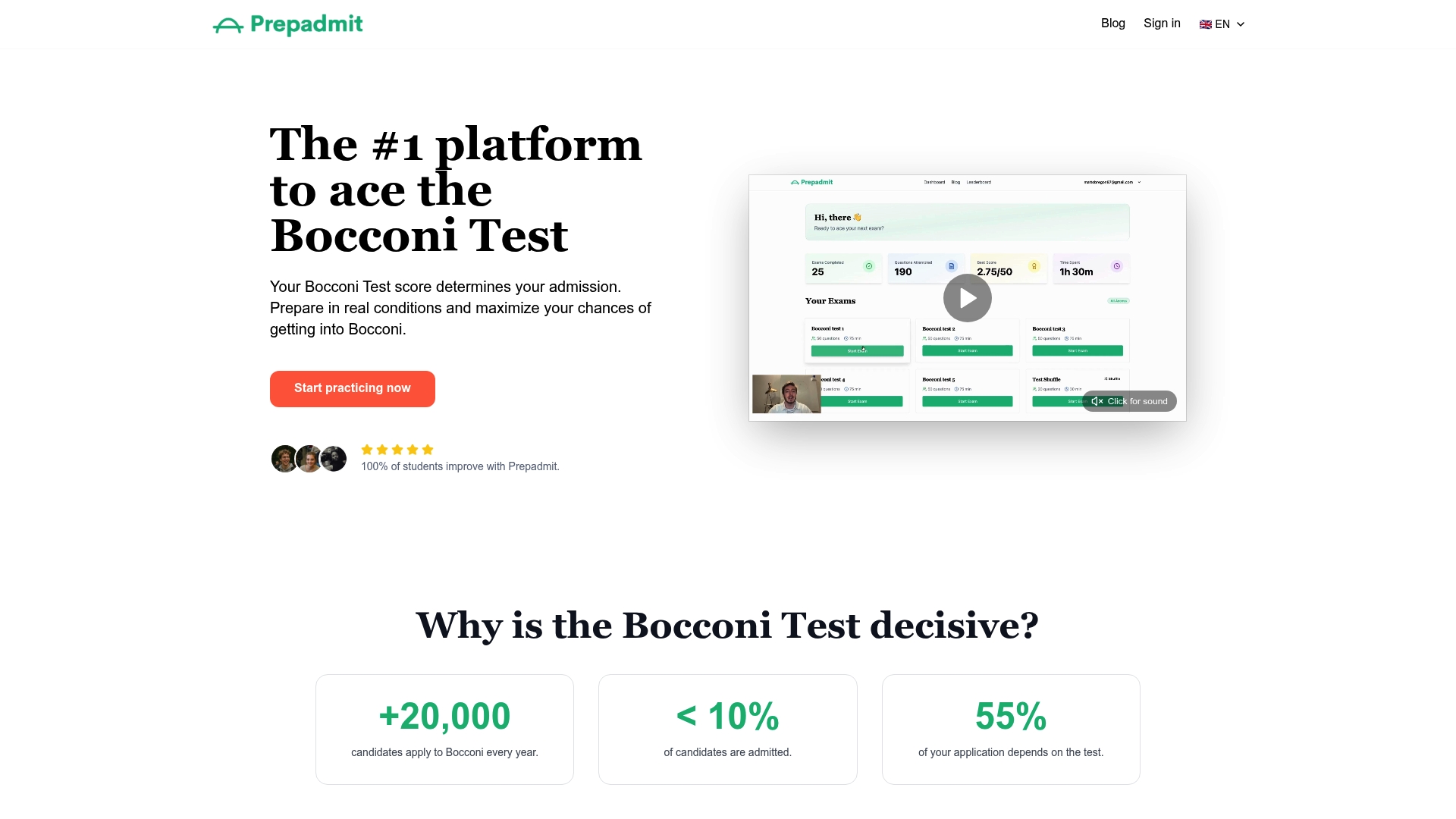
The platform gives you access to official past papers, on-demand timed simulations, detailed answer corrections, and peer ranking, all in one place. Students using Prepadmit see an average score improvement of 34%, backed by a money-back guarantee. If you are serious about Bocconi and working with a real budget, start your prep on Prepadmit today and put your study time where it actually counts.
FAQ
What is affordable exam preparation?
Affordable exam preparation is the strategic use of free and low-cost study materials, practice tests, and targeted guidance to improve exam scores without overspending. It prioritizes fit, practice volume, and diagnostic-led spending over premium course subscriptions.
How much should i spend on bocconi test prep?
Most students see the best results per dollar by spending $500–$1,500 on prep, but smaller score gaps are achievable for under $300 using free resources combined with an affordable practice platform like Prepadmit.
Are free resources enough to pass the bocconi test?
Free resources like Khan Academy and official past papers are strong for foundational content, but timed simulations with performance analytics are needed for full exam readiness. A hybrid approach combining both produces the best results.
Why are mock exams so important for affordable prep?
Mock exams train you to perform under real time pressure and reveal exactly which areas need more work. Skipping them to save money increases the risk of a retake, which costs far more in fees and time than any simulation platform.
What is the biggest mistake students make with budget exam prep?
The most common mistake is buying multiple overlapping resources and using none of them consistently. One focused platform used daily for six weeks outperforms three premium courses used sporadically.
Recommended
Related articles
Ready to ace your admission test?
Discover PrepAdmit, the platform that helps you succeed at top university admission tests.
Discover PrepAdmit