What to Do in Your Last Month Before the Bocconi Test

What to Do in Your Last Month Before the Bocconi Test
Book your session now if it isn’t locked in, run a full technical launch during official support hours, and complete at least two full timed simulations before test day. Those three moves separate students who walk in calm from students who scramble.
The last month before the Bocconi test rewards speed and precision, not more studying. Waiting on booking risks losing your preferred date to blackout windows. Skipping a tech check risks a failed launch that costs you an attempt. And relying on scattered review instead of timed practice means you show up unprepared for the actual pressure of a 75-minute clock.
Here’s what to do this week:
- Book your slot today if you haven’t, targeting a date well before your session’s closing window.
- Launch a full system check during technical support hours to confirm your webcam, microphone, and browser setup work.
- Run at least two full timed simulations and daily 60 to 90 minute drills on your weakest subscore.
Key Takeaways
Success in the final month depends on booking early, verifying your technical setup during support hours, and running enough timed simulations to master pacing under real pressure.
| Point | Details |
|---|---|
| Book weeks ahead | Reserve your session well before the closing date since final slots sell out fast. |
| Run a tech check early | Test your webcam, microphone, and browser during official support hours, not on test day. |
| Respect the 24-hour rule | Change your date or language only up to 24 hours before your booked slot. |
| Train with timed simulations | Run at least two full simulations plus daily 60 to 90 minute drills on weak areas. |
| Use Prepadmit for realistic practice | Official past papers and timed simulations on Prepadmit mirror actual test conditions and pacing. |
Table of Contents
- When Is the Last Month Test Bocconi Window, and What Dates Should You Target?
- What Does the Bocconi Test Actually Look Like on Screen?
- What Rules Govern Attempts, Date Changes, and Refunds?
- How Do You Prepare Your System Before Test Day?
- Building Your Four-Week Study Plan for the Final Stretch
- The 72 Hours Before Your Test: A Final Checklist
- Reading Your Score Report and Deciding Your Next Move
- What Kinds of Questions Show Up, and How Hard Are They Really?
- How Do You Manage Time and Stress in the Final Weeks?
- What Mistakes Trip Up Students Most Often in the Final Month?
- How Prepadmit Fits Into Your Final Month
- Sources
When Is the Last Month Test Bocconi Window, and What Dates Should You Target?
Bocconi runs its online admission test in three main sessions: Early, Winter, and Spring. Each has a closing date that determines the true last month test Bocconi window for that round, and those dates shift depending on whether you’re an Italian or international applicant.
Italian applicants can generally book anywhere from July 13, 2026 through April 20, 2027, while international applicants face earlier closing points, sometimes as early as mid-January for certain rounds. That gap matters. If you’re applying from outside Italy, your personal “last month” often falls weeks before the date an Italian classmate is using.
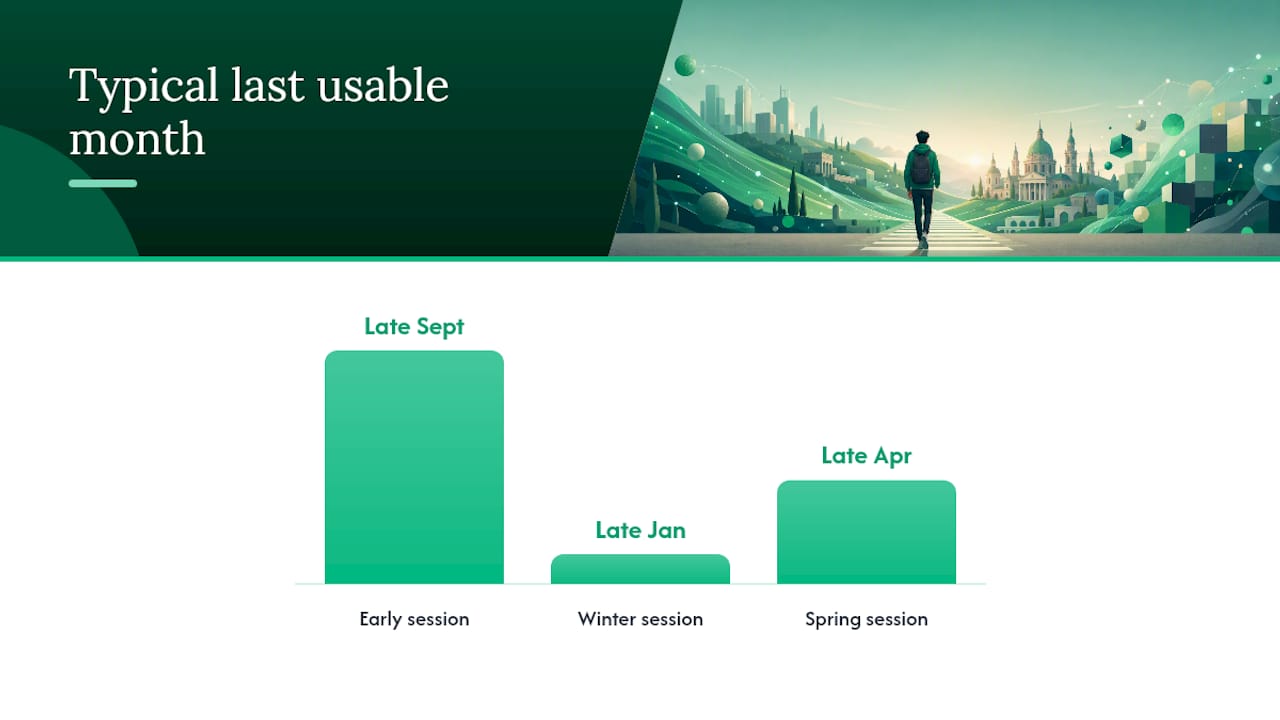
Typical last usable dates look something like this: the Early session tends to close around late September, Winter wraps in late January, and Spring closes in late April. Treat these as approximate examples tied to each admissions cycle rather than fixed universal dates, and always confirm the exact figure on the official calendar before you plan around it.
Two structural details catch students off guard:
- The booking calendar only displays dates starting two days after today, so you can’t book tomorrow, even if a slot theoretically exists.
- The platform closes entirely during recurring blackout stretches, including breaks around late summer, late September into October, and the winter holidays, based on the schedule Bocconi publishes for the online test.
The last available dates in every session sell out. Bocconi’s own admissions guidance recommends booking well in advance rather than waiting for a slot to open closer to the deadline, precisely because demand spikes hardest in the final days. Book weeks ahead, not 48 hours ahead. A booking made with margin gives you room to reschedule if life interferes, without the last date on the calendar as your only fallback.
What Does the Bocconi Test Actually Look Like on Screen?
The undergraduate test typically runs 50 questions in 75 minutes, split across mathematics, text comprehension, and critical or numerical reasoning. Some versions add a fourth thematic block, so check the exact structure for your intended course on the official instructions document before you finalize your prep plan.
Each section demands a different mental gear shift:
- Mathematics tests algebra, basic geometry, and quantitative logic under time pressure, not advanced calculus.
- Text comprehension gives you a passage and asks you to extract meaning, tone, or implication quickly.
- Reasoning mixes pattern recognition with numerical estimation, often the section where pacing breaks down first.
Your score report becomes available within 48 hours of finishing and includes your total score, sub-scores by area, counts of correct, omitted, and incorrect answers, and a reference number you’ll need for your application file. Save that reference number the moment it appears. You’ll want it on hand when you submit materials for your chosen admission round.
What Rules Govern Attempts, Date Changes, and Refunds?
Four structural rules shape how much room you have to maneuver, and missing any one of them can cost you an attempt you didn’t mean to use.
- Attempt limits. You can take each test type up to four times per academic year, though same-day or back-to-back-day repeats aren’t allowed under the rules.
- Changing your date or language. You can modify your booking up to 24 hours before your scheduled date through your personal account area. Miss that window and you’re locked in.
- Withdrawal and refunds. A 14-day right of withdrawal generally applies from booking, but timing interacts with how close you are to the test date, so check the specific refund terms tied to your booking.
- Unjustified absence. If you don’t show up and haven’t formally withdrawn in time, the system marks it as a used attempt, not a neutral no-show.
Each attempt carries a registration fee of €60, payable by PayPal or credit card. That’s real money attached to every miscalculated booking, which is one more reason the 24-hour change window deserves a spot on your calendar reminders, not just in your memory.
How Do You Prepare Your System Before Test Day?
Running your technical setup once, two or three days out, prevents the single worst outcome in this whole process: a proctoring failure on the day that matters.
Work through this list before you’re within 48 hours of your booked slot:
- Test your webcam and microphone with the actual proctoring software, not a generic video call app.
- Confirm your internet connection holds steady for at least 90 continuous minutes.
- Install and open the Safe Exam Browser to check for conflicts with your operating system.
- Capture a clear ID photo exactly as the platform requires.
- Do a full room scan with your smartphone to confirm your space meets the visibility requirements.
Technical assistance runs Monday through Thursday, 9:00 to 18:00, and Friday 9:00 to 16:30 CET/CEST. Run your test launch inside those hours. If something breaks, you want a support agent awake and reachable, not a help form sitting unanswered overnight.
Pro Tip: If your launch fails, screenshot the error immediately before you close anything. Support teams move faster when they can see exactly what broke, and a rebooking decision is easier to make once you know whether the issue was on your end or the platform’s.
Building Your Four-Week Study Plan for the Final Stretch
A four-week runway is enough time to fix real weaknesses, but only if each week has a distinct job. Students who spread generic review evenly across the month tend to peak too early or never peak at all.
- Week four: diagnose before you plan. Take one full diagnostic simulation under real time constraints, then identify your two weakest areas from the sub-score breakdown. Everything that follows should target those two gaps specifically, not a vague sense of “needing more practice.”
- Week three: targeted improvement. Run daily 60 to 90 minute sessions split between focused skill drills in the morning and mixed timed sets in the evening. Review every wrong answer the same day you make the mistake, while the reasoning is still fresh.
- Week two: master your timing. Increase to two or three full timed simulations this week. This is where pacing strategy gets tested for real: know in advance how long you’ll spend per question before moving on, and log every error type so you can spot repeat patterns fast.
- Final week: taper and handle logistics. Run one more full simulation early in the week, then shift to lighter, focused drills rather than new material. Complete your technical system check during support hours by midweek at the latest. Protect your sleep in the final 72 hours; a tired brain loses more points on reasoning sections than an under-reviewed topic ever will.
Short, repeated timed sets with immediate error review tend to move your score faster in this window than long sessions covering brand-new material, since the final month rewards consolidation over exploration. A step-by-step preparation guide can help you structure the earlier weeks if you’re building this plan from scratch.
Pro Tip: Log every missed question in a single running document with the error type, not just the topic. “Misread the question” and “forgot the formula” call for completely different fixes, and you’ll only see the pattern if you track it that specifically.
The 72 Hours Before Your Test: A Final Checklist
The three days before your test aren’t for new content. They’re for making sure nothing external derails a score you’ve already earned through practice.
Work through this in order:
- Confirm your booking details and double-check the exact date and time window.
- Log into the test platform once to confirm your credentials still work.
- Fully charge your laptop and have a backup power source ready.
- Prepare your ID exactly as required, and set up a quiet, well-lit room.
- Run one last login test during official support hours, just in case.
On test day, log in early, complete your system checks calmly, and pace yourself by section rather than by question count alone. You can take the test any time within the 00:00 to 23:59 window of your booked date, but don’t wait until the last hour if you can help it.
If anything feels wrong on the morning of, remember you can still adjust your booked date up to 24 hours in advance. Once you’re inside that 24-hour window, though, your only paths are showing up or accepting an absence, so weigh a reschedule decision early rather than late.
Reading Your Score Report and Deciding Your Next Move
Your report lands within 48 hours and includes your total score, section-by-section sub-scores, and a count of correct, omitted, and incorrect answers. Save the reference number immediately. It ties directly to your application file.
Match your test timing to your target application round. A score has to exist on file while that round’s platform window is still open, so a strong result taken too late for your intended deadline doesn’t help the round you wanted.
If your score comes in below where you hoped:
- Rebook another attempt if you still have attempts remaining and time before your application deadline.
- Consider whether an alternative accepted test fits your situation better.
- Adjust your application round or course choice if the numbers suggest a stronger fit elsewhere.
What Kinds of Questions Show Up, and How Hard Are They Really?
The math section leans on speed as much as knowledge. Expect algebraic manipulation, percentage and ratio problems, and basic geometry, but rarely anything beyond what a solid high school curriculum covers. The difficulty comes from the clock, not the content.
Text comprehension questions test inference more than memory. You’ll read a passage once, then answer questions about tone, main argument, or what the author implies without stating outright. Students who skim too fast miss implication questions; students who read too carefully run out of time. Finding that middle gear takes practice on passages with the same structure the real test uses.
Reasoning questions mix numerical estimation with pattern logic, and this is usually where scores diverge most between students who’ve drilled the format and those who haven’t. A question that looks like a simple sequence puzzle can hide a numerical trap that costs 90 seconds if you don’t recognize the pattern type immediately.
Across all three areas, difficulty rarely comes from advanced concepts. It comes from unfamiliar phrasing under time pressure. That’s why timed, format-matched practice outperforms general review in the final month: you’re training recognition speed, not learning new material. Reviewing how the test format has evolved helps you calibrate exactly what “hard” looks like this cycle.
How Do You Manage Time and Stress in the Final Weeks?
Time management in this window means protecting your practice sessions the same way you’d protect a scheduled class. Block 60 to 90 minutes daily, treat it as fixed, and resist the urge to cram everything into weekend marathons that leave you fried by Monday.

Inside each practice session, simulate real conditions as closely as possible. Time every section separately, not just the whole test, so you learn exactly where your pacing breaks down. A problem solving practice tool can supplement your drills for isolated reasoning skill work between full simulations.
Stress tends to spike hardest in the final week, usually from uncertainty rather than lack of preparation. The fix isn’t more content. It’s more structure. Knowing your exact test date, having your tech verified, and having already run two or three full simulations removes the unknowns that usually cause pre-test anxiety. Confidence in this context comes from familiarity with the format, not from cramming one more topic the night before.
What Mistakes Trip Up Students Most Often in the Final Month?
The most common pitfall is booking too late and losing a preferred date to a blackout window or a fully booked calendar. The second is skipping the technical check entirely and discovering a webcam or browser conflict minutes before the test starts. The third is over-cramming new material in the final week instead of reinforcing what’s already been learned through timed review.
A smaller but real pitfall: forgetting that an unjustified absence counts as a used attempt. Students sometimes assume they can simply skip a booked slot if they don’t feel ready, without realizing that decision consumes one of their four allowed attempts for that test type.
A coach’s take on the final month
The mistake I see most often isn’t lack of effort. It’s booking late, skipping the tech check, and cramming new topics instead of reviewing old mistakes. Pace yourself, review every error closely, and trust realistic, timed practice over last-minute panic reading. For structured, exam-condition simulations, Prepadmit’s resources are worth building into your final weeks.
— quentin
How Prepadmit Fits Into Your Final Month
Realistic, timed pressure is the one thing generic review can’t replicate, and it’s the exact gap Prepadmit was built to close. The platform gives you official past papers, on-demand timed simulations, and detailed answer corrections so every practice session mirrors the actual test conditions you’ll face on booking day, not a watered-down approximation.
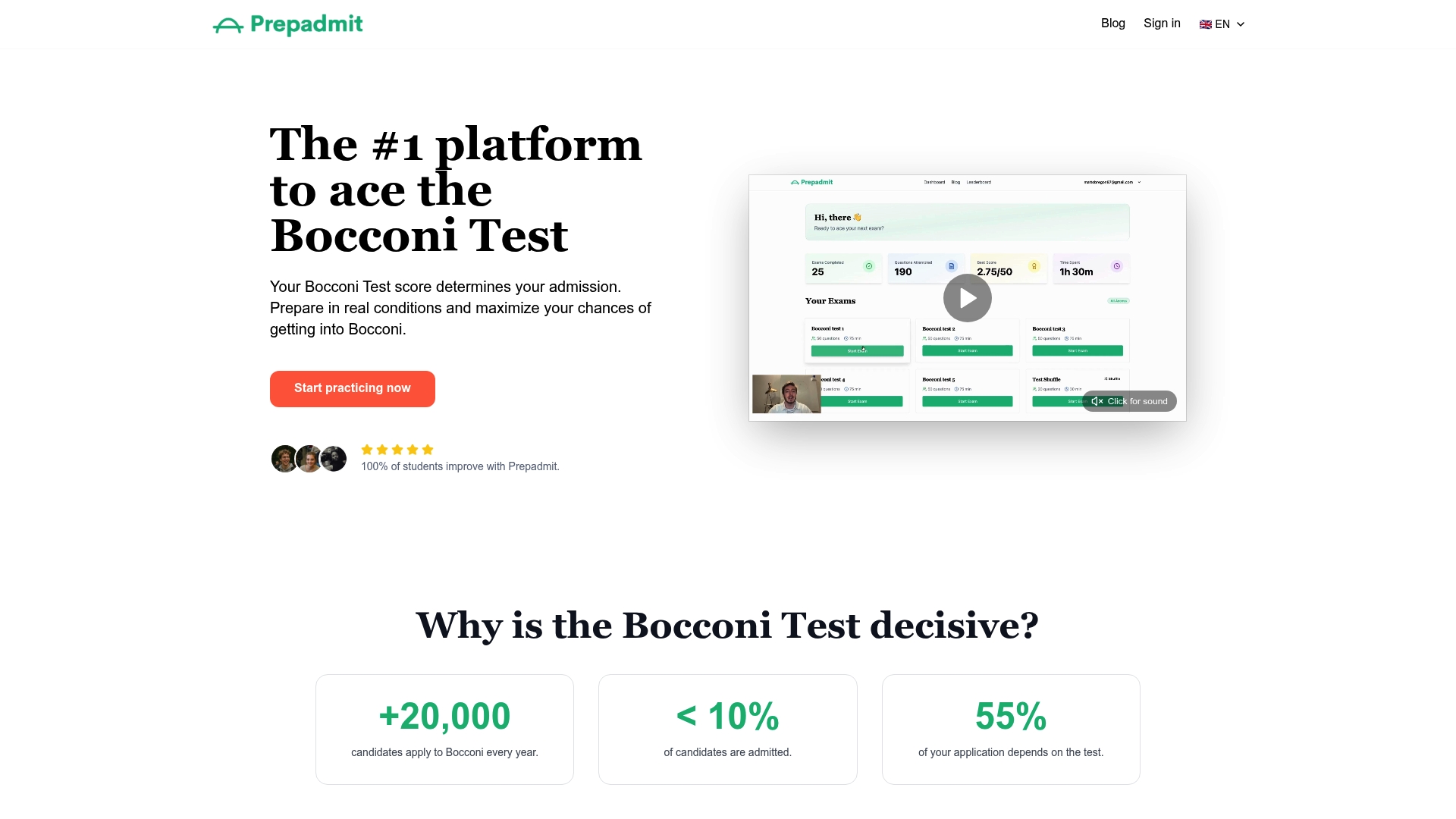
What makes it useful specifically in this window is speed of feedback. A quick diagnostic simulation tells you your two weakest areas in the time it takes to run one test, and skill-specific drill modes let you attack those gaps directly instead of re-reviewing material you’ve already mastered. Progress tracking shows whether your timing is actually improving week over week, and the peer leaderboard gives you a concrete sense of where you stand before the real thing. Prepadmit also backs its results with a money-back guarantee, which matters when you’re deciding how to spend your final-month hours. Check your standing on the leaderboard and start your first timed simulation today.
Recommended
Related articles
Ready to ace your admission test?
Discover PrepAdmit, the platform that helps you succeed at top university admission tests.
Discover PrepAdmit