Realistic Simulazioni Weekend Bocconi: Your 2-Day Practice Plan

Realistic Simulazioni Weekend Bocconi: Your 2-Day Practice Plan
Run two full, proctor-style mocks this weekend, one Friday night and one Sunday morning, each set to 50 questions and 75 minutes, using the official Bocconi simulation for your baseline and a timed platform like Prepadmit for the second run, configured to forbid back-navigation. That single instruction is the entire point of simulazioni weekend Bocconi: compress real exam pressure into two days so you know exactly where you stand before test day.
Here’s why this works. Bocconi’s actual online admission test locks you into 50 multiple-choice questions in 75 minutes, delivered three at a time, with zero ability to return to a previous screen once you’ve moved on. Most students never practice that constraint. They study concepts in a relaxed browser tab, get every answer right eventually, and then panic on test day when the platform refuses to let them go back and check question 12. A weekend simulation fixes that gap fast, because it forces the same one-shot decision-making the real webtesting platform demands.
- Saturday or Friday night: one baseline run on the official simulation, reviewed afterward for accuracy.
- Sunday morning: one proctor-style mock on a platform that mimics the no-back-navigation rule, ideally at the same hour your real test is scheduled.
- Same day, within the hour: a debrief session comparing both scores and marking every wrong answer by cause (careless error, timing pressure, or knowledge gap).
Pro Tip: Set your phone timer for 75 minutes even if the platform shows its own countdown. A second visible clock trains your eyes to check pacing without breaking focus on the screen.
Do I need two full mocks every weekend, or is one enough? One full mock still beats zero, but two gives you a same-weekend comparison point. Running the baseline Friday and the proctor-style version Sunday shows whether fatigue, timing, or format familiarity is driving your score, which a single attempt can’t isolate.
Key Takeaways
Weekend simulations work when they replicate Bocconi’s exact 50-question, 75-minute, no-back-navigation format, not a looser approximation of it.
| Point | Details |
|---|---|
| Match the exact format | Run mocks at 50 questions and 75 minutes with sequential, non-returnable screens. |
| Run a system check early | Test your browser extension, camera, and connection at least a day before any mock. |
| Sequence your weekend | Light Friday warm-up, Saturday drills, Sunday full mock, same-day debrief. |
| Track more than raw score | Log section subscores, error type, time per question, and unanswered rate weekly. |
| Use Prepadmit for the proctor-style half | Configure on-demand mocks to block back-navigation and track section-by-section progress. |
Table of Contents
- What Structure and Rules Should a Bocconi Simulation Match?
- What Technical Setup Do You Need for a Faithful Mock?
- How Do You Actually Run a Weekend Simulation, Step by Step?
- How Often Should You Run Full Simulations, and What Should You Track?
- How Do Test Dates, Attempts, and Accommodations Actually Work?
- Where Can You Actually Run These Simulations This Weekend?
- Why Prepadmit’s Simulation Data Backs Up This Weekend Routine
- An Editorial Perspective on Weekend Simulation Habits
- Get a Proctor-Style Weekend Mock Without Building One Yourself
- Bookmark These Before Your Next Weekend Mock
- Sources
What Structure and Rules Should a Bocconi Simulation Match?
The real Bocconi online test is fixed at 50 multiple-choice questions and a 75-minute clock, and any weekend mock that deviates from that ratio is measuring the wrong thing. Questions arrive mixed by topic and difficulty rather than grouped by subject, which means you can’t warm up on math for ten minutes before switching gears. Verbal reasoning, quantitative logic, and critical reading questions interleave from question one.
Navigation is where most students get caught off guard. The official instructions document confirms the test displays three questions per screen and moves forward only. Once you submit a screen, it’s gone. The official simulation is more forgiving here. It lets you review your answers at the end of the run, which is useful for baseline scoring but doesn’t train you for the stricter real-test experience.
50 questions, 75 minutes, no going back. That’s the entire specification you need to memorize before you build a weekend routine around it.
| Element | Real Bocconi Test | Official Simulation |
|---|---|---|
| Question count | 50 | 50 |
| Time limit | 75 minutes | 75 minutes |
| Screen layout | 3 questions per screen | 3 questions per screen |
| Back-navigation | Not permitted | Not permitted during, review allowed at end |
| Proctoring | Active monitoring | None |
Scoring rewards correct answers and does not credit blanks, so guessing strategy matters more than perfectionism. Bocconi also lets candidates choose Italian or English as the test language, independent of which degree program language you’re applying to, so pick whichever you’re faster reading in and simulate in that same language every time.
What Technical Setup Do You Need for a Faithful Mock?
Technical failures cancel more attempts than content gaps do. The official rules require a specific Chrome extension or Safe Exam Browser install, a working webcam and microphone, and a stable connection, with wired Ethernet preferred over Wi-Fi. If you’ve never run a system check before your weekend mock, you’re testing your setup and your knowledge at the same time, which muddies your results.
Set up your room like the real thing would demand:
- A single monitor, no dual-screen setups, since the proctoring software flags a second display.
- Your phone placed where a camera scan would show it, even if your mock platform doesn’t require one, just to build the habit.
- Good, even lighting so a face-detection check wouldn’t fail.
- A closed door and a sign warning family members away for the full 75 minutes.
Pro Tip: Run your system check the night before, not the morning of. A failed webcam driver update at 8:55 AM has ruined more mock scores than any tricky logic question ever will.
| Failure Mode | Likely Cause | Fix |
|---|---|---|
| Extension won’t load | Wrong browser or outdated Chrome | Reinstall Chrome, then install the required extension fresh |
| Connection drops mid-test | Wi-Fi congestion | Switch to Ethernet for the full session |
| Camera not detected | Driver or permission issue | Test a day ahead, not same-day |
| Screen resolution error | Unsupported display settings | Match the resolution specified in the instructions PDF |
Insiders who track cancelled attempts point to the same pattern: a full system check completed a day early prevents most avoidable failures, according to the official instructions. Treat your weekend simulation setup with the same seriousness.
How Do You Actually Run a Weekend Simulation, Step by Step?
A weekend simulation only works if you sequence it deliberately. Randomly taking a mock on Saturday afternoon between errands teaches you nothing about pacing under pressure. Structure beats spontaneity here.
- Friday evening, 30 minutes. Light warm-up: ten mixed practice questions, no timer, just to reactivate your reasoning patterns without exhausting you before the real work.
- Saturday morning, 90 minutes. Skill-specific drills targeting your weakest section from the last mock, whether that’s quantitative reasoning or reading comprehension.
- Saturday afternoon, free. Rest. Cramming Saturday night into Sunday morning produces worse results than rest does.
- Sunday morning, 75 minutes, uninterrupted. The full proctor-style mock, taken at the same hour your real test is likely scheduled, camera on, no back-navigation.
- Sunday, immediately after, 45 minutes. Full debrief: review every wrong answer, categorize the mistake, and log it before you forget the reasoning that led you there.
| Session | Day | Duration | Goal |
|---|---|---|---|
| Warm-up | Friday evening | 30 min | Reactivate reasoning without fatigue |
| Skill drills | Saturday morning | 90 min | Target weakest section from last mock |
| Rest | Saturday afternoon | Open | Recovery before full mock |
| Full mock | Sunday morning | 75 min | Replicate exact test conditions |
| Debrief | Sunday, right after | 45 min | Categorize errors, log patterns |
Pacing inside the 75 minutes deserves its own attention. Fifty questions in 75 minutes gives you roughly 90 seconds per question, but that average hides the real strategy: front-load easy questions, flag anything that eats more than two minutes, and move on rather than losing three questions’ worth of time defending one answer. Bocconi itself advises candidates to develop a personal strategy rather than rely on raw content knowledge alone, and pacing discipline is most of what that strategy comes down to.
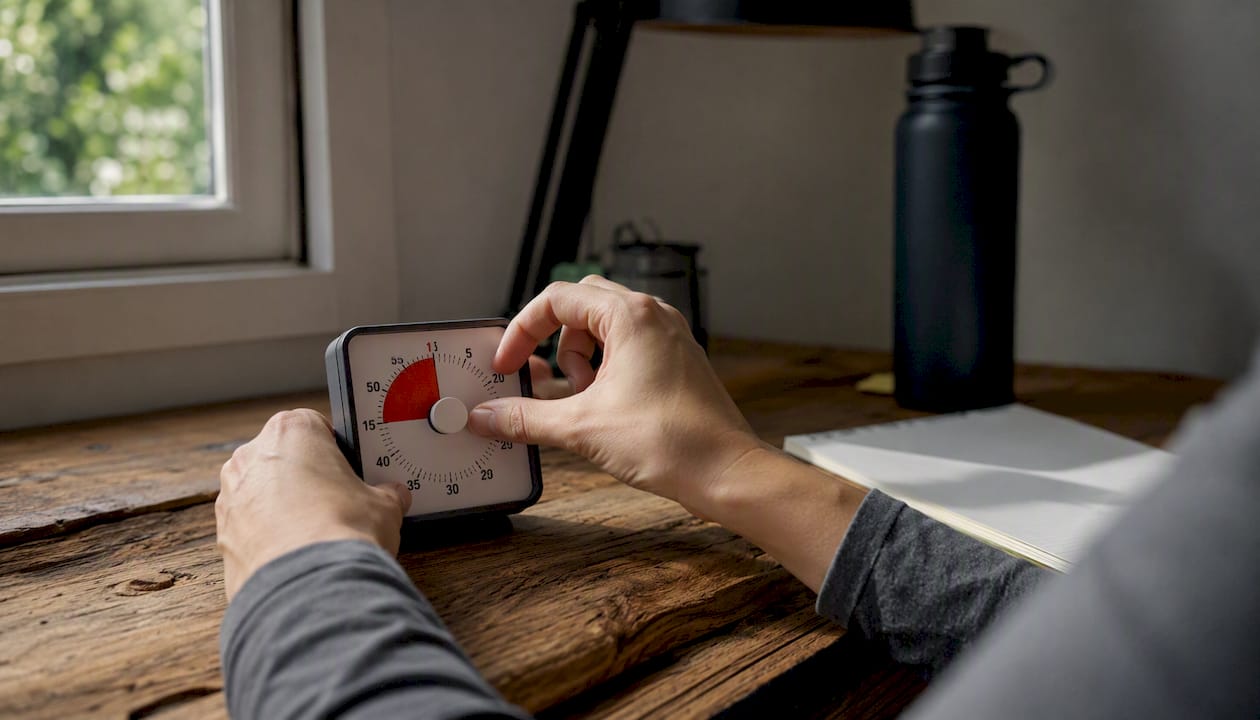
Pro Tip: Keep your camera on during Sunday’s mock even if your practice platform doesn’t require it. Students who train under simulated proctoring develop faster one-shot decisions than those who practice in a relaxed, back-navigable environment.
How Often Should You Run Full Simulations, and What Should You Track?
Frequency depends on your timeline, but the pattern that produces the most consistent gains starts light and builds toward weekly full mocks. A commonly cited 8 to 12 week structured plan begins with the official simulation as a baseline, then shifts into skill drills for the middle weeks, and moves to weekly full timed tests once you’re within the final month.
Track more than your raw score. A single number tells you almost nothing about what to fix next weekend.
- Raw score and section subscore (quantitative, verbal, critical reasoning) to spot which area is dragging your total down.
- Error type per question, split into careless mistakes, timing pressure, and genuine knowledge gaps.
- Time per question, flagged for anything over two minutes.
- Unanswered rate, since blank answers earn nothing and often signal pacing problems rather than difficulty.
If your baseline is weak, expect the first three or four weekends to show slow, uneven gains as you rebuild fundamentals. If you’re starting from an average score, weekly full mocks from week 6 onward tend to produce the steadiest improvement curve. If you’re already strong, your remaining weekends should focus almost entirely on speed and error-pattern elimination rather than new content. Structured plans that sequence drills before full mocks consistently outperform students who jump straight to full-length tests every session, since drills isolate the specific skill a full mock can only reveal after the fact.
How Do Test Dates, Attempts, and Accommodations Actually Work?
Once your weekend routine is producing steady scores, it’s time to look at the administrative side. Bocconi runs its admission test across multiple dates on the webtesting calendar, and candidates select a preferred slot rather than being assigned one automatically.
- You cannot sit two attempts on consecutive days, so plan your weekend simulations around your actual booked date, not against it.
- There’s a cap on how many attempts you’re permitted within a single academic year, so treat each real attempt as valuable, not disposable.
- Students requiring learning-difference or disability accommodations should contact Bocconi’s support channels well ahead of registration, since accommodation requests typically require lead time to process.
- Technical assistance hours are published in the official instructions, and refund or absence policies apply if a technical failure occurs on test day.
If I miss my test date because of a technical failure, do I lose the attempt? Refund and absence rules are covered in Bocconi’s own instructions document, and specific eligibility depends on your circumstances, so confirm directly with Bocconi’s support team rather than assuming a blanket policy applies to your case.
Can I request extra time or a different test format for a documented learning difference? Bocconi’s accommodation process exists for exactly this, and you should reach out through official channels early, since these requests are handled on a case-by-case basis and processing takes time.
Where Can You Actually Run These Simulations This Weekend?
Start with the official Bocconi simulation. It’s free, matches the exact question format, and gives you a legitimate baseline. Its limitation is real, though: there’s no proctoring, and you can review your answers at the end, which makes it a format check rather than a pressure test.
For the proctor-style half of your weekend, Prepadmit builds mocks from official past papers and lets you configure the on-demand test to forbid back-navigation, matching the real webtesting rules rather than the more relaxed demo experience. Progress tracking flags which sections are dragging your score down between weekends.
When choosing any simulator, weigh it against a short checklist:
- Does it enforce the exact 50-question, 75-minute format?
- Can you disable back-navigation to match real proctoring conditions?
- Does it break down results by section rather than giving one flat score?
- Does it work equally well on desktop and mobile, in case your weekend schedule shifts?
Pro Tip: Use the free official demo for your very first baseline only. After that, a paid on-demand simulator that blocks back-navigation will teach you more per hour than repeating the same unproctored demo.
| Simulator Type | Format Fidelity | Proctoring Style | Detailed Corrections |
|---|---|---|---|
| Official free demo | Exact | None, review allowed | Basic |
| On-demand paid platform | Exact, configurable | Timed, no back-navigation | Detailed, by section |
Why Prepadmit’s Simulation Data Backs Up This Weekend Routine
Prepadmit was built by a team with backgrounds from institutions including HEC and Bocconi itself, and the platform’s core offering lines up directly with what a faithful weekend mock requires: official past papers, on-demand tests you can configure to block back-navigation, skill-specific drill modes, detailed answer corrections, progress tracking, and a peer leaderboard to benchmark your standing.
- Official past-paper practice, so the question style matches what you’ll actually see.
- On-demand mocks configurable to forbid back-navigation, replicating real proctoring rules rather than a relaxed demo.
- Section-by-section progress tracking, so you know exactly which weekend to prioritize which skill.
- Peer leaderboard ranking, giving you context beyond your own raw score.
- Detailed corrections explaining not just the right answer, but why the wrong ones were wrong.
Prepadmit reports an average score improvement of 34% among students who use the platform’s structured practice cycle. The mechanism isn’t magic: it’s the combination of official-format practice with granular progress tracking, which surfaces the exact section costing you points instead of leaving you guessing after a single unproctored demo.
Students who train under strict, proctor-style constraints, camera on, timer enforced, no back-navigation, tend to build faster one-shot decision-making than students who only practice in relaxed, reviewable environments. That gap shows up most clearly in the final ten minutes of a real 75-minute test, when there’s no time left to second-guess.
An Editorial Perspective on Weekend Simulation Habits
The weekend routine I’d recommend to a student starting from scratch isn’t complicated, and that’s the point. Complexity is what kills consistency. Friday evening, 20 minutes of light review, nothing timed. Saturday, a two-hour block split between drills on your weakest section and a short break in the middle, because fatigue after 90 straight minutes produces the same error patterns as a genuine knowledge gap, and conflating the two wastes your debrief time. Sunday morning, the full 75-minute mock, taken at whatever hour your actual test slot falls on, so your body and brain get used to performing at that specific time of day.
Here’s the schedule laid out simply: Friday 7:00 PM, 20-minute light review. Saturday 10:00 AM to noon, skill drills with a 15-minute break at the midpoint. Sunday 9:00 AM, full 75-minute proctor-style mock, followed immediately by a 30-minute written debrief where you log every error by category before you forget your reasoning.
The night before your actual official test, resist the urge to run one more full mock. A short, low-stakes review of your error log, twenty minutes, no timer, does more for your confidence than another 75-minute stress session. Sleep matters more than one extra practice round at that point, and most students who burn out on the eve of the real thing did it by treating the night before like just another weekend.
Get a Proctor-Style Weekend Mock Without Building One Yourself
Setting up a faithful weekend simulation from scratch, extension installs, camera checks, timing enforcement, section-by-section scoring, takes real effort, and most students end up skipping half the checklist by Sunday. Prepadmit gives you that entire setup already configured: on-demand mocks built from official past papers, a mode that blocks back-navigation to match the real webtesting rules, and detailed corrections that show you exactly why an answer was wrong, not just that it was.
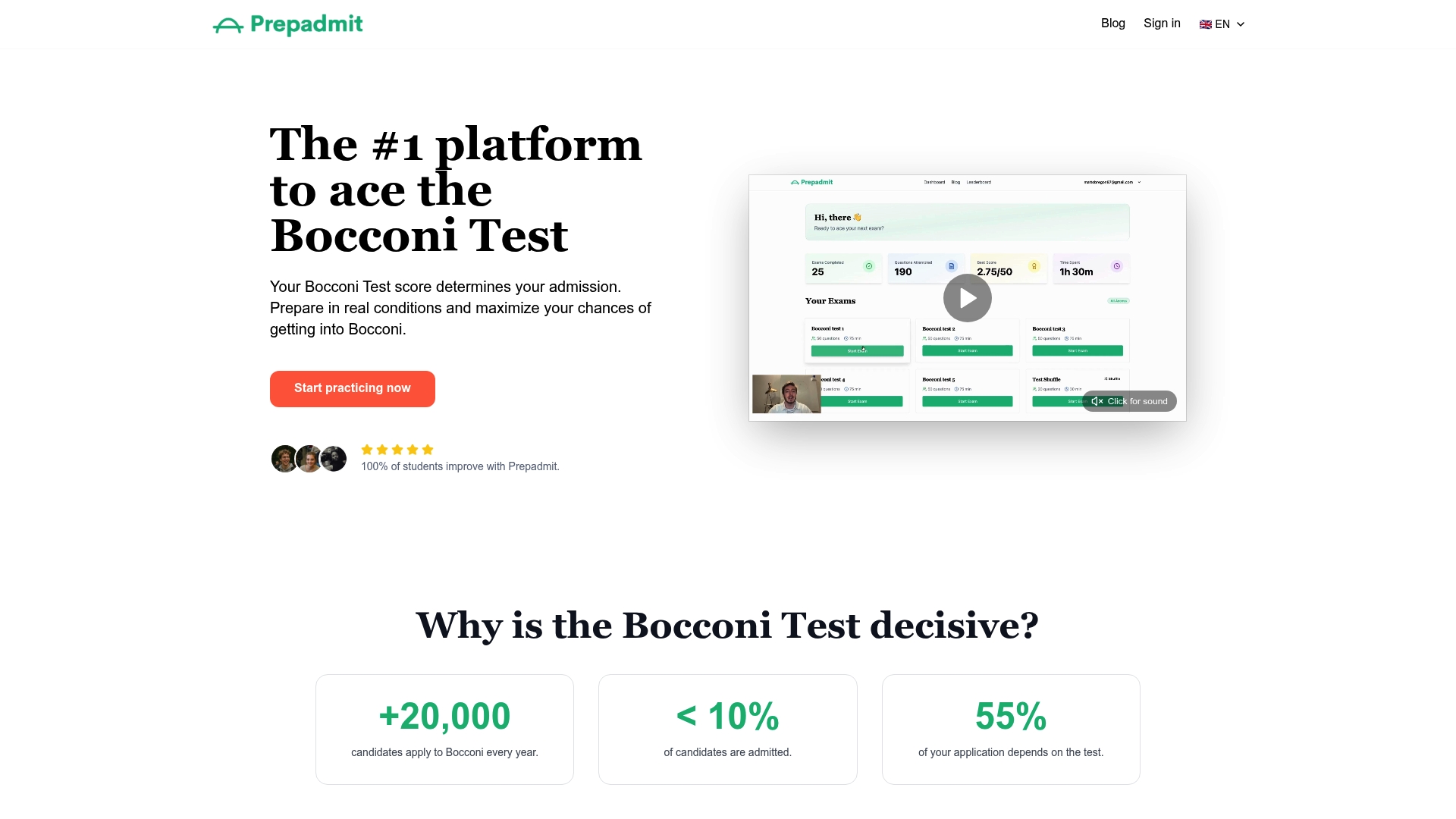
The platform includes progress tracking that flags your weakest section automatically between weekends, a peer leaderboard so you know where you actually stand, and skill drills for the days between full mocks. Prepadmit backs its approach with a money-back guarantee, and it costs a fraction of private coaching for the same structured, official-format practice. If you’ve been running unproctored demos and wondering why your score isn’t moving, this is the fix: a mock that behaves like the real test instead of a friendlier version of it. Visit the Prepadmit landing page to start your first configured simulation before this weekend is over.
Bookmark These Before Your Next Weekend Mock
- Official instructions and rules PDF: covers system checks, ID setup, screen layout, and technical assistance hours.
- What a real Bocconi mock looks like: a closer look at how a faithful simulation is built and configured.
- 12-week study plan structure: useful if you’re mapping your weekend routine against a longer preparation timeline.
Bookmark the official instructions PDF and the Prepadmit demo page now, before the next weekend arrives. You’ll want both open at 9:00 AM Sunday, not scrambling to find them at 8:55.
Sources
- Test online Bocconi - Università Bocconi
Recommended
Related articles
Ready to ace your admission test?
Discover PrepAdmit, the platform that helps you succeed at top university admission tests.
Discover PrepAdmit